r/gamedev • • 4d ago

Announcement /r/GameDev Updates to Rule 3: No Showcasing Projects

142 Upvotes

This community has often allowed people to share free tools and assets but it has always been subjective about where the line crosses regarding self-promotion or showing off a project. We have updated rule 3 to make the following clarification about sharing tools in our community:

  1. All of your own tools you share must be free (this is reinforced by rule 6)
  2. You must provide discussion or technical takeaways regarding the tool.
    1. What unique challenges did you run into when making it?
    2. How did you solve them? Any unique formula, feature, or workaround?
    3. Examples of using the tool and how it improved your workflow.
  3. You must engage the best you can with comments asking about the tool. This does not mean replying to every comment but proving you want to interact with the community.

However we are still left with the open-ended question of what to do with assets. People often share free assets made by others, but what is the line to draw here? We had reports come in because free creators have tip jars or linked patreon accounts. Other reports reference paid products elsewhere on their website.

What do you all feel is appropriate for a developer wishing to share a free asset they made with the community? We will update rule 6 accordingly in the near future as we debate this.

Thank you all for your continued contributions to this community.

Edit: Since there is some confusion this is us expanding what is allowed and we are wanting feedback on if we should allow more posts or not. This stuff has been banned for years already.


r/gamedev • • 5d ago

Community Highlight Introducing BRUTAL | A free C# framework that helped RimWorld make its own engine and break free of Unity. Now you can too.

4.2k Upvotes

Our industry is rotting from its core, outwards in every direction, and it has been for some time. Driven by greed, driven by a race to the bottom on price. It is my position that the games industry was already heading somewhere unsustainable before reverse-engineering and powerful agentic processes became widely available. These have pushed things over the edge.

But I think one of the biggest problems is something we don’t discuss enough. Developers have surrendered an extraordinary amount of control over their work to companies whose interests aren't necessarily aligned with their own.

So we're doing something about it. We're making the BRUTAL Framework publicly available, with its source code, and we’re making it free to use, including for commercial games, subject to an attribution requirement.

I'm Dean Hall. I originally made DayZ, and now run a New Zealand game studio called RocketWerkz, as well as a new gaming distribution platform called Ahwoo. Our games include Stationeers and ICARUS, among others. We’ve used BRUTAL to replace engines in several of our games currently under development. This is the same framework we've used to make Kitten Space Agency, and which Ludeon used as the foundation for their new Waylith engine for RimWorld.

The BRUTAL Framework

Four years ago our studio began developing our own custom framework. At the time, it seemed like the kind of thing that only a "crazy" developer would do. Something that would make people shake their heads. Making your own technology was such a "red flag" for a studio that it was even a secret undertaking internally. It started with a few libraries. But it gradually grew, and then rather rapidly became a complete framework you could use to make a game or your own game engine.

We called it the BRUTAL Framework.

It is important to explain that BRUTAL is a framework, not a game engine. You can make a game directly using it, like we have with Kitten Space Agency, or use it as the foundation for an entirely separate engine, like Ludeon have with RimWorld.

At its core is a custom interop layer, giving C# access to native APIs and libraries. We've built quite a lot of supporting libraries around this, including mathematics, memory management, strings, job scheduling, logging, localization, and other systems. We have an obsessive focus on reducing allocations and unnecessary overhead. We make extensive use of unmanaged memory and unsafe code where it makes sense. Our core focus has been on doing a few low-level things extremely well, using the latest versions of C# and Vulkan.

You can use the Vulkan bindings to make your own renderer, for example. But BRUTAL doesn't make all those decisions for you. You get to make them yourself. You can use whatever NuGet packages you want, including third-party packages. You get to write your own stack. In some ways this makes it much harder to use than Unity, Unreal, or Godot. In other ways, particularly if you're doing something unusual, it makes things considerably easier.

It's called BRUTAL for a reason.

Personally, I have found it much easier. But this comes with a forcing function. You actually have to know what you want to do first. In Unity or Unreal I would often spend days or weeks figuring out how the people who made the engine intended something to work, and then how to get around the assumptions they had made. Without all that, it is actually faster. At least for the kinds of games we're trying to make.

What BRUTAL is not

I do not believe this is the tool that everyone should use to make a game. We've aggressively pushed back against efforts internally to "add more". Our intention is to make a focused and efficient tool for "hard-to-make games". We are not trying to make something that can do everything for everyone. In fact, one of the most important decisions we've made is what not to put into BRUTAL.

This means we're going to be quite aggressive about maintaining its scope. Pull requests that drift away from a clear purpose will be rejected. That isn't because we don't appreciate contributions, but because adding everything is exactly how the industry ended up with the kind of engines we don't wish to use.

Think of the relationship between the Linux kernel and something like Ubuntu. It's not an exact technical comparison, but it gets across the idea. We provide a technical foundation, and developers build their own systems on top of it.

I'm not suggesting everyone should make their own game engine. I'm suggesting every developer should have the option to do so, without having to spend four years building the foundations first. And without having to surrender so much control over their own work.

RimWorld and the Waylith Engine

On May 1st, Tynan Sylvester, RimWorld's creator, approached me with a problem, and I pitched him the BRUTAL Framework. Since then, Ludeon have been able to leverage BRUTAL to help build their own game engine, called Waylith. You can see for yourself what incredible work they've managed to achieve, in a remarkably short space of time. From that conversation to the announcement was only about five months.

Their team amazingly extracted the last bits of Unity out of RimWorld to create their Waylith engine. Moving such an established game, with a huge modding community, off Unity without anything breaking is extraordinarily complex. I'm enormously impressed with what they've achieved.

I also think this is an excellent demonstration of what BRUTAL was intended to enable. An established studio with a very specific set of problems can take the framework and build an engine designed around their own game, instead of spending years building the underlying foundations.

You can read more about what Ludeon achieved in their Steam announcement.

They report performance improvements of 2 to 4 times in their own tests, with the vast majority of existing mods remaining compatible. The new engine is available right now through RimWorld's unstable beta branch. That's an extraordinary piece of engineering, and I'm very pleased BRUTAL could play a part in it.

Kitten Space Agency

Kitten Space Agency is our free spaceflight simulation game, and the first major project we've built directly using BRUTAL. The inspiration came from Kerbal Space Program, and our desire to take that kind of game further. We wanted to simulate spaceflight at enormous scales, with high precision, complex physics, without compromising what we wanted to do because of assumptions made by a general-purpose engine.

It's also brought together one of the most extraordinary groups of developers I've had the privilege of working with. Felipe Falanghe, the original creator of Kerbal Space Program, helps steer the direction of the project. Stefan Moluf joined us after spending nearly twelve years at SpaceX writing flight software for actual spacecraft. I find it somewhat absurd that we have someone who helped program real rockets now helping us program pretend rockets.

We also have some of the most influential people from the Kerbal modding community. Casper works on our terrain and planetary surfaces. Blackrack, who created Scatterer and helped transform what was visually possible in KSP, works on atmospheric rendering and related systems. Jamie Leighton (JPLRepo), a former lead engineer and QA manager on Kerbal Space Program, brings extensive experience both from developing KSP and creating some of its most important mods.

These are people who have already spent years pushing the limits of what is possible with a game like Kerbal Space Program. Now we're giving them direct access to the underlying technology to do things the way they actually want to do them.

The game runs a solar system at real scale, with complex orbital trajectories, enormous distances, and very different requirements around rendering, coordinates, and simulation. The important part for this announcement is that none of this is built around a traditional game engine. We use BRUTAL and develop the systems that KSA actually needs.

Kitten Space Agency is available as a completely free pre-alpha through Ahwoo. You can download it and see the technology yourself.

Felipe Falanghe, the Creator of Kerbal Space Program

I first met Felipe a long time ago while I was making DayZ, and there was an instant bond over how we felt about the games industry. We reconnected when we started making Kitten Space Agency. Felipe is, in my opinion, one of the most underappreciated developers in our industry. He made one of the most influential games of our generation, with scientists and astronauts referencing it. Yet I don't think he's received nearly the recognition he deserves.

He was also the first outside developer to use BRUTAL. Having his team as external users proved incredibly useful, ensuring the framework is truly agnostic from developer usage. Felipe and I actually spoke with Game Developer about BRUTAL late last year. He has this fantastic habit of being able to explain something very well, especially when I tend to explain things far too emotively.

He described working with BRUTAL as sitting on a bar stool while everyone else using engines like Godot was sitting on comfortable couches. I think that's a fantastic way of describing it.

Perhaps most interesting was how Felipe approached the framework itself. Rather than starting with how an engine expected something to be done, he could start with the problem itself. One example was using high precision coordinates in rendering. With his approach, he explained, "you get to use high precision numbers as far as you can into the game execution."

You can read our interview with Game Developer here.

Felipe is making his next game using BRUTAL. I'm deliberately not going into detail about it because that is his story to tell. And Felipe is the kind of person who is captivating when telling a story. I've seen what he's cooking, and I can't wait for everyone to see it. Having someone with his experience working directly with the framework, challenging our decisions, and approaching problems differently has been enormously valuable.

You are only as independent as your tools

I have watched Unity and Unreal consistently fail to be accountable to developers. And I think this problem could get much worse as agentic workflows begin undermining the competitive advantages that have protected established software companies.

My concern is that as those advantages erode, the companies involved will increasingly look to extract more revenue from developers who feel they cannot switch. Whether through royalties, subscriptions, or more restrictive licensing.

When I attend GDC I often go to the Tencent Summit, where Tim Sweeney, the CEO of Epic, has given keynotes. Tim was, for a long time, a hero of mine. A powerhouse of a programmer with a mind I admired growing up. But over time I became frustrated with how much of the discussion seemed to revolve around the latest buzzwords. The metaverse one year, AI the next. Meanwhile developers were struggling with performance, stability, and the practical consequences of decisions made by engine vendors.

At GDC 2025, during a Q&A, I asked Tim whether he thought Unreal was accountable to developers, particularly around performance and stability. His response was about making more demos and putting them on social media to counter people describing games as "Unreal slop". I interrupted and asked whether more demos were actually part of the problem, because they set expectations with customers about how easy it was to achieve those results. I was not satisfied with his answer, and I continue to believe Unreal is not accountable enough to developers. Particularly when it can take a 5% royalty on game revenue above its licensing threshold.

I don't think developers should have to simply accept that relationship without questioning it.

Unity has had its shares of public issues with developers, enough to warrant a whole essay on. Ironically, even as I write this, Unity developers are dealing with account suspensions related to a mandatory security change. Some have lost access even after following the required process. Unity business decisions have repeatedly sent troubling waves across the games industry.

Imagine your ability to work on your own game depending on a decision made by a company you have absolutely no control over. Now, I don't think any of this means developers should abandon Unity or Unreal tomorrow. For many projects they're absolutely the right choice, and I'm not pretending BRUTAL could replace what they provide. But I think we've created an industry where the default is to become dependent on a few enormous technology companies, and we've increasingly accepted that as inevitable. It isn't inevitable.

I think we're going to see many more frameworks like BRUTAL emerge in this environment. Not because everyone will abandon existing engines, but because the cost of making alternatives is going to fall dramatically. I hope those alternatives are free. BRUTAL won't solve all of the industry’s problems, but for some developers it might offer a lifeboat.

This technology is a small step towards changing the balance of power. If the tools are public, if you have the source code, and if you're free to build your own systems on top of them, you have options. And if one day we stop being accountable to developers ourselves, they should have the ability to fork the framework and go their own way. That's important to me.

You are only as independent as your tools are.

This is how we fight back.

Credit and Licensing

We initially wanted to do something simple, like MIT. But that made us realise that one of the many problems open-source projects now face is what attribution actually means in a world increasingly dominated by AI and agentic development. Credit is, to me, what matters most.

The team who made the BRUTAL Framework are world class. They have backgrounds from some of the biggest and most influential game studios in the world. They're experts in their fields, and they've spent years developing technology that most players will never even know exists. They made this. I want history to remember them. So we've drafted a licence based on MIT, but with additional attribution requirements.

You can use BRUTAL for free, including in commercial games. There are no royalties and we don't want a percentage of your game's revenue.

What we ask is that a game or product built with BRUTAL includes the BRUTAL copyright notice in its credits screen, shows the BRUTAL logo before gameplay starts, and ships the NOTICE.txt file alongside it. If you don't want to do that, we can arrange a separate commercial licence. We can also provide detailed support directly from our engineers. You can contact us about waiving the logo requirement, for example for non-profit projects or where displaying the logo would be detrimental to the application's purpose.

We're describing BRUTAL as open-source, although our custom licence has not been reviewed or approved by the Open-Source Initiative. We recognise there will be discussion about whether these attribution requirements meet everyone's definition of open-source, and I welcome that discussion.

There are already OSI-approved licences that allow certain forms of graphical attribution. We think there is room to explore how attribution should work in an increasingly agentic world, and we intend to develop the licence with community feedback, including exploring formal OSI approval.

I'm not particularly interested in fighting over terminology. I am interested in making the source code and the work of our engineers available for anyone to use, modify, and build upon, without paying us royalties. And I want to ensure the people who made it receive some credit.

Who built BRUTAL

I've talked quite a lot about credit, so I want to acknowledge some of the people whose work has made this possible. I can't name everyone, and I've already mentioned several contributors above, but I think it's important to put some names to all this work.

Our Enterprise team develops and maintains BRUTAL. They have achieved something I'm enormously proud of. Aaron Koolen-Bourke, Benoit Fouletier, Chris Howlett, Craig Warne, Eric Chiu, Hanan Finnerty, Jane Kim, Josh O'Hagan, and Max Johnson. Additional past or occasional contributions from Ghassen Lahmar, Daniel Southon, Simon Brown, Felipe Falanghe, Brogan King, Hadley Patchett, and Max Kooij.

Our Head of Engineering, Rian Drake, brings enormous experience from his work at Grinding Gear Games and has provided the technical leadership and vision behind much of this effort. He is truly extraordinary. Bobby Lever is the Senior Producer helping tie everything together, and Dr Zac Isaac is our Senior Mathematician.

Across the wider RocketWerkz team there are many others. Simon Brown stewards technical development generally, including leading Stationeers and Torpedia, the latter having migrated from Unity to BRUTAL. His talent, skill, and ability are impossible to ignore.

We also have new people joining us from some of the world's largest game companies, bringing their experience to this effort.

I know I've missed people. But I want everyone to understand that BRUTAL is the result of years of work by an incredible group of engineers and developers. I am humbled and proud to work with all of you. When I talk about wanting credit for BRUTAL, these are the people I'm talking about.

Managing submissions on the repo

As a team we've been agonizing over how to approach public contributions, particularly pull requests and issues, in the age of agents. Agentic tools can make individual developers extraordinarily productive. But they can also make it very easy to submit enormous amounts of code without understanding it, testing it, or considering how it fits into a project. This is already overwhelming even large, well-resourced open source projects.

We've come to the conclusion that we simply have to throw ourselves at the problem. So you will be able to submit PRs and issues, and we'll try to figure it out. We're a relatively small team, and maintaining a public framework is going to involve a lot of work. So please be patient with us. Our plan is to see what happens initially, assess the problems, and change our workflows as necessary. I'm more than happy to listen to feedback and change our approach.

What won't change is BRUTAL's focus. We are not trying to build another general-purpose game engine. We're trying to make it easier for developers to make their own.

How to get started

It is ready right now. Here is how you do it.

The source code, the README and the contribution rules are on GitHub: https://github.com/ahwootech/BRUTAL

You will need the .NET 10 SDK, and a Vulkan capable GPU with current drivers if you intend to render anything. Windows and Linux are supported.

BRUTAL ships as NuGet packages, one per library, so you reference only what you need. Create a console project and add Core and Glfw:

dotnet new console -n HelloBrutal
cd HelloBrutal
dotnet add package Ahwoo.Brutal.Core
dotnet add package Ahwoo.Brutal.Glfw

Replace Program.cs with this:

using Brutal.GlfwApi;
using Brutal.Numerics;

if (!Glfw.Init())
    throw new Exception("Failed to initialize GLFW");

Glfw.WindowHint(GlfwWindowHint.ClientApi, 0);
var window = Glfw.CreateWindow(new GlfwWindow.CreateInfo
{
    Title = "Hello BRUTAL",
    Size = new int2(1280, 720),
});

while (!window.ShouldClose)
    Glfw.PollEvents();

Glfw.Terminate();

Run it with dotnet run and you have a window with no graphics API attached. What you add next is up to you. The Vulkan packages give you what you need to write a renderer, the ImGui packages give you a debug UI, Concurrency gives you the job system, and Fmod and RakNet give you audio and networking. The full list of libraries, with what each one is, is in the README.

Questions about using BRUTAL go on the forums. Bugs go on GitHub, with a minimal repro. Read CONTRIBUTING.md before opening a pull request. It covers scope, what we expect from AI-assisted contributions, and the sign-off every commit needs.
r/gamedev • • 22h ago

Discussion I spent 3 years reverse engineering and rebuilding a dead MMO. AI can now do it in a day.

1.4k Upvotes

There was a 2D isometric MMO that I played when I was young. In 2004, the servers shut down, and because there were no private servers or captured server packets, no one has been able to play it since.

In 2023, I finally decided to resurrect the game.

I combed through the original CD. All of the assets and data were stored in a custom binary format. There was no documentation for it, so I spent nearly a hundred hours decoding sprites, visual effects, animations, maps, and items, simply by staring at raw hex until I figuring it out.

I cataloged every asset. I rebuilt the map loader, the UI, the sprite manager, the login and character system, and the combat controller.

The code became completely unmaintainable, so I rebuilt an ECS game engine from scratch. I built my own networking layer optimized for real-time online games. I implemented replay, rollback, and client prediction.

"You can't build an MMO solo," everyone said.

Well, I was going to try. And I was really sure I would succeed.

I've sunk well over 1,000 hours into this.

Sure, AI can vibecode an entire SaaS, but there's no way it could reverse engineer an old Windows game and rebuild an entire massive multiplayer online game, right?


When I started in 2023, the game had been dead for 20+ years, and I was the only one attempting to resurrect it.

Yet in October 2026 alone, 3 other engineers started working on reverse engineering the same game.

It now takes AI less than 20 minutes to study the original client files, reconstruct the entire world, and get a character walking around the map.

I tried it myself over the weekend. In that time, I was able to implement:

  • Multiplayer
  • Combat and spells
  • Mob spawning and combat AI
  • Experience, stats, and leveling
  • NPCs and merchants
  • Banking

It was also able to:

  • Port the entire game to modern macOS.
  • Reverse engineer the network protocols and emulate the server-side protocol within minutes.
  • Add WASD controls to a 20-year-old game.
  • Increase the resolution beyond 640x480 by rendering more tiles.

I didn't have to provide any technical direction. I simply told it what feature I wanted and left it alone for 15 minutes.


I'm really not sure what to do now.

I spent 10+ years accumulating experience in frontend, backend, mobile, devops, security, architecture, cloud, and UX.

I moved away from full-stack development because it looked like AI was coming for it. I moved into real-time multiplayer, believing that it would be safe because it required combining all of my expertise.

But apparently AI can do that too, at a speed 100x faster than me.


I used to pride myself on my ability to cut scope and ship a working product. Many people can write code, but few people actually finish and deliver.

Well, it turns out everyone can ship now. The other 3 engineers already have a server running.

Who needs to cut scope when AI can code things as fast as you can think of them?

I always wrote clean, maintainable code that's easy to understand and easy to change without introducing bugs.

Who needs good software practices when AI can apparently navigate a 20-year-old .exe and extend it just fine?

For the first time in over 10 years, I'm genuinely worried about my job and my future.


r/gamedev • • 6h ago

Discussion LD60 game jam feels saturated with AI imagery. Some games feel so generic and empty I’m definitely sifting through more AI than I used to. Is this the new normal for game jams?

54 Upvotes

I feel like this might be the new normal. Some games definitely look way out of scope for a 48 hour jam than I’ve ever seen before. Has anyone else had similar observations on this or other jams?


r/gamedev • • 20h ago

Discussion I can't code my games with AI, and I'm surprised how others can

356 Upvotes

As the title suggests, I cannot code my games using AI. Sure, I could ask it for a simple script, a few complex functions, specific solutions, or optimizations, but I can’t code an entire game (or even a significant portion of one) solely through prompts.

What I find even more baffling is that some people can do this. I mean, in a way, a game is a massive piece of software with thousands of relations between its various code components; how can someone develop a game, and maintain full control over all the generated code, without having a complete, expert-level understanding of how everything fits together, which is accomplished by writing the code itself and not just reviewing it?

In my view, coding wasn't just about a long, continuous typing process; it was about understanding all the building blocks of your software as you typed,enabling you to easily debug, develop, and expand it.

I’d be happy to hear your thoughts and approach on this matter. Thanks for reading.

P.S.: By "the others," I mean those people I frequently see on social media claiming that "no one writes code by hand anymore," "Coding by hand is over," or "writing code by hand is just foolish."


r/gamedev • • 1h ago

Question Are Different Window Sizes Really Necessary in Games?

• Upvotes

I'm developing a 2D top-down adventure game, and I'm wondering if offering different window sizes is worth the effort, or if fullscreen alone would be enough.

I've always played games in fullscreen and never in a smaller window, so I didn't include windowed mode options in my settings. But now I'm wondering if I should offer two or three different window sizes.

What do you think?


r/gamedev • • 15h ago

Question How do you make secrets without code divers finding them?

92 Upvotes

If I want to make a secret ending, secret item or have other secrets that take real time to figure out, how can I stop people from looking at the code to find it?

I know this has been something that's affected other games with secret endings, so is it just unfixable?


r/gamedev • • 2h ago

Discussion Is it finally time for Steam to revamp nextfest?

6 Upvotes

It has been slipping over the years from an event full of great games people were excited to the point where now they are lucky if they see something they get excited about.

The socials of nextfest are now are absolutely brutal with consumers, creators/reviews all slamming it hard.

I feel like it needs some barriers for entry. 1000 verified wishlists(from accounts with active payment methods) would remove 80-90% of the games and leave games that at least have some level of interest.

8K games is simply too big and doesn't really help anyone, and there is no reason to believe without change the next one will easily exceed 10K. While consumers are blaming AI games putting that aside, the number is just too big. Festivals perform best with lower numbers.

Anyone else have any bright ideas?


r/gamedev • • 10h ago

Discussion Less than 500 players on my leaderboard and already dealing with cheaters

16 Upvotes

I'm making a small turn-based space tactics game. Fewer than 500 players have leaderboard scores, total installs are a bit higher and revenue is about $7 so far.

Already found two cheaters: huge currency balances and extensive research unlocked with barely any battles played.

The game supports offline play, but scores and fleets are shared online, so cheating affects other players too. I've had to add detection tools and account restrictions much earlier than planned - I was hoping the game would earn something before anti-cheat became a priority.

My question is: how common is it to encounter cheaters this early after launching a free-to-play mobile game?


r/gamedev • • 5h ago

Discussion Build up wishlists or just shadow drop my game?

3 Upvotes

Hey all, I'm working on getting my first game onto steam (have plenty on itch in the past) and I'm wondering if it's worth just launching it when it's ready and telling people to buy it, or if it's still worth building wishlists in this day and age? A third option is launching into early access but I need to read more up on this whole launch process. Keen to hear everyone's thoughts?


r/gamedev • • 2h ago

Question Is Steam Next Fest week a bad time to pitch streamers a demo that isn't in the fest?

3 Upvotes

Our free demo went up on Steam a few weeks ago, outside Next Fest. This week most of the demo streamers we'd normally reach out to are booked solid with fest games, though one still squeezed ours into their day 1 stream.

Do you pause streamer outreach during the fest, or is it actually a good moment to stand out?


r/gamedev • • 11h ago

Discussion Can making mods actually get you a job at a game studio?

15 Upvotes

I’ve made 12 working mods for a game I really enjoy, with another 10+ planned. Other players seem to like them too, and I’ve started getting requests for new ones which is pretty cool, considering this all started with me fixing stuff that bugged me.

Now I’m wondering whether it’s worth reaching out to the studio behind the game. Could this be a useful portfolio, or am I getting a little carried away with my hobby?

Has anyone here gone from making mods to working in game dev? I’d love to hear how that happened and what the job was like compared to modding.


r/gamedev • • 13h ago

Postmortem Top 5 learnings from developing a multiplayer game

14 Upvotes

After over three years of developing a multiplayer game and finally releasing it to the world, I decided to share our learnings about developing one. I'll include the rough estimates of time wasted or saved, based on our own experience. For context, we rebooted the project after two and a half years and switched from a real-time game to a turn-based one.

  1. To prototype a multiplayer game like it would be played, you often need a lot of work done before you can test whether your idea is fun or not. Which is why I recommend taking every shortcut imaginable in the early days: proto with screen share, proto with two players on the same machine, proto as a board game. Anything other than writing network code before making the game.
    • Time wasted: It took us around 3 months to get to the core game playable with online multiplayer
  2. The technical demand of any multiplayer is significant, but it is way more demanding to test the game properly. So, whatever you think the development will take, maybe double the estimate to include the testing as well.
    • Time wasted: We have spend so much time testing and bug hunting. Even if things work offline and with one player, technically or design-wise, they tend not to transfer straight to multiplayer.
  3. After the initial idea has been verified, it pays dividends to develop bot players to play against. They do not need to be good or even proper enemies, but a lot of bugs and design issues arise once you have someone to interact with.
    • Time saved: This alone has saved us months' worth of work in so many ways. But it should be noted that this was a significantly easier thing to do for a turn-based multiplayer game than it would have been for a real-time one.
  4. Similarly, it pays dividends to be able to launch multiple sessions locally as early as possible, using whatever network architecture you plan to use. This lets you test everything much faster than coordinating with other developers or testers.
    • Time saved: At minimum a month! This can help the 2nd point although depending on a game it is almost impossible to emulate two players.
  5. And lastly, as with all game development, polishing last is wise, and that applies to network code too. There will be bugs, performance issues, sync problems, assets not lining up and whatnot. Just leave them be until it is time to finish the product.
    • Time wasted: I wish I had followed this more although it got better with the reboot. In total, I would say a month if not months were spent on optimizing and polishing things that, at the end of the day, did not matter that much.

I hope I can save someone an ounce of headache by writing these here. I welcome any disagreements you may have, as these were our personal experiences and yours may differ!

If you're curious what kind of indie multiplayer game we made, you can play it for free now. And if you want to learn more about how our indie game development went, we made a post about it recently.


r/gamedev • • 17h ago

Marketing How I got to 10,000 wishlists before Steam Next Fest

30 Upvotes

Hi everyone, I've been working on my game Funeral for the Sun for almost a year and a half at this point, and I wanted to talk about my process marketing it on Steam.

As of yesterday, I have passed 10,000 wishlists, just before this upcoming Steam Next Fest.

The biggest thing in my favor was having a playable build that people could see early. Way back in October I had a steam playtest, and in January I launched my official demo on Steam. By the end of that month, I was at more than 1,000 wishlists.

Since I already had a demo up, I could get into other events like the Thinky Games Showcase, and the official Steam Detective Fest, which are perfect for getting new eyes onto the project. My daily wishlist rate was fairly low, usually less than 10 per day. These spikes from events, however, could sometimes get me 100+ wishlists in a day, sometimes more!

And it's not like the game was perfect throughout this past year either, it very much was a work in progress, and I'm only now starting to feel like I'm ready to release it. For anyone who's currently developing a game: If you don't have a steam page yet, MAKE ONE NOW! The earlier did prove to be better for me.

Even if the game isn't that good, you will get an opportunity to receive feedback and slowly improve it until it turns good. I know reddit is full of posts talking about games with giant wishlists counts that they gain in like a day, and sure that sometimes happens with social media virality or a marketing budget, but that's not the only way to succeed in marketing. Sometimes its enough to just make a good game and slowly build up support over time, being sure to apply to events when you see them.

Tl;Dr: I got my steam page up early, and slowly accumulated wishlists over time.


r/gamedev • • 5h ago

Discussion People who have launched during a steam showcase, how did that affect your personal calendar wishlists?

3 Upvotes

In order to show up on a personal calendar slot for release day, you need more wishlists than the top games releasing that day(at least within your niche). However, if you launch during a showcase, there are likely more games launching through it on the same day, so the personal calendar slot is clogged.

And they probably have more wishlists than you. If you're launching during a genre showcase(the easier ones to get into), then all of them will be in the same niche. So, it seems like a tradeoff, do you want personal calendar wishlists or a single boost for a couple of days on release during the showcase.

People who've launched after the personal calendar rework during a steam showcase, Is it worth it?

This is not about general info whether showcases are worth it. I just want to know how it affects personal calendar stats for smaller games.


r/gamedev • • 7h ago

Question How do I use this type of sprite?

Thumbnail spriters-resource.com
3 Upvotes

First of all, I’m not a programmer, but I am participating in a project.

I’d like to know how to use this specific type of sprite. I’m using Phoenix Wright as an example: there’s a main, full-body sprite, and alongside it, there are other sprites containing only the mouth or the eyes. As I understand it, these are meant to be layered over the main sprite to create an animation. How do I do this in Unity?

Please don’t judge me—I really need some help with this.


r/gamedev • • 9m ago

Marketing TikTok no longer good for indie game marketing?

• Upvotes

This weekend I attended a panel on marketing strategies - focused on writing and self-publishing, mind you - where the speaker said that TikTok as a platform is bloated with content so it is not afforable in terms of time spent on content creating vs sold units.
I kind of want to agree, at the start of the year I made a video about our game that has around 60k views and 6k likes (no ads) and it maybe generated max 50 wishlists total.
I want to know your opinions on this as I work on my game as a hobby and I really don't like spending my free time creating marketing content for nothing. I'd rather spend time creating games :) or at least pay for content creation for a platform that gives good return in wishlists and sold units


r/gamedev • • 6h ago

Discussion Student looking to interview someone working in game development

2 Upvotes

Hello, I'm a student studying game development and I have an assignment for class where I need to interview someone working in the game industry. It's only 5 questions that you can answer over DMs, about things like your career, advice you would give, etc. I also need to include your name, company, and job title in the assignment, so only answer if your comfortable giving that information. Thank you!


r/gamedev • • 14h ago

Discussion New kind of steam next fest

8 Upvotes

In the first 2 hours ... 11 demo copies claimed. How are your stats right now with the start of the festival?


r/gamedev • • 1d ago

Discussion Indie Game Developers receive the blunt of the AI Hate, while big companies receive little to no consequences

994 Upvotes

In todays video game market of Ai, Indie Game Developers are the ones receiving the brunt of the Ai Hate even when they donot use AI, while big companies reap the benefits with little to no hate when most do use AI (At least not as much as indie devs) and its only getting worse. We just left the era of "Ai hate" and entered the era of "AI Scare", meaning, consumers that hated AI, now fear AI, making them scared to buy any games made with AI ...or not.

While large companies can absorb the hate and the financial damage to their yearly budget, for indie developers, even the slightest hint of Ai or an AI accusation is enough for at least half of consumers to ignore your game. The worst part about it all is the accusations, even if a Indie developer was simply accused without proof of using AI, this is enough for users to boycott your game forcing indie developers to address every single accusation one at a time all over social media and even that may still not be enough.

In the the new Ai scare era, users are afraid to buy indie developed games because of the possibly that AI could have been used to make this game in any way, and this is starting to bleed over to indie developed games that have never even touched AI, making Indie developers less optimistic to release their games. (Working years on a game and finally enthusiastic about showing it, only for users to call your hand drawn Art "AI Slop" when its not is very discouraging)

There are indie developers that worked years on Art, assets, sounds, systems, etc with proof their game was being created long before AI became relevant and since they are releasing in the AI scare era, they are even getting accused of using AI with top comments being "AI Slop!" , "This is AI!" and of course "Is this AI?" and while some very high quality indie games dont get this hate, lower quality human made creative indie games that took years to make with passion are annihilated with "AI Slop" comment hate. Indie games have to now be of AAA quality with the budget of an A quality game.

While AAA studios all announce or secretly use AI in their games, studios, websites, customer service, search engines or in some type of way. (Its a massive way to cut cost and time, why wouldnt these greedy CEO's and big corporations use it?) When these companies use AI without disclosure and get caught, they sometimes take a financial hit but they can afford it and they continue to use it. Soon we'll see AAA Studios pushing games out yearly or faster while indie developers take multiple years to make one game. All the Tiktok brains will have done moved on forgetting that your little indie game exist while they buy the monthly AAA slop and when your game finally does come out for a humble 5 to 10 usd, it will be called "AI slop" before someone tries it, even if you didnt use AI! lol

For Indie developers, the disclosure doesn't matter now and days, you are guilty until proven innocent and even when innocent people are still skeptical. Consumers are more afraid to buy Indie developed games then to buy AAA games when we know most of these AAA companies and game CEO's are using or moving towards AI in some way.

Ps: Voice actors got it worse


r/gamedev • • 7h ago

Question Finding outside experts on themes, eras, tones

2 Upvotes

This can be read as a stupid question or not, but it comes with absolute sincerity! The VN/management sim game I'm working on is a passion project of sorts – success for me will be if players find it fun and of course getting that Overwhelmingly Positive (and equivalent), more than money returns. And it's set in a time and place that's drawing on, and satirizing, the Victorian era in England and Europe.

Eventually, I was thinking it'd be good to have an expert or experts get engaged. Like people who know the Victorian social history well, by study or hobby or the like. I don't know if anyone from that background would be down to review a VN game – let alone one with NSFW content like mine has – and help sharpen its wit and humor, but I figure it's the difference between me writing a fanfic satire and me developing a fun and funny game with period-reflective voices.

Have other VN or similar game devs encountered this question before? Or otherwise, if folks have any tips or suggestions for how I might ultimately go about it?


r/gamedev • • 15m ago

Discussion I asked a game’s community “how did you get good?” and it changed my game’s core loop

• Upvotes

My daily geography game had a problem: players either knew the answer or felt like they were guessing randomly. Engagement dropped after ball 2.

Instead of guessing at fixes, I asked GeoGuessr players how they improved. Every answer described the same thing: a Guess Who process (eliminate hemispheres, then languages, then countries) and learnable metas, small clues you reuse forever.

What I changed:

  • Clues go broad → narrow, and each one costs points (−15% / −25% / −40%), so knowing it still pays most.
  • Only the deepest clue counts, so deducing feels rewarding instead of taxed.
  • Each answer teaches a reusable meta.

Lesson: your players’ favourite other game already knows what makes learning fun. Ask them.

Happy to share numbers in a week once I see if it moved retention.


r/gamedev • • 13h ago

Industry News GDC 2027 Announces Change to 4-day Schedule

7 Upvotes

I've just received an email from GDC 2027 saying that they have changed the conference's schedule from 5 days to 4, so it will now only run Monday through Thursday.

Here is the email I received:

---

Hi,

We’re writing with an important update to the GDC Festival of Gaming 2027 schedule. GDC will now take place over four days from Monday through Thursday. We have consolidated into four days so that you can balance your time at GDC with your professional and personal commitments.

This change is part of our efforts to deliver a higher quality, more focused, and more valuable experience across the days when the GDC community is most active. Here is an overview of the week:

  • The Business Hall at Moscone West will offer dedicated meeting and dealmaking space, Monday through Thursday.
  • The Festival Hall at Moscone South will run Tuesday through Thursday, bringing together activations, partner stages, lounges, and community experiences.

    We recognize that you may already have made plans around the original five-day schedule, and we apologize for any inconvenience this change creates. If it affects your plans, please contact [gdcregistration@informa.com](mailto:gdcregistration@informa.com) so we can review your circumstances individually.

We’ll continue to share program and scheduling details as they are finalized. Thank you for being part of GDC 2027.

- The GDC Team


r/gamedev • • 23h ago

Announcement Announcing TinyFFR v1.0: A highish-level C# 3D realtime rendering library (NOT vibe slop!)

29 Upvotes

Intro: The Why of TinyFFR

C# has some really great libraries for anyone who likes the "build your own engine" approach; for physics you have BepuPhysics or Jitter2, audio has OpenAL or SoundFlow (and a couple others), networking has LiteNetLib, Riptide, ENet-CSharp, and probably some more I'm forgetting right now.

However... When it comes to 3D graphics in my opinion the options have always felt limited; there are mostly only managed wrappers over raw graphics APIs that still require you to do the hardest parts of a 3D render pipeline yourself. I see this as a significant gap in the gamedev ecosystem and it's something that's frustrated me personally for a long time, so I set out to fix it.

That's basically where TinyFFR comes in. It's a single C# library (available via NuGet) that gives you everything you need to render modern realtime 3D without having to touch shaders or graphics APIs at all. It won't be for everyone of course: Some people will surely continue to prefer the flexibility of writing against graphics APIs themselves, but for anyone who wants to build a 3D game/app and just wants a modern plug-and-play PBR renderer, TinyFFR is for you!

TinyFFR Features

TinyFFR is free, targets cross-platform desktop (Windows, Linux w/ Wayland, MacOS Apple Silicon) and open-source†. It provides the following features OOTB:

  • A PBR material system ready-to-go;
  • State-of-the-art render pipeline: Forward+ rendering, VSM shadowing, FXAA + TAA antialiasing, AMD FidelityFX (FSR) upscaling, physical post-processing (incl. HDR bloom, DoF, fog, shadowing, real exposure), image-based-lighting;
  • Support for tens of model formats (incl. glTF + GLB, OBJ, FBX, STL, STEP/STP, + more);
  • SDF text rendering (both for 2D canvases and 3D in-world)- supports any TTF file and has three fonts built-in;
  • Skeletal animation (including anim blending + node transform calculations);
  • ImGui, Avalonia, WPF, and WinForms integration;
  • Scene compositing: Render-to-texture, picture-in-picture, splitscreen, render-to-bitmap. Multi-scene, multi-camera setups as standard;
  • Camera controllers (first-person, follow/chase, free-flying, inspection, orbital, PTZ, programmable keyframe);
  • Dynamic vertex buffers, dynamic textures + parallelized mutation APIs for both;
  • Scene querying (pixel picking, ray testing, shape testing);
  • Fully documented (every public member has xmldoc, NOT AI slop; and the main site has lots of documentation, also not AI slop);
  • A really rich plain-English math API;
  • A window + input API with intrinsic support/understanding of DPI scaling on all three platforms.

†: The source is available on github; the library uses a modified FSL license that converts to MIT after two years.

Performance & Additional Work

I have a background in engine dev + high-performance C#, having previously released a game on Steam under a custom C# engine and also worked in the energy industry writing grid-scale battery management servers. For TinyFFR I've transferred that knowledge and gone to extreme lengths to prioritise performance:

  • No GC stutter whatsoever. Completely flatline memory profile throughout the entire application lifetime (asset loading, render/frame loop, input, windowing, streaming, etc). Zero GC allocation target verified by a Benchmark.NET benchmark suite, plus API helpers exposed that make it easy for user code to avoid creating GC pressure;
  • AoT publish ready (no dynamic access or reflection throughout);
  • SIMD-enabled math lib;
  • Custom allocators for pooled memory re-use, including a slab allocator, custom zero-GC collections, native interop string buffers, and bespoke array pools;
  • Zero-GC, block-based, lock-free parallelization, accessible to users and used internally throughout for things like mesh mutations and texture compression;
  • Upscaled resolution options, copious render quality tweaks including frame latency controls, buffer reduction + vsync;
  • Asset bakery for fast loading;
  • Tons of caching or precalculation where possible;
  • Hand-optimised algorithms everywhere: Example 1, Example 2, Example 3

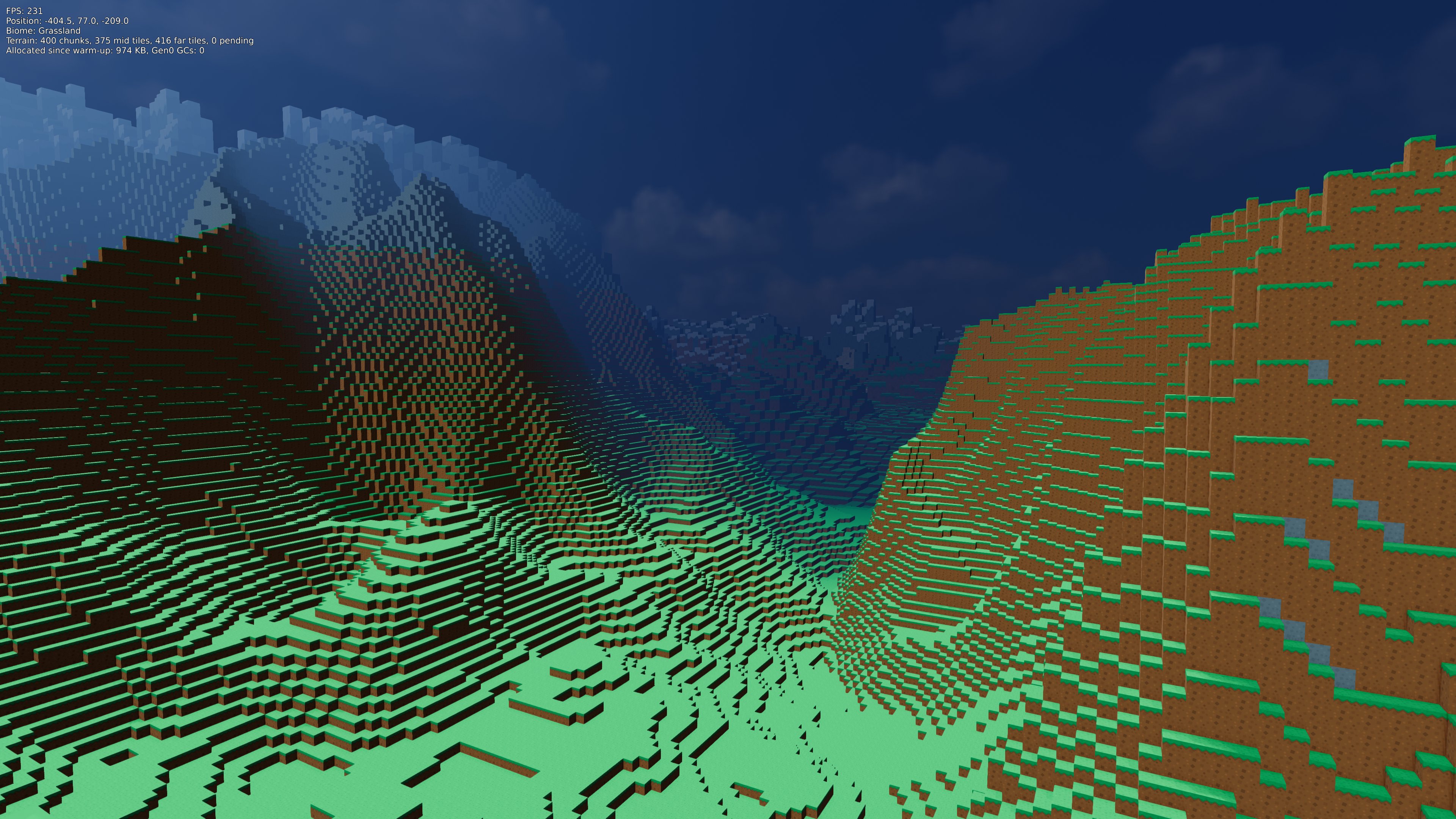
On my 3080Ti, I can run the voxel world generator example at native 4K 'High' settings at just under 400FPS, or on 'Very Low' at 67% native res (~2572x1447 FSR upscaled to 4K) at 800-900FPS. That's with a realtime voxel terrain generator running inside it too.

What Next?

I've been working on TinyFFR as a passion project for about three years, and I'm now ready to open it up to a wider audience. I have a lot of ideas about next steps so I'm looking to build a small community that I can work with to prioritise/inform how to continue developing it.

If you're interested, please consider joining my discord server.

There's also a website here with loads of reference guides + tutorials: https://tinyffr.dev

And finally, here are some screenshots made with the library (taken from the video on the homepage):

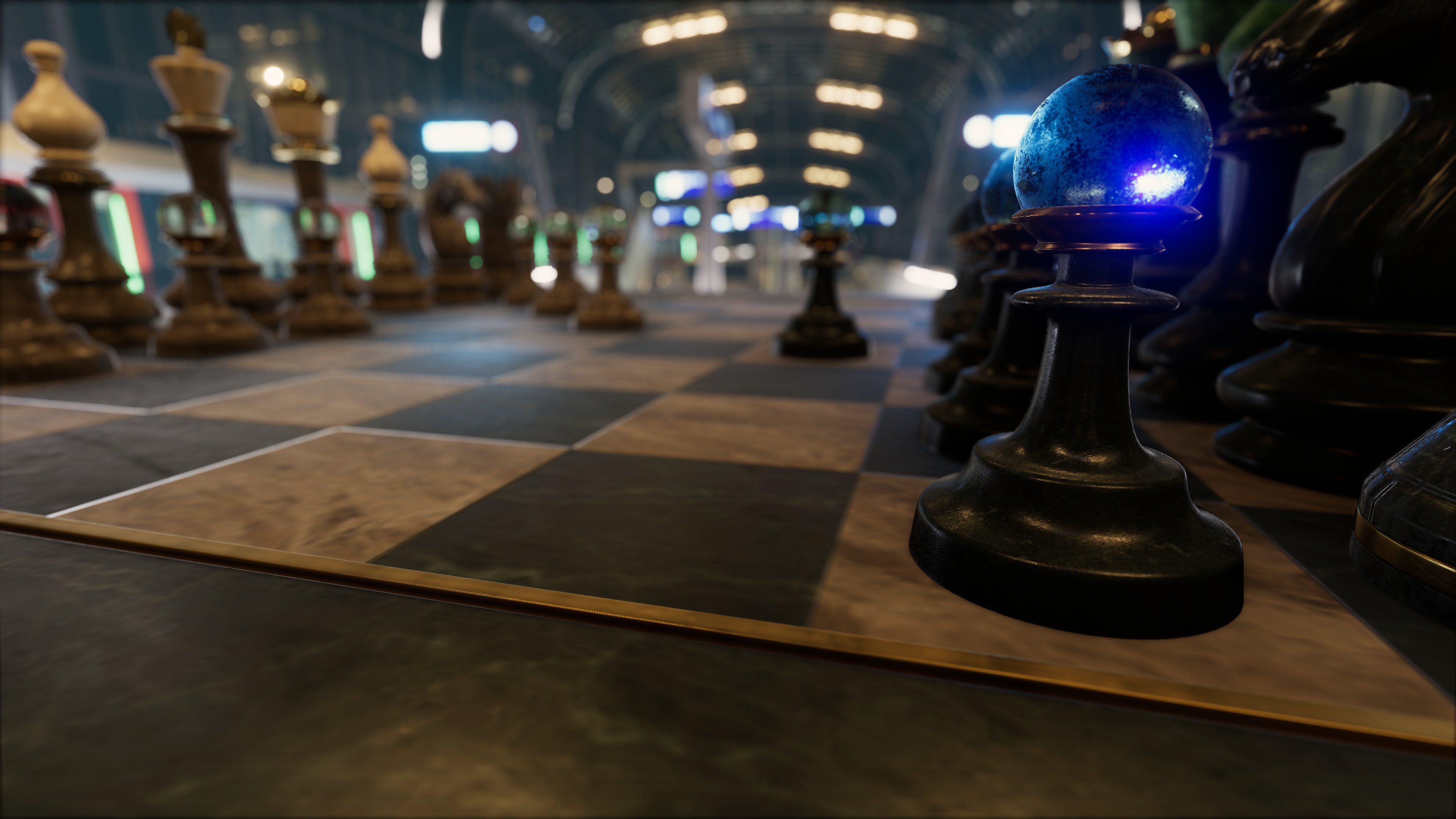
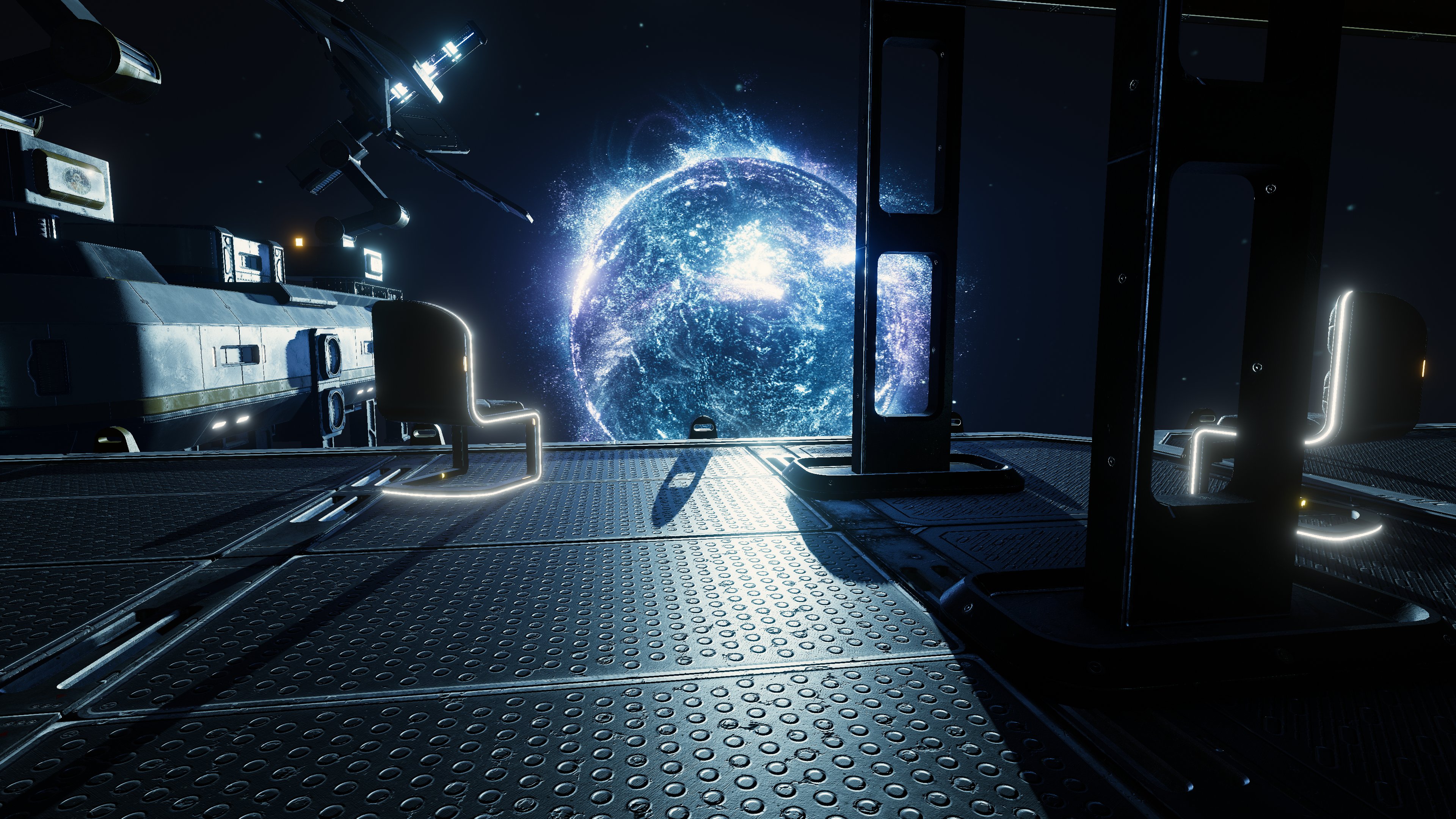
Screenshot 1 Screenshot 2 Screenshot 3


r/gamedev • • 17h ago

Postmortem I kept telling myself I’d make my game fun later. Lessons from most of a year doing that.

7 Upvotes

I spent most of a year making a game I don’t enjoy playing. I thought I’d make it fun later.

I have a big Post-it on my Miro board that says “MORE FUN.” I’ve also rage-quit my own game more times than I’d like to admit. Recently, I made a few small prototypes and caught myself giggling while playing them. Some took a couple of hours. The game I’d spent months developing never gave me that feeling, and I finally had to take that seriously.

The game is Jackstrap, a combo-driven survivors-like about a living jockstrap fighting nutcrackers. Get it? I wanted a stupid premise executed really well, with combat that felt like Jackie Chan in a ridiculous kung fu movie. I’m still developing it, but those prototypes have convinced me to rework the combat. This is my first game, and these are the mistakes I’m trying to learn from before going further.

1. I kept developing without knowing whether the combat was fun.

The original system had automatic attacks, but you controlled the direction of the individual moves in your combo. I still think that’s an interesting idea. Playing it, though, felt interrupted and frustrating. I kept thinking I’d fix that once more of the animations and systems were finished. In my head, the finished game was going to be so cool that I let myself put off the fact that I didn’t enjoy what I already had.

The prototypes helped me understand the difference. I could start playing without understanding the whole system, have fun immediately, then learn how to use the combos better. My current game was awkwardly between automatic combat and direct control. I’m now testing button-driven combos without timers or enemy-distance requirements, and experimenting with controlling attacks and movement separately. Having a clearer connection between pressing a button and what Jack does already feels better to me.

2. I didn’t get enough validation, but I also can’t treat silence as a clear answer.

My best Reddit post was an early animation with 152 upvotes. Most posts got fewer than ten, often with no comments. More recently, posting in feedback channels across about a dozen Discord servers brought maybe six or seven replies. The people who responded were helpful, but the feedback was generally negative: how the game felt, how it looked, and how difficult the combo system was to understand from footage.

I have barely any audience, which made it easy to brush off the silence. It’s genuinely difficult to get feedback starting from zero. But I also accepted too little validation early on, especially around the art, and didn’t push hard enough to get a playable prototype in front of potential players.

I was also lumping two things together: I don’t enjoy playing it, and I’m struggling to get other people interested. Very few people have actually played it, so I can’t claim they’ve all rejected the gameplay. I need to test those problems separately.

3. I needed to decide what I wanted before choosing a pivot.

I considered continuing with the current design, combat mixed with pinball, and putting the demo on itch and freezing the project. Over the weekend, I kept asking myself what the objective was. Ship quickly? Make money? Learn? Ultimately, I want to make something I enjoy playing and can feel proud of. It doesn’t have to be perfect, and I still want to give Jackstrap a chance.

The prototype I’m enjoying most leans into ridiculous wrestling. Jack jumps from the corner post, throws chairs, and can knock out the referee. Better combos get the crowd roaring. More significantly, enemies don’t die: you have to throw them out of the ring. Hits and crowd sentiment affect how easily you can do that. I’m enjoying setting enemies up to throw them out, and the environment gives me more to play with.

I’m also looking at what I can simplify so this doesn’t become another enormous production commitment. Drawing every new attack in eight directions takes time. Maybe future attacks can use two directions while I keep the existing eight-direction movement. I’d rather spend some of that time on the interactions that are making these prototypes enjoyable.

I haven’t proved this direction will interest other players. That’s what needs testing next, before I spend months producing assets again. I don’t regret the year—probably six months of actual work around personal stuff—and I’ve learned a huge amount about animation, code, and Godot. But I should have spent longer finding something I wanted to play before building so much around it.

If you’ve reworked a core mechanic mid-project, what helped you decide the new version was ready for production?