r/LekkerSA • • 16d ago

Welcome to r/LekkerSA!

Post image
11 Upvotes

If your feed feels like a constant stream of bad news, race-bait, politics, arguments and outrage, this sub is for you. We are hoping to promote a place for the good stuff happening across South Africa. Small wins, good news, beautiful places, cool stories, humour, achievements, and South Africans doing good things and being nice to each other. We’re not pretending the country doesn’t have problems. We just don’t need every corner of the internet to be about politics and negativity. We want to focus on the lekker stuff.

Subscribe for more positivity in your feed. 🇿🇦


r/LekkerSA • • 1h ago

Discussion Quick history of the Baxter Theatre in Cape Town. Have you ever seen a production there or visited?

Thumbnail
gallery
• Upvotes

On 1 August 1977, the Baxter Theatre Centre opened in Rondebosch, Cape Town, at a time when South Africa was governed under apartheid. The theatre was established through a bequest of R553,866 from Dr William Duncan Baxter, a former Mayor of Cape Town and chairman of the University of Cape Town Council. Baxter had died in 1960, leaving money to the university specifically to establish a theatre that would develop and encourage the performing arts in Cape Town and surrounding areas. The building was designed by architect Jack Barnett, with Leslie Broer also involved in its design.

The Baxter became particularly significant because of its approach to racial inclusion during apartheid. While segregation laws restricted access to many cultural institutions, the Baxter maintained a policy of welcoming audiences and performers across racial lines. Its association with the University of Cape Town provided opportunities to stage politically progressive productions that questioned the country’s social and political conditions. The theatre presented works dealing with racial discrimination, identity and resistance, including productions associated with South African playwright Athol Fugard.

One of the theatre’s most notable moments occurred in 1985 during a production of August Strindberg’s Miss Julie, adapted and directed by Bobby Heaney. Actors John Kani and Sandra Prinsloo performed what is widely recognised as the first interracial kiss on a South African stage. At the time, relationships and marriages between people classified under different racial categories had been subject to apartheid legislation, making the performance particularly significant. The production attracted attention because it challenged racial conventions that had shaped South African public life for decades.

The building itself became an important architectural landmark. Its design incorporated an expansive foyer, an unusual floating roof structure and spaces intended for different forms of performance. The complex includes a main theatre, concert hall and smaller studio theatre, allowing it to accommodate drama, opera, ballet, music and experimental productions. Barnett received an Award of Merit from the South African Institute of Architects in 1977 for his work on the building. Unlike a conventional single-auditorium theatre, the Baxter was conceived as a broader cultural centre serving both the university and the public.

Following the end of apartheid, the Baxter continued supporting South African theatre through productions, educational initiatives and programmes for emerging performers. Its Zabalaza Theatre Festival has provided opportunities for artists from historically disadvantaged communities, while productions such as Mies Julie, The Fall and Life & Times of Michael K have contributed to its reputation. The theatre will mark its 50th anniversary in August 2027. Nearly five decades after opening, it remains part of the University of Cape Town and continues to operate as one of the city’s established performing arts institutions.

https://en.wikipedia.org/wiki/Baxter_Theatre_Centre


r/LekkerSA • • 2h ago

History The Vela incident: A mysterious flash in the stratosphere in 1979, suspected to have been a secret nuclear weapons test conducted by South Africa and Israel.

Post image
4 Upvotes

On September 22, 1979, an American surveillance satellite detected two unusual flashes of light over the southern Indian Ocean, near South Africa’s Prince Edward Islands. The satellite, known as Vela 6911, was part of a US programme designed to detect nuclear explosions in violation of international test restrictions. Its instruments recorded a brief, intense flash followed by a longer second flash, a pattern characteristic of an atmospheric nuclear detonation. The Vela satellites had previously detected 41 atmospheric nuclear tests, all of which had been independently confirmed. The 1979 detection became known as the Vela incident.

American intelligence officials initially suspected that the satellite had detected a nuclear explosion with an estimated yield of two to three kilotons. Attention turned toward South Africa and Israel, both of which had secretive nuclear weapons programmes at the time. South Africa was developing its own nuclear arsenal under the apartheid government, while Israel maintained a policy of ambiguity regarding its nuclear capabilities. One theory suggested that Israel had conducted a nuclear weapons test with South African assistance in the remote ocean region. Neither country has acknowledged conducting such a test.

The Carter administration commissioned an independent scientific investigation led by MIT professor Jack Ruina. In 1980, the panel concluded that the satellite signal was probably not caused by a nuclear explosion. Investigators identified irregularities in the optical measurements and considered the possibility that a small meteoroid had struck the satellite, producing a misleading signal. However, other American intelligence analysts and weapons scientists disagreed with this assessment. President Jimmy Carter recorded in his diary that scientists increasingly believed Israel had conducted a nuclear test near southern Africa.

Additional evidence complicated the investigation. Researchers reported radioactive iodine-131 in sheep thyroid samples collected in parts of Australia following the incident, although the connection to the suspected explosion remained disputed. Underwater acoustic recordings were also examined for evidence of a detonation near the Prince Edward Islands. Subsequent research published in 2017 and 2018 reassessed the satellite measurements, hydroacoustic observations and radioactive material findings. The researchers concluded that the combined evidence supported the interpretation of a nuclear weapons test, challenging the earlier explanation involving a possible satellite malfunction or meteoroid impact.

The incident remains historically significant because South Africa eventually acknowledged its nuclear weapons programme and dismantled its six completed nuclear weapons before the country’s transition to democracy. Israel has continued its longstanding policy of neither confirming nor denying possession of nuclear weapons. Despite decades of investigations, declassified documents and scientific reassessments, no government has officially confirmed responsibility for the September 1979 event. The satellite detection itself is undisputed, but the precise cause and any involvement by Israel or South Africa remain unresolved.

https://en.wikipedia.org/wiki/Vela_incident⁠


r/LekkerSA • • 1h ago

History South Africa’s Sutherland observatory houses one of the largest optical telescopes in the Southern Hemisphere.

Post image
• Upvotes

The South African Astronomical Observatory operates a major astronomical research facility near Sutherland in the Northern Cape, approximately 370 kilometres from Cape Town. Established in the early 1970s, the observing station was developed to provide better conditions than the historic Cape Town observatory. Its altitude of approximately 1,800 metres, dry atmosphere, dark skies and relatively low light pollution make it suitable for observing faint astronomical objects.

The facility’s largest instrument is the Southern African Large Telescope (SALT), inaugurated in November 2005. Its primary mirror consists of 91 hexagonal segments forming a surface approximately 11 metres across. Unlike conventional telescopes that can point freely across the sky, SALT operates at a fixed elevation angle while rotating horizontally to observe different regions. Its instruments collect and analyse light from distant galaxies, black holes, supernovae and other celestial objects.

The Sutherland site also hosts several smaller research telescopes. These include the 1.9-metre Radcliffe Telescope, which was relocated from Pretoria, and the 1.0-metre Elizabeth Telescope. The facility additionally hosts international robotic telescope projects, including the Las Cumbres Observatory network and the MASTER telescope system. These instruments support research into variable stars, exoplanets, stellar explosions and transient astronomical events.

Much of the infrastructure is designed for precision observations and automated operation. Telescope buildings contain specialised tracking systems, scientific cameras, spectrographs and environmental monitoring equipment. Some instruments can operate remotely, allowing researchers to collect observations without travelling to Sutherland. The site also supports international collaborations, with universities and research institutions sharing access to telescope facilities and scientific data.

Sutherland has become a significant centre for optical astronomy in Africa, complementing the country’s radio astronomy infrastructure, including the MeerKAT telescope in the Karoo. Its combination of large research instruments, smaller specialised telescopes and international observing networks allows astronomers to investigate everything from nearby stars to galaxies billions of light-years away.

https://en.wikipedia.org/wiki/South_African_Astronomical_Observatory


r/LekkerSA • • 1h ago

Humour TIL that South Africa is technically younger than sliced bread…

Post image
• Upvotes

r/LekkerSA • • 2h ago

Humour If this was an album cover, what would the title of the album be…

Post image
3 Upvotes

r/LekkerSA • • 8h ago

Discussion The missing Kruger gold. Myth or something to the story? What do you think…

Post image
7 Upvotes

The Kruger Millions refers to a legendary fortune in gold supposedly hidden during the Second Boer War. As British forces advanced towards Pretoria in 1900, the government of the South African Republic, led by President Paul Kruger, transported its remaining gold reserves out of the capital.

On 4 June 1900, gold coins, bars, and unprocessed gold were loaded onto a train travelling east along the Delagoa Bay Railway. The shipment reportedly reached Middelburg shortly before British forces occupied Pretoria. The amount involved remains disputed. Contemporary estimates ranged from approximately £750,000 to more than £2 million. Although substantial gold reserves existed, there is no conclusive evidence that the entire fortune disappeared.

Some gold was used to finance the Boer war effort. Records indicate that 62 cases of gold were transferred to a German trading firm in Lourenço Marques, now Maputo, in exchange for supplies. Other theories suggest that gold was transferred to European banks.

Over the following decades, treasure hunters searched areas of Mpumalanga, particularly around the Blyde River and Ermelo. Numerous people claimed to know where the gold was buried, but none produced convincing evidence.

In 2021, a collection of 910 historical South African gold coins emerged from a Swiss vault. Although the discovery attracted attention, no definitive connection to the missing Kruger Millions was established. More than 125 years later, the legend remains unresolved. Historians generally regard wartime expenditure and overseas transfers as plausible explanations, while the existence of a large buried treasure remains unproven.

https://en.wikipedia.org/wiki/Kruger_Millions


r/LekkerSA • • 2h ago

News National Opt-Out Registry to help consumers block spam calls.

Post image
2 Upvotes

The National Consumer Commission (NCC) says with the newly launched National Opt-Out Registry, South Africans can file official complains with them if they continue receiving unwanted telemarketing calls, even after blocking them.

The registry, is a free, government-administered platform allowing South African consumers to pre-emptively block unwanted direct marketing calls, SMSes, and electronic communications.

According to Truecaller’s 2026 South Africa Spam Report, citizens have received 17.47 billion spam calls between January and June this year, an over 25% increase as compared to the same period last year.

Acting Commissioner at the National Consumer Commission, Hardin Ratshisusu, says they’re still hard at work to try and ensure this is resolved.

“We have a situation where consumers are bombarded with unwanted direct marketing calls. In some cases it’s spam calls and currently there’s no mechanism that is protecting consumers from being able to opt out from these calls. So they may have opted in on some but not able to opt out.”

“Hence we now (have) a regulation in the country which then introduces the optout registry system to stop those calls. If direct marketers do not register on the system and they are given until December to do so –  they may face prosecution by the NNC.”

https://www.sabcnews.com/sabcnews/new-opt-out-registry-to-help-consumers-black-spam-calls/


r/LekkerSA • • 3m ago

Photo The majestic Theewaterskloof Dam. It holds about 40% or the water supply Cape Town and surrounds rely on.

Thumbnail
gallery
• Upvotes

Theewaterskloof Dam, located on the Sonderend River near Villiersdorp in the Western Cape, is the largest reservoir in the Western Cape Water Supply System. Completed in 1980, it can store approximately 480 billion litres of water, representing around 41% of the system’s total storage capacity. When full, the reservoir covers roughly 51 square kilometres, making it one of South Africa’s largest dams by surface area.

The dam was constructed as part of the Riviersonderend-Berg River water transfer scheme, an engineering project designed to move water between different river catchments. Its earth-fill wall measures 646 metres long and approximately 35 metres high. A network of tunnels transfers water beneath the Franschhoek Mountains towards the Berg River catchment and Cape Town’s water supply. The system can also operate in reverse, allowing surplus water to be transferred into Theewaterskloof. The reservoir supplies water for domestic, industrial and agricultural use. Its infrastructure includes intake towers, irrigation outlets and a spillway designed to release excess water during periods of heavy rainfall. Water stored at Theewaterskloof is particularly important during the Western Cape’s dry summers, when demand remains high but rainfall is limited.

During the severe drought between 2015 and 2018, Theewaterskloof became one of the most visible symbols of Cape Town’s water crisis. By early April 2018, its storage level had fallen to approximately 10.3%, exposing large sections of the reservoir bed. The shortage contributed to strict water restrictions and preparations for a possible Day Zero, when much of Cape Town’s municipal water supply could have been shut off. Improved winter rainfall eventually replenished the reservoir, which reached full capacity again in October 2020.

Theewaterskloof remains a critical component of the region’s water infrastructure. Its enormous storage capacity and connection to surrounding river systems allow it to support millions of residents and extensive agricultural operations. The 2018 drought also demonstrated how vulnerable even large reservoirs can become after several consecutive years of below-average rainfall.

https://en.wikipedia.org/wiki/Theewaterskloof_Dam


r/LekkerSA • • 15h ago

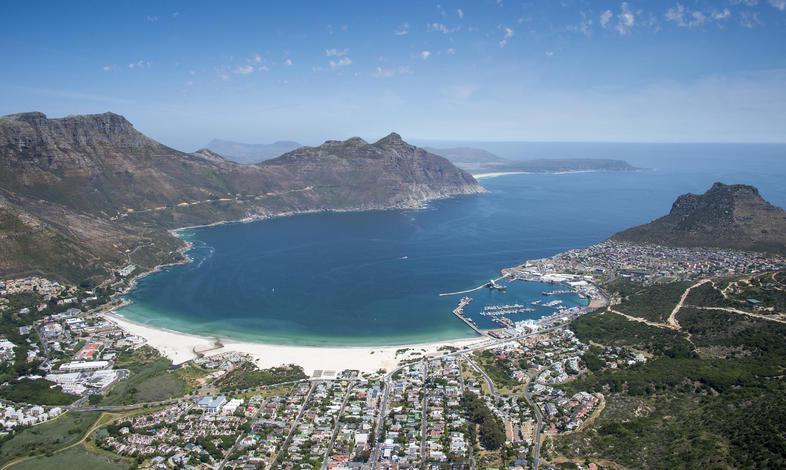
News Small seaside town in South Africa where house prices are increasing by R1 million every year.

Post image
15 Upvotes

House prices in Hout Bay, a seaside town on Cape Town’s Atlantic Seaboard, have surged over the past five years, with the average property price climbing by around 141% as demand for luxury homes accelerates.

The average price has increased from R3.53 million five years ago to approximately R8.5 million, according to property data from Propstats.

The latest average is also up from R5.5 million last year, reflecting a growing number of high-value transactions in the area.

Stephan Cross, manager for Seeff Hout Bay, said the market was performing strongly despite a broader slowdown in property activity, with homes selling at their fastest rate in more than a decade.

Constrained supply has helped support prices, while sellers are increasingly achieving close to their asking prices.

“Almost half of all sellers are achieving close to or even their full asking price, and in some instances above their asking prices,” Cross said.

The shift represents a significant change from five years ago, when sellers typically accepted offers around 10% below their asking prices and properties could remain on the market for as long as 175 days.

Properties are now taking just over a month to sell on average, compared with 78 days last year. Sellers are achieving prices approximately 3.9% below asking, according to Cross.

The composition of sales has also changed considerably. Five years ago, fewer than 2% of property transactions in Hout Bay exceeded R10 million.

This year, approximately 22% of sales have been above that level, with several transactions exceeding R20 million, particularly in gated estates.

Only around 40% of sales are now below R5 million, with these transactions largely involving apartments and sectional-title properties. Recently, properties have sold for R12.995 million, including VAT, R11.5 million and R11 million. 

Gated estates have become a major attraction for affluent buyers. Ruyterplaats has a median property price of R18.75 million, with several homes selling for more than R20 million over the past two years.

Kenrock has a median price of R17.9 million, with transactions increasingly ranging from above R10 million to more than R20 million.

https://businesstech.co.za/news/property/880232/small-seaside-town-in-south-africa-where-house-prices-are-increasing-by-r1-million-every-year/


r/LekkerSA • • 9h ago

Nature The beautiful Blue Crane: South Africa’s National Bird

Thumbnail
gallery
5 Upvotes

The blue crane (Grus paradisea), also known as the Stanley crane or paradise crane, is the national bird of South Africa and one of the country’s most recognisable bird species. It is found almost exclusively in southern Africa, with the majority of its population concentrated in South Africa and a small, isolated population in northern Namibia. Of the world’s 15 crane species, the blue crane has the most restricted geographical distribution. It is currently classified as Vulnerable on the IUCN Red List.

Adult blue cranes stand approximately 100 to 120 centimetres tall, weigh between 3.6 and 6.2 kilograms, and have a wingspan reaching two metres. Their plumage is predominantly pale blue-grey, with darker colouring around the head and neck. One of their most distinctive features is their elongated wing feathers, which trail towards the ground and are often mistaken for tail feathers. Unlike many other crane species, blue cranes have relatively large heads and slender necks.

The species primarily inhabits open grasslands, agricultural fields, and dry upland areas. Although cranes are commonly associated with wetlands, blue cranes spend much of their time feeding in relatively dry environments. Their diet consists of grasses, seeds, sedges, insects, and small animals, including frogs, lizards, snails, and occasionally snakes. Some populations move between higher and lower elevations seasonally, particularly during winter.

Blue cranes are known for their elaborate courtship displays, which involve jumping, running in circles, spreading their wings, and tossing objects into the air. Breeding generally takes place between October and March, with females typically laying two eggs. Both parents participate in incubation, which lasts approximately 30 days. The chicks can walk within a few days of hatching and generally develop the ability to fly after three to five months. Adults are also highly territorial during breeding and may aggressively defend their nests against animals much larger than themselves.

Despite their cultural importance, blue cranes experienced substantial population declines beginning around 1980. The species has disappeared from large portions of its former range, while populations in several northern South African provinces have declined by as much as 90%. Historical estimates placed the remaining population at approximately 26,000 individuals. Major threats include the conversion of natural grasslands into commercial plantations, habitat degradation, deliberate and accidental poisoning, and conflicts with agricultural activities. Conservation efforts have increasingly involved private landowners because much of the species’ remaining habitat occurs on agricultural land.

The blue crane also holds considerable cultural significance in South Africa. Among the Xhosa people, it is known as the indwe, and its feathers were traditionally awarded to individuals who demonstrated exceptional courage or leadership. Crane feathers also featured in the ceremonial attire of Zulu kings and warriors. This association with honour and bravery influenced the naming of the Isitwalandwe award, which recognises outstanding contributions to South Africa’s liberation struggle. Today, the blue crane remains both a national symbol and a conservation priority, with its long-term survival closely connected to the protection and management of South Africa’s remaining grassland habitats.

https://en.wikipedia.org/wiki/Blue_crane


r/LekkerSA • • 23h ago

Nature Blyde River Canyon in Mpumalanga is the third largest canyon on earth. Has anyone been there and how was it?

Thumbnail
gallery
46 Upvotes

The Blyde River Canyon, also known as the Motlatse Canyon, is situated in the Mpumalanga province of South Africa and makes up the northern part of the Drakensberg mountain range. It is approximately 26 kilometers long and averages 800 meters in depth. These measurements make it the third largest canyon in the world, following the Grand Canyon in the United States and the Fish River Canyon in Namibia. The walls of the gorge are primarily composed of red sandstone that has eroded over millions of years.

Unlike the other massive canyons on Earth, this site is considered a green canyon because it is covered in dense subtropical vegetation. This environment is part of the Blyde River Canyon Nature Reserve and supports a wide variety of wildlife. The area provides a habitat for hippos, crocodiles, klipspringers, and all five of South Africa's primate species. The canyon is also known for its birdlife, hosting species such as the African fish eagle, the Cape vulture, and the Narina trogon.

The region is a major feature of the Panorama Route, a public road network that connects several distinct geological landmarks. One of the most prominent formations is the Three Rondavels, which are three large, circular rock peaks shaped by erosion to resemble traditional African roundhouses. Another significant feature is the Kadishi Tufa fall, a unique waterfall where calcium rock deposits have formed a shape resembling a crying face. The local infrastructure supports regular tourism, offering high altitude viewpoints, hiking trails, and boat trips near the Blyde Dam.

https://en.wikipedia.org/wiki/Blyde_River_Canyon


r/LekkerSA • • 21h ago

Nostalgia Remember Simba Tazos?

Post image
26 Upvotes

r/LekkerSA • • 21h ago

News New restaurants launching in the biggest National Park in South Africa.

Post image
12 Upvotes

South African National Parks (SANParks) has announced several new restaurant changes at selected camps in the Kruger National Park.

This comes as part of SANParks efforts to enhance and invest in the tourism facilities and visitor experiences at the national park.

SANParks said that the appointment of the new restaurants comes after a “transparent and competitive” tender process that attracted several popular hospitality brands.

“The appointments coincide with the expiry of the previous concession agreements and form part of SANParks’ commitment to enhancing visitor experiences and maintaining world-class tourism facilities,” SANParks said.

The former Mugg & Bean at Lower Sabie will be reopened as Sabie River Café, while the Wimpy at Pretoriuskop will become Le Lapeng Burgers and Grill. 

Tindlovu Restaurant at Berg-en-Dal will be transformed into Eziko Eatery, and the Cattle Baron at Skukuza will be refurbished to give it a fresh look and feel.

SANParks explained that temporary dining facilities with limited menus will be available during the refurbishment periods to ensure the continuity of service for visitors. 

“SANParks and the respective operators apologise for any inconvenience caused by the upgrades and appreciate visitors’ patience and understanding,” it said.

SANParks said that the new operators will introduce new concepts, investment and energy to selected camps in the park, which should contribute to economic growth, job creation and an enhanced tourism offering.

Below is a table showing the restaurants located within the Kruger National Park at the different camps.

Kruger National Park Restaurants

Camp Restaurant Current Status
Berg-en-Dal Eziko Eatery(formerly Tindlovu Restaurant) Transitioning / under refurbishment (temporary facilities with limited menus available during upgrade)
Lower Sabie Sabie River Café (formerly Mugg & Bean) Transitioning / under refurbishment (temporary facilities with limited menus available during upgrade)
Pretoriuskop Le Lapeng Burgers and Grill (formerly Wimpy) Transitioning / under refurbishment (temporary facilities with limited menus available during upgrade)
Skukuza Cattle Baron Grill & Bistro Undergoing refurbishment to give it a fresh look and feel
Skukuza Kruger Station Precinct:• 3638 Family Restaurant• Round in 9 Bar• En Route (Ice cream & coffee)• Grab ‘N Go (Deli & quick bites) Operating as normal
Letaba Tindlovu Restaurant Operating as normal
Olifants Tindlovu Restaurant Operating as normal
Satara Tindlovu Restaurant Operating as normal
Mopani Mpila Leisure Mopani Operating as normal
Punda Maria Mpila Leisure Punda Maria Operating as normal
Shingwedzi Mpila Leisure Shingwedzi Operating as normal

https://businesstech.co.za/news/lifestyle/879471/new-restaurants-launching-in-the-biggest-national-park-in-south-africa/


r/LekkerSA • • 16h ago

News Be careful guys: Warning for people using WhatsApp in South Africa.

Post image
3 Upvotes

Recent cases have emerged in which cybercriminals have taken over WhatsApp accounts and contacted users’ contacts to request money.

Cybersecurity expert Boikokobetso Makhetlane told Cape Talk that there are numerous ways for cybercriminals to “hack” users’ accounts and get access to their information.

The first method Makhetlane describes is SIM card jacking, which is when cybercriminals take over a person’s SIM card, “think of it as SIM swap,” he explained.

This method, as he describes it, involves criminals performing a SIM swap without the user’s knowledge. 

He said that the criminals may also send the user a code to verify, or even call the user, posing as a service provider and asking for verification details.

He noted that by posing as a service provider, criminals inform the user about suspicious activity on their phone or SIM card and request additional information for verification.

Makhetlane highlighted that simply having a person’s cellphone number allows cybercriminals to commit many scams.

He explained that these criminals often send messages to family members, work colleagues, or friends of the original cellphone number’s owner, posing as that person to obtain money.

Makhetlane warned that sensitive information shared via WhatsApp can easily be compromised by scammers or cybercriminals.

This can pose a huge risk to the protection of information such as banking or credit card details, passwords, and the residential addresses of friends and family. 

A potential warning sign of a scammer taking over a WhatsApp account is a cellphone suddenly losing mobile network connection, or WhatsApp sending a notification that a user’s cellphone number is registered on another device.

“If you do see that, immediately contact your network service provider as soon as possible to verify that everything is still intact because you need to double-check everything,” said Makhetlane.

Makhetlane noted that cybersecurity experts have increasingly discovered that scammers are sending links to individuals, which, if opened, serve as direct entry points for them to take over a person’s WhatsApp account.

Experts have urged WhatsApp users to enable two-factor authentication and to constantly monitor which devices are connected to their accounts.

https://businesstech.co.za/news/telecommunications/880136/warning-for-people-using-whatsapp-in-south-africa/


r/LekkerSA • • 23h ago

Food The delicious Waterblommetjie & Lamb potjie or stew is a classic in the Overberg region where I grew up.

Post image
13 Upvotes

I grew up in the Overberg region, where Waterblommetjie is common. It grows in some of the local farm dams, and it makes the most delicious potjie and stew when combined with lamb. Is this dish known in other regions too, and has anyone here tried this before? If not, do yourself a favour!

Here is the recipe:

https://drizzleanddip.com/2021/07/29/the-springboks-lions-get-tasty-with-boschendal-wines/


r/LekkerSA • • 22h ago

History Throwback to the Formula 1 Grand Prix at the Kyalami circuit in Midrand, 1993.

Thumbnail
gallery
6 Upvotes

The 1993 South African Grand Prix was a Formula One motor race held at the Kyalami circuit in Midrand, South Africa, on 14 March 1993. It served as the first round of the 1993 Formula One World Championship. The event was contested over 72 laps on the permanent racing facility. It also marked the final time that the South African Grand Prix was held as a part of the Formula One calendar.

The event was highly anticipated due to the return of Alain Prost, who had taken a sabbatical during the previous season. He entered the race driving for the Williams team alongside his teammate Damon Hill. Because the reigning champion Nigel Mansell had left the sport for American racing, Williams could not use the traditional number one on their vehicles. This resulted in the team utilizing the number zero for the first time since the 1973 United States Grand Prix.

During the qualifying sessions, Alain Prost demonstrated the speed of his vehicle by securing pole position. Ayrton Senna qualified second in his McLaren, and Michael Schumacher took the third starting position for Benetton. The race weekend experienced challenging weather, featuring very hot and humid conditions along with heavy thunderstorms. Despite these environmental difficulties, the top drivers managed to set highly competitive lap times.

At the start of the race, Ayrton Senna jumped ahead to take the lead while Alain Prost dropped down to third place. Prost successfully overtook Michael Schumacher on lap 13 and immediately began to chase down Senna. Following a failed attempt earlier, Prost finally passed Senna for the lead on lap 25 by diving to the inside line. Later in the event, Schumacher attempted to pass Senna for second place, which led to a minor collision that forced Schumacher to retire from the Grand Prix.

Alain Prost controlled the remainder of the race and crossed the finish line to win by a margin of over a minute. Ayrton Senna successfully held on to finish in second place. Mark Blundell secured third place for the Ligier team, taking the final spot on the podium after other drivers spun out. The remaining points positions were claimed by Christian Fittipaldi in fourth, JJ Lehto in fifth, and Gerhard Berger in sixth.

https://en.wikipedia.org/wiki/1993_South_African_Grand_Prix


r/LekkerSA • • 22h ago

News Good news about BEE, NHI, and land expropriation laws in South Africa.

Post image
3 Upvotes

The head of one of the nation’s biggest wealth and money-management firms says court rulings and challenges to some of South Africa’s most contested laws are good for South Africa. 

“There are over 50 challenges to various bits of legislation,” PSG Chief Executive Officer Francois Gouws said in an interview on Thursday. He added that this is good news and could improve business sentiment after years of policy uncertainty.

“It’s good that we’re getting clarity,” he said, adding that “the more these decisions are communicated, the more people can understand what the landscape looks like. That helps people to gain confidence.”

Last month, the Constitutional Court struck down a law that would have expanded mandatory preferential-procurement rules, including reserving some state contracts for Black-owned businesses. 

The court found lawmakers had failed to adequately consult the public before passing the legislation. 

The National Health Insurance Act — which critics say is unaffordable — also faces multiple constitutional challenges, with President Cyril Ramaphosa delaying its introduction in February because of litigation.

A legacy of corruption and mismanagement under Ramaphosa’s predecessor, Jacob Zuma, still dogs an economy that’s expanded less than 1% annually for more than a decade. 

Companies have consequently been reluctant to invest, with gross fixed capital formation at about 14% of gross domestic product in 2025, less than half the 30% target set out in a policy plan with a deadline of 2030, the president said in August.

The nation’s expropriation law — which gives the government the power to take land or property for a public purpose such as to build roads or schools, or in the public interest — was published in January last year but has yet to take effect as it’s been tested in court.

The legislation provoked US President Donald Trump to halt aid to South Africa after he claimed the government was seizing the land of White farmers. 

While the state hasn’t taken any properties without compensation since the end of apartheid in 1994, unlawful occupation of private and state-owned land remains widespread. 

Official data show that about 12% of households are situated in informal settlements.

Gouws expects municipal elections on 4 November will give voters a chance to reassess how cities and towns are managed. 

The president, in February, acknowledged that scores of municipalities were deeply dysfunctional and unable to provide basic services such as water and power consistently.

“It is an opportunity for the country to reset and for us to reevaluate our position,” Gouws said.

The African National Congress, the party of Nelson Mandela, lost its parliamentary majority in the 2024 general election for the first time since the end of White-minority rule 30 years earlier. 

It has since governed at the national level in a coalition with smaller rivals and the Democratic Alliance, the second-largest group. South Africa’s next national elections are due to be held in 2029.

https://businesstech.co.za/news/business-opinion/880098/good-news-about-bee-nhi-and-land-expropriation-laws-in-south-africa/


r/LekkerSA • • 23h ago

Food A Cremora Tart recipe to try out this weekend. A personal favorite of mine.

Post image
5 Upvotes

When it comes to international desserts, the Cremora tart from South Africa stands out for its simplicity. Unlike other desserts that require a lengthy list of ingredients, the Cremora tart calls for just a few essentials: powdered coffee creamer, condensed milk, and lemon juice for the filling, and Tennis brand biscuits for the crust. Remarkably, these few ingredients transform into a cheesecake-like dessert with minimal effort.

In the 1980s, an ad featuring Cremora, a powdered coffee creamer, aired in South Africa. The idea for this no-bake cheesecake followed, and now the dessert is commonly served at social gatherings or as a standard, everyday sweet treat. Nestle Cremora is hard to find in the United States, so I’m using Nestle Coffee-mate instead (they are essentially the same product). As for the Tennis biscuits, they’re difficult if not impossible to find locally, so I bought some online. However, graham crackers should also work well.

Cremora Tart

A no-bake cheesecake using powdered coffee creamer, condensed milk and lemon juice for the cream cheese-like filling, and biscuits for the crust. 

  • Prep Time 15 mins
  • Chill Time 1 hr
  • Total Time 1 hr 15 mins
  • Course Coffee Break, Dessert
  • Cuisine South African

Equipment

  • 1 Ziploc storage bag to crush biscuits, or use rolling pin
  • 1 Large mixing bowl
  • 1 round push-pan

Ingredients  

Crust

  • 1 pkg biscuits Tennis brand, or similar
  • 4 tbsp butter, melted 55 g

Tart filling

  • 2 cups non-dairy coffee creamer powdered, 250g 
  • ½ cup water 125mL 
  • 1 can condensed milk
  • ½ cup lemon juice preferably fresh, 125mL 

Instructions 

  • Add the entire package of biscuits to a zipper bag, close it, and crush it with a rolling pin. Alternatively, you can pulse them in a food processor. If you prefer not to make a crumb crust, lay whole Tennis biscuits in an even layer on the bottom of a square pan. For this option, you will not need the entire package.
  • Transfer the crumbs to a bowl, pour the melted butter over the crumbs, and stir until well combined.
  • Pour your crust mixture into a pan. Since I wanted a taller tart, I used a push-up pan with a small diameter.
  • Use a measuring cup or glass to press the crust mixture into the bottom of your pan.
  • Place the crust in the refrigerator to chill while you make the filling.
  • In a large bowl, add the Cremora or another non-dairy creamer and cold water. Whisk to work out as many lumps as possible. It will look quite dry at first. Alternatively, you can use an electric mixer.
  • Follow with the condensed milk, then slowly pour in the lemon juice as you stir. Continue to stir until you see the texture change. It should thicken into a batter with a smooth, creamy consistency.
  • Pour the filling over the crust and smooth out the top.
  • Cover and refrigerate for at least 1 hour, but overnight is best. (You want to give the filling maximum time to set up.)
  • Remove from the pan. If you are using a push pan, push the bottom upward to remove the tart.
  • Slice and serve.

https://www.emmymade.com/cremora-tart/


r/LekkerSA • • 23h ago

Nature The father and son team rescuing and relocating wild honeybees in Cape Town 🐝

Thumbnail
gallery
5 Upvotes

Although the Cape honey bee is classified as “not threatened”, these chief pollinators are facing growing pressure in the sprawling South African city of Cape Town.

But in 2018, a father-and-son team, Lourens and Dylan Kruger, formed the Cape Honeybee Conservancy dedicated to rescuing and relocating them.

Since then, they have moved over 250 wild bee colonies from ceilings, houses, walls, trees, and other urban nooks and crannies.

Recently, they rescued about 40,000 wild honeybees who had made their home in a cement garden feature.

A local bee specialist says there are likely millions of colonies in the greater Cape Town area.

Louren Kruger explains why in some cases, wild bee colonies in urban areas are considered problematic.

“They would move into a house, into a vent for instance, and people might have little children and they’re afraid," he says.

"People are inherently afraid of being stung, their children being stung, their animals."

Bee specialist Mike Allsopp says there are as many as millions of wild bee colonies within the greater Cape Town area, most of which do not cause harm.

"There are bees everywhere: wild colonies that come in and move in and then they move out. And for the most part they exist perfectly peacefully, people don’t even know where they are," he says.

"Occasionally you get really big ones that are in a roof or under the floorboards, and they can get really large and problematic.”

Cape honeybees are native to the region and play a key role in pollinating both agricultural crops and indigenous plants and help sustain the Western Cape's remarkable biodiversity.

Before the rescued honeybees can start a new life in a safe rural area, the wild colony needs to be transferred to a beehive.

Fortunately, there is also a lot of farms in the Cape, many of whom are happy to offer the bees a new home.

The team has set up six bee conservancies on farms, including Radford Dale organic wine farm in Elgin which is about an hour and a half drive out of the city.

It already has nine beehives, home to bees translocated from urban areas, which produce honey that is sold by Kruger.

“We grow the grapes organically, we make organic wines, so that limits us a little bit in terms of what we can and cannot do,” says Jeanne Joubert, marketing manager at the wine estate.

“But, it also creates quite an inviting environment for certain bugs to thrive in. Vineyards do not necessarily need bees to be pollinated, but it becomes a very important part of the ecosystem of farming in general,” she says.

Although not essential for vineyards, the relocated bees help support biodiversity in general by pollinating wildflowers and other plants necessary for a thriving ecosystem.

So, the initiative is helping protect residents while preserving the native bees that play a vital role in the region’s unique biodiversity.

https://www.africanews.com/2026/10/16/south-africa-rescuing-and-relocating-wild-honeybees-in-cape-town/


r/LekkerSA • • 23h ago

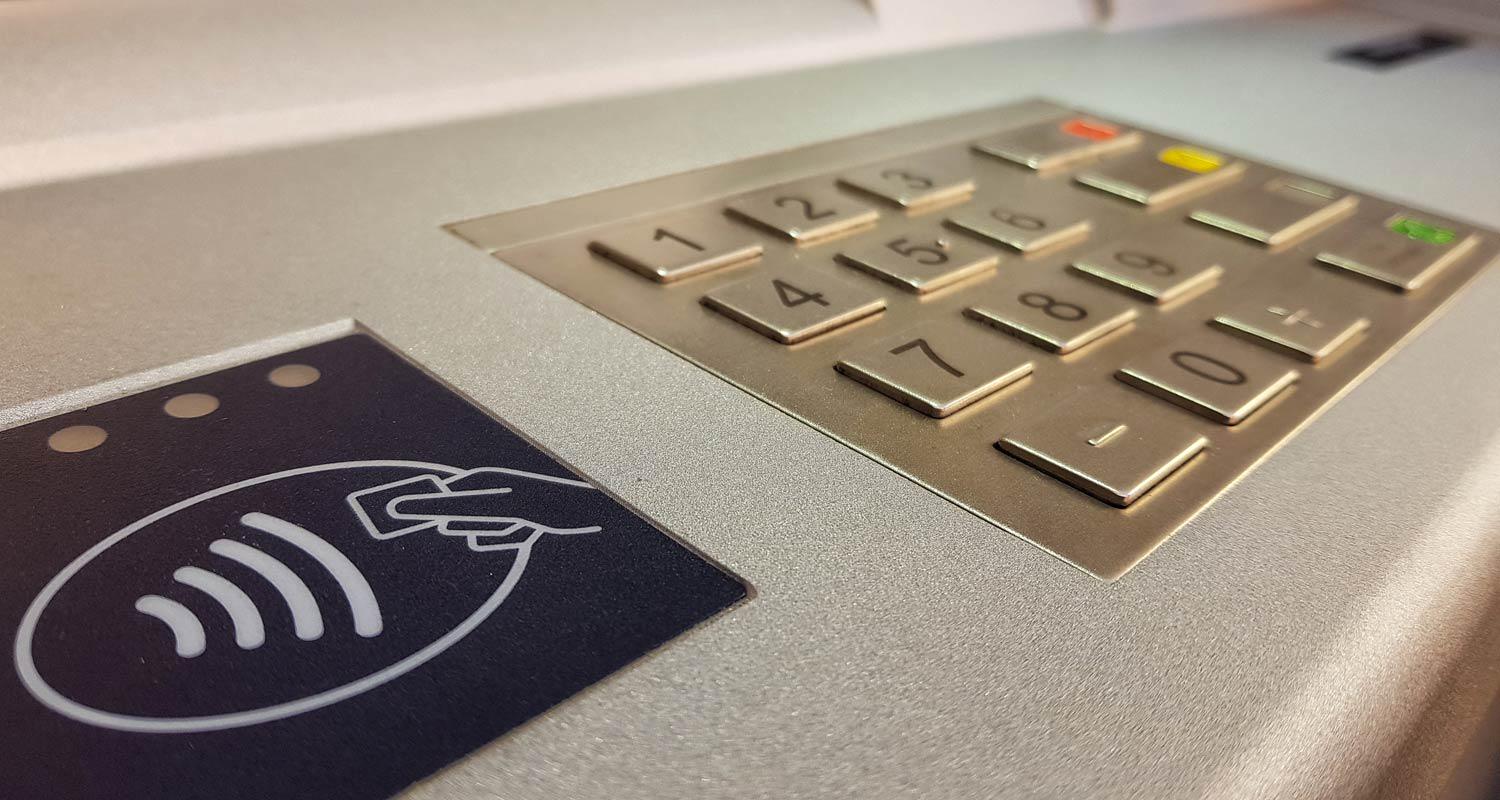
News South Africa’s ATM network faces its biggest overhaul in decades.

Post image
6 Upvotes

The Reserve Bank wants all of South Africa's ATMs unbranded, with small transactions free of charge.

The Reserve Bank will start piloting white-labelled ATMs in January, the first step in a plan to turn all of South Africa’s more than 30 000 machines into a shared, unbranded network where transactions below a set threshold are free.

To get there, the central bank intends to establish a national cash utility by March 2027 and to start bringing cash centres run by the likes of SBV and Fidelity into the Reserve Bank by the middle of that year, senior officials said at a media briefing on Friday.

“We are asking banks to white-label all ATMs,” said Pradeep Maharaj, executive director of the Reserve Bank’s Payments Ecosystem Modernisation (PEM) programme. “It will be a robust conversation, in continued collaboration with the banks, but that is our thinking.”

We are asking banks to white-label all ATMs. It will be a robust conversation…

The central bank set out its plans earlier this year in a position paper, Towards a Cash Smart Society. The banks have since come back with alternative models, Maharaj said, and the Reserve Bank has undertaken to return to them in November, with a view to rolling out next year. “We will arrive at a final solution that works for the country.

“Our requirement is that all ATMs should allow deposits, withdrawals and balance enquiries and, below a certain amount, transactions must be free,” he said.

That would be a big change. About 9 200 of the country’s roughly 30 600 ATMs are run by independent deployers that do not accept cash deposits, according to the Reserve Bank’s cost of cash study, which used 2024 data. Maharaj also took aim at what he called the “disloyalty fee”, charged when a customer’s own bank’s ATM is out of order.

The timeline

The timeline set out at the briefing:

  • November 2026: The Reserve Bank responds to the banks’ alternative ATM models, and the standardised QR+ payment code is due
  • January 2027: The white-label ATM pilot begins
  • March 2027: The national cash utility is established
  • Mid-2027: Cash centres start moving into the Reserve Bank
  • End of 2027: The first batch of white-label ATMs is deployed, in a phased roll-out.

Maharaj presented the overhaul as a fix for unequal access rather than a war on cash. There are more ATMs in Sandton City than in neighbouring Alexandra township.

“Cash is a public good and core to inclusivity,” he said. The Reserve Bank is not trying to build a cashless society, he added: “That does not exist and will not exist.” Countries that had tried had failed. Cash still accounts for 56% of consumer transactions by volume, according to the cost of cash study.

Arif Ismail, head of the central bank’s national payment system department, said there is about R180-billion in cash in the system, and that it costs about R90-billion/year to manage. The cost of cash study puts the annual economic cost at R88.5-billion, or about 1.2% of GDP, and finds that the poorest pay the most: consumers earning up to R1 250/month spend about 5% of their income on cash-related costs, against 1% for those earning R20 000 or more.

The economics are turning against the current model. As digital payments grow, the vaults, vehicles and ATMs that move cash cost the same to run but are spread over fewer transactions, the Reserve Bank argues. Branches and ATMs in less profitable rural and low-income areas close first, leaving “cash deserts” where the people most reliant on cash travel further and pay more for it.

Maharaj said the cost of cash would have to fall by at least 30% just for the system to stand still. If ATMs stay as they are, they will only get more expensive, he argued, whereas under the Reserve Bank’s model the unit cost of cash comes down.

The utility would pool cash centres into a single shared platform with one cash management system, so that the same notes are moved, counted and checked fewer times, and would place shared, unbranded ATMs where access is needed. Today each bank and cash-in-transit company runs its own cash centres, vehicles and routes.

Wholesale cash handling and transportation is dominated by a small number of providers

There is a resilience argument, too. Wholesale cash handling and transportation is “dominated by a small number of providers”, the Reserve Bank’s position paper notes, and “the departure or insolvency of a major cash logistics provider could therefore severely disrupt nationwide cash distribution”.

Unlike PayInc, the former BankservAfrica in which the Reserve Bank took a 50% stake last November, with the banks holding the rest, the national cash utility will be wholly owned by the central bank, Maharaj said. A Reserve Bank presentation on its cash strategy, delivered in Johannesburg in May, suggested that industry participants could gain “governance participation and ownership interests” in the utility, so the final structure may yet shift.

The same playbook for digital

The cash plan mirrors the Reserve Bank’s approach to digital payments, where it wants PayInc to become a national payments utility with equal access for all. Until now, Maharaj said, PayInc acted mostly for its shareholders rather than in the national interest.

With PayShap, he said, the banks built a world-class system, but then gave themselves the power to set the rules, implemented it differently and imposed clashing limits. “It is not a uniform experience, that is the problem.” Transactions below a certain level should be free, he said, and the standardised QR+ code should let even a car guard accept digital payments without fees.

PayShap handles about 60 million transactions a month, Ismail said, and the target is 500 million a month by 2029. He blamed the shortfall on four Ps: parity, pricing, promotion and perimeter, the last referring to where PayShap can be used.

The briefing also confirmed that the National Payment System Bill, released for comment in September, will provide a new authorisation framework that lets non-banks perform, initially, seven payment activities on their own, from issuing e-money and acquiring merchants to payment initiation, starting in the middle of next year.

Maharaj insisted the banks are not the target. “Banks are doing a great job, and will continue to do so,” he said. “Our idea is simply to open access and to let entrepreneurs be able to serve sections of the economy that have been underserved by traditional banking.”  – © 2026 NewsCentral Media

https://techcentral.co.za/reserve-bank-white-label-atms/287382/


r/LekkerSA • • 23h ago

News Big improvement to the petrol price outlook in South Africa.

Post image
3 Upvotes

The projected petrol and diesel price under-recoveries for November have declined sharply, translating into a much smaller price hike for motorists.

At the start of October, the Central Energy Fund (CEF) warned that South Africa was on track for a R4.57-per-litre petrol price increase, while diesel was facing a hike of up to R2.91 per litre.

Thankfully, these estimates have been on a downward trajectory ever since, with the latest data showing that the under-recoveries for both fuels have more than halved.

Petrol is now expected to increase by R2.06 per litre, while diesel is looking at a R1.38-per-litre hike.

However, while it is a considerable improvement, the fact of the matter is that motorists are still likely to pay more next month.

This is concerning given that fuel prices have already crossed the R30-per-litre mark, pushing South Africa’s pump prices to record highs.

These are the CEF’s latest fuel price adjustment predictions at the end of the third week of October:

  • Petrol 93 – increase of R2.07 per litre
  • Petrol 95 – increase of R2.06 per litre
  • Diesel 0.05% (wholesale) – increase of R1.32 per litre
  • Diesel 0.005% (wholesale) – increase of R1.38 per litre

Brent Crude oil is currently trading at $105 per barrel due to growing uncertainty about a recovery in physical flows from the Persian Gulf this week.

US Central Command confirmed on Thursday that a container ship that sank in the Strait of Hormuz this week was struck by an Iranian projectile.

International Energy Agency member nations pledged to complete the release of the remaining 100 million barrels from an intervention in March after lobbying from US officials, reported Bloomberg.

The war between Iran and the US shows no signs of being resolved in the near future, with US President Donald Trump declining to rule out the possibility of using “the Mother of all Bombs” on the Islamic Republic after the elections.

However, while a ship sank in the strait after being hit by an Iranian projectile, more than 40 vessels passed through the maritime channel in the last 24 hours, suggesting energy flows are continuing.

The end result of this tumultuous situation is that South Africa is set for a 166c under-recovery in the Basic Fuel Price (BFP) of petrol next month.

Unfortunately, the exchange rate is only making matters worse. The rand has fallen to R16.53 per US dollar, leading to a 40c per litre under-recovery in the BFP of petrol.

The following table shows how fuel prices will be affected in November, based on the current projections:

Fuel Type October fuel price Projected change Expected fuel price for November
Petrol 93 R29.88 + R2.07 R31.95
Petrol 95 R30.25 + R2.06 R32.31
Diesel 0.05% (wholesale) R31.95 + R1.32  R33.27
Diesel 0.005% (wholesale) R33.29 + R1.38  R34.67

https://topauto.co.za/news/166579/big-improvement-for-petrol-prices-in-south-africa/


r/LekkerSA • • 2d ago

History The story of Max, the South African gorilla who became a hero after cornering a criminal.

Thumbnail
gallery
34 Upvotes

Max was a western lowland gorilla born at the Frankfurt Zoo in Germany on March 6, 1971. He was transferred to the Johannesburg Zoo in South Africa in 1972, where he lived a mostly normal zoo life with his mate, Lisa. By 1997, he weighed around 180 kilograms and was just a regular, massive silverback going about his daily routine.

The situation took a bizarre turn on July 18, 1997. A man named Isaac Mofokeng was fleeing from the South African police. He was wanted for a string of serious crimes in the area, including housebreaking and rape. Trying to escape the pursuing officers, Mofokeng scaled a wall and jumped into the defensive moat of the primate enclosure, putting himself face to face with a highly territorial silverback.

Max immediately stepped up to protect his enclosure and his mate. He cornered the intruder and pinned him down. During the struggle, Mofokeng pulled out a .38 caliber revolver and shot the gorilla in the chest and neck. Despite being wounded twice, Max did not back off and retaliated by biting Mofokeng severely. Three police officers then barrelled into the enclosure to make the arrest, but an enraged Max injured all three of them during the ensuing chaos.

The violent scene ended when Mofokeng was shot in the groin by the police and Max was subdued with a tranquilizer dart by zoo staff. Because of his severe gunshot wounds, Max was rushed to Milpark Hospital, which is a human trauma center. Surgeons operated on him and he made a full recovery. He returned to the zoo and lived peacefully for another seven years, passing away from heart failure in his sleep on May 5, 2004, at the age of 33.

Mofokeng faced severe legal consequences for his actions. He was convicted of rape, robbery, and malicious damage to property for shooting the gorilla. The magistrate sentenced him to 40 years in prison, with five of those years specifically handed down for his attack on Max. Mofokeng died in 2005 while he was a patient at Weskoppies Psychiatric Hospital after reportedly swallowing pills. Today, a bronze statue of Max stands at the Johannesburg Zoo to document the bizarre history of a captive gorilla who took down a fleeing fugitive.

https://en.wikipedia.org/wiki/Max_(gorilla))


r/LekkerSA • • 2d ago

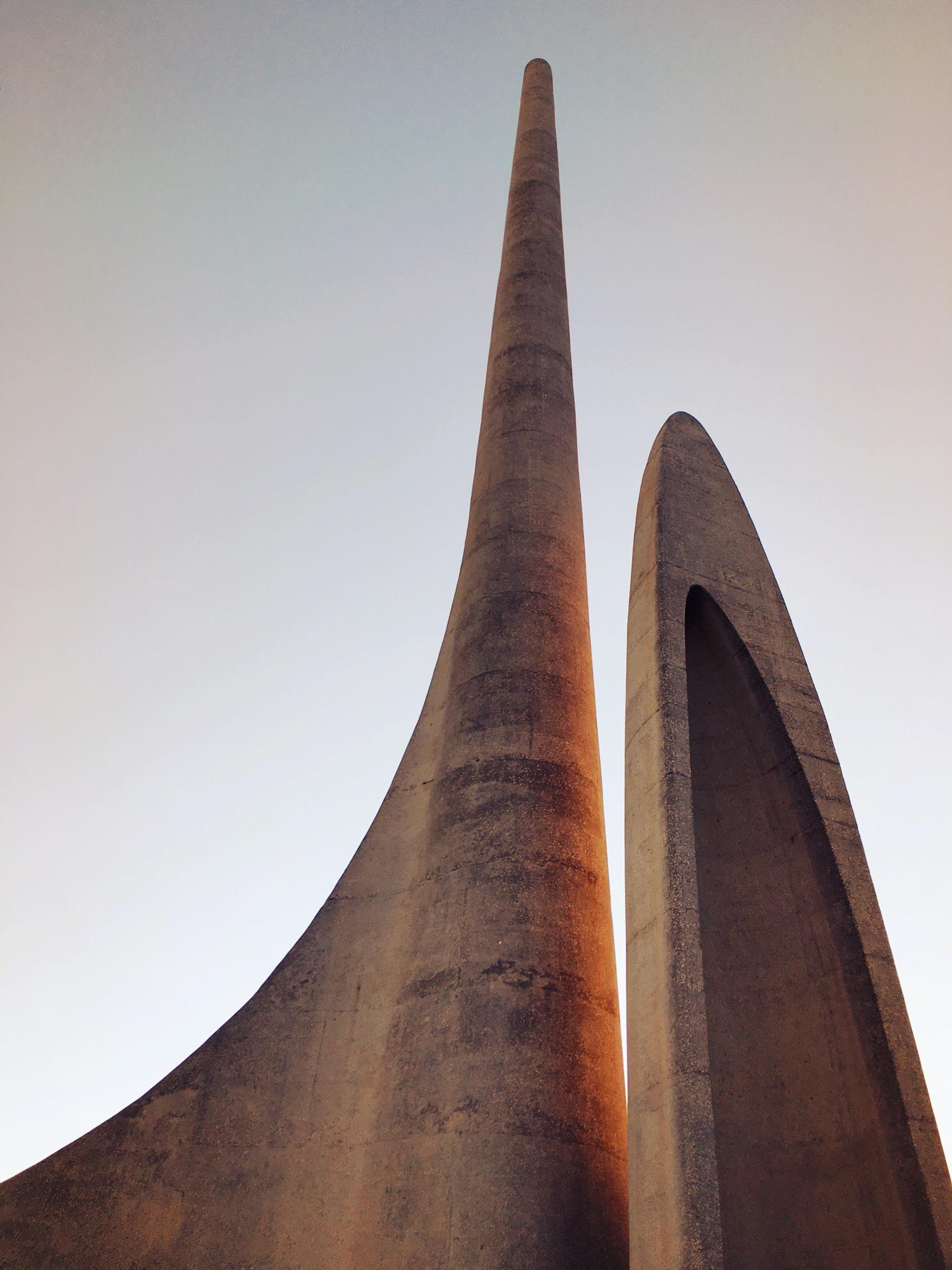
Photo A photo I took 10 years ago of the Taalmonument in Paarl.

Post image
26 Upvotes

The Afrikaans Language Monument is located on a hill overlooking Paarl, Western Cape Province, South Africa. Officially opened on 10 October 1975, it commemorates the semicentenary of Afrikaans being declared an official language of South Africa separate from Dutch.

https://taalmuseum.co.za/en/home/


r/LekkerSA • • 2d ago

News 5 kayakers rescued after getting lost in dense fog off Cape Town coast.

Post image
24 Upvotes

Five paddlers were safely brought ashore after becoming disoriented in dense fog off the coast of Cape Town in a rescue operation on Tuesday, 13 October. The incident unfolded offshore of Three Anchor Bay, where a group consisting of two local women and three German male tourists found themselves struggling to navigate their way back to shore.

Dean Wegerle, the NSRI regional operations manager, revealed that at 08:50, the National Sea Rescue Institute (NSRI) received an emergency alert via the NSRI SafeTRX app from a solo paddler on one of the kayaks. This prompted the immediate activation of NSRI Table Bay and NSRI Bakoven duty crews.

As NSRI’s Emergency Operations Centre investigated the situation, it was determined that the 5 paddlers two women aged 60 and 59 and three men aged 35, 26, and 21 had launched from the slipway at Three Anchor Bay but became disoriented after launching into the thick fog enveloping the area.

‘In dense fog, they became adrift without a clear sense of direction,’ said NSRI spokesperson Craig Lambinon.

‘Although only one of the three sea-kayaks was utilising the NSRI SafeTRX app, it was instrumental in tracking their whereabouts as it indicated they were drifting towards Bantry Bay.’

After making contact with the lead kayaker, it was confirmed that the group was remaining together but was uncertain of their position relative to the land. This led to the immediate mobilisation of the NSRI rescue craft, Colorpress Rescuer, which was launched while crew members remained on alert.

Meanwhile, members of Atlantic Adventures, a local kayaking company, were in the area and had postponed clients’ kayaking due to the hazardous conditions.

Upon spotting three kayakers offshore of Granger Bay, they quickly stepped in to assist by launching their safety support craft, which successfully reached the kayakers, confirming they were not the group that raised the alarm. Those three kayakers safely returned to shore with the help of Atlantic Adventures’ crew.

As the NSRI rescue craft navigated through the fog, they located the disoriented group approximately 1.3 nautical miles offshore of Clifton. The rescue operation resulted in the five paddlers being brought safely onboard, where they were treated for mild hypothermia before their sea-kayaks were recovered.

NSRI Table Bay dispatched a rescue vehicle to the Oceana Power Boat Club (OPBC) to await their arrival.

‘All five were in good spirits and did not require further assistance, so we provided them with a lift back to their vehicles at Three Anchor Bay,’ said Lambinon.

‘This incident underscores the importance of safety measures while paddling; we strongly encourage all kayakers to download and utilise the NSRI SafeTRX smartphone app before heading out.’