r/CaughtMyEye • • 2d ago

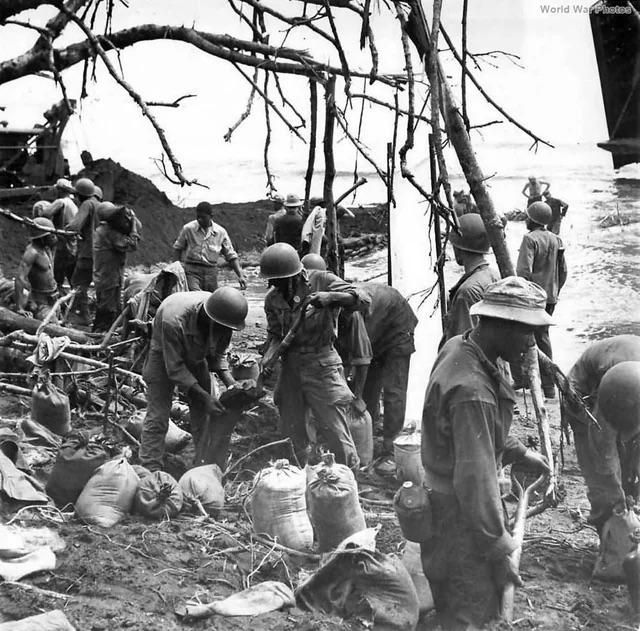
In 1942 Australia, African American Soldiers of the 96th Engineer Battalion Mutinied and Killed Their White Commanding Officer Over Racist Abuse. The Incident was Covered Up For 70 Years.
Post image
845 Upvotes

62 comments sorted by

31

u/TaintOfDestiny 2d ago

Apparently white American soldiers, serving in Australia and the UK, got upset that black American soldiers were treated the same as them and allowed into the same bars/restaurants/etc…

8

u/Occasion-Mental 2d ago

Doubt that. We were an even more racist country back then, and Queensland was no exception...you could be arrested for providing an aboriginal with alcohol.

Can't recall where I read it, but aus authorities wanted the black soldiers from the US located as far away as possible from the cities so white Australians would not be confronted by seeing them.

8

u/Western-Radish 1d ago

So, I'm not Australian, but I heard about this from a History podcast.

Apparently, Black American was totally fine in Australia. They were seen as American first.
But, they still hated aboriginals.

It was weird, but the Americans, even the black Americans made really good money, and got rations in things that were sometimes scarce in Australia at the time.

It was weird, even the podcast hosts commented how weird it was that Australians in a sundown town for Aboriginal Australians, were so cool with black Americans

2

u/Capital-Self-3969 1d ago

No, that wasnt the case.

1

u/HarryLewisPot 1d ago

It was weird

1

u/tuan_kaki 18h ago

One is seen as transient and the other not. Not that weird.

3

u/AnalystWeekly5817 1d ago

Sheesh cobber I’m a kiwi and I learned this at school (there’s even a kiwi story of this happening that I’ve included at the end). One event was called the battle of Brisbane. 

Overall it was a bit of both tho, support annd racism. Ai summary and direct links to sources follows.

There is considerable historical evidence that African-American servicemen experienced both racism and support from ordinary Australians during WWII. Some Australians actively objected to American military segregation, while others participated in racial discrimination. The following academic research, historical archives and firsthand accounts document these experiences.

  1. Brawley and Dixon (2002) — Peer-reviewed research Using US Army censorship reports and African-American servicemen’s own accounts, the authors found that Black Americans encountered discrimination in Australia, sometimes encouraged by white American soldiers. However, many also found ordinary Australians surprisingly welcoming and racially tolerant compared with their experiences of American segregation.

Brawley, S., & Dixon, C. (2002). Jim Crow Downunder? African American encounters with White Australia, 1942–1945. Pacific Historical Review, 71 (4), 607–632.

https://doi.org/10.1525/phr.2002.71.4.607

Full paper: https://figshare.com/articles/journal_contribution/Jim_Crow_downunder_African_American_encounters_with_White_Australia_1942-1945/28958897

  1. Saunders and Taylor (1995) — Peer-reviewed research

This study examines the reception of African-American servicemen against the background of Australia’s White Australia policy. It addresses institutional racism, political attitudes and the imposition of segregation. It provides an important counterpoint to evidence of personal friendliness, showing that welcoming individual behaviour did not eliminate broader racial discrimination.

Saunders, K., & Taylor, H. (1995). The reception of Black American servicemen in Australia during World War II: The resilience of “White Australia.” Journal of Black Studies, 25 (3), 331–348.

https://doi.org/10.1177/002193479502500304

  1. Shrine of Remembrance (2022) — Australian historical museum

This account specifically reports that younger, working-class white Australians tended to be more welcoming towards Black American servicemen. It cites an April 1942 report by African-American journalist Davis Lee describing Australian soldiers responding to US military police attempting to exclude Black soldiers from a mixed dance by getting the women to leave. However, it also documents Australian authorities enforcing discriminatory restrictions and segregated facilities.

Shrine of Remembrance. (2022). One Sunday afternoon in Townsville 1942.

https://www.shrine.org.au/one-sunday-afternoon-townsville-1942

  1. Department of Veterans’ Affairs — Australian government history

The government’s account of the Battle of Brisbane documents violent clashes between Australians and Americans in November 1942, together with earlier racial conflict between Black and white American servicemen. It identifies multiple causes, including military policing, differences in pay and privileges, resentment and racial tensions. The riot cannot be attributed exclusively to Australians defending Black soldiers.

Australian Government, Department of Veterans’ Affairs. (2026). Battle of Brisbane riot in World War II.

https://anzacportal.dva.gov.au/wars-and-missions/ww2/homefront/battle-of-brisbane-riot

  1. State Library of Queensland (2024) — Historical archive

The library explicitly identifies segregation and the treatment of African-American soldiers as sources of tension between Australian and American forces. It documents the circumstances of the Battle of Brisbane, in which Australian servicemen and civilians fought American military police.

Anzac Square Memorial Galleries. (2024). Services of USA. State Library of Queensland.

https://www.slq.qld.gov.au/blog/services-usa

  1. Powell (2017) — State Library of Queensland historical research Historian Judith Powell examines the Battle of Brisbane using contemporary police reports, witness statements and other historical records. Her account identifies resentment over American military privileges, treatment by military police and wider Australian-American tensions. It also documents official efforts to restrict reporting of the riots. Powell, J. (2017). Battle of Brisbane. State Library of Queensland. https://www.slq.qld.gov.au/blog/battle-brisbane

  2. Ernest Tyler (2003) — Firsthand Australian serviceman testimony

Australian naval veteran Ernest Tyler recalled that Australian soldiers disliked the treatment of Black American troops by white Americans. In his interview, recorded in October 2003, he explicitly attributes some Australian support for African-American servicemen to objections to American racism. He also recounts allegations of racially motivated mistreatment. These are personal recollections, not independently verified findings, and the interview includes negative racial stereotypes.

Tyler, E. (2003, October 9). Ernest Tyler: Transcript of interview. Australians at War Film Archive, UNSW.

https://australiansatwarfilmarchive.unsw.edu.au/archive/htmlTranscript/1088

  1. New Zealand Ministry for Culture and Heritage — Related historical comparison Similar tensions occurred in New Zealand. The government’s account explains that white American servicemen from the segregated southern United States sometimes objected to eating or drinking alongside Māori people. These attitudes contributed to clashes involving American servicemen and Māori, particularly soldiers.

Manatū Taonga—Ministry for Culture and Heritage. (2023). Americans and Māori. NZ History.

https://nzhistory.govt.nz/war/us-forces-in-new-zealand/americans-and-maori

Conclusion: The historical record does not support portraying all wartime Australians as either racist or racially tolerant. Australia maintained discriminatory racial policies, yet many ordinary Australians welcomed African-American servicemen and some actively opposed their segregation. Brawley and Dixon’s research is particularly important because it incorporates the recorded experiences of Black servicemen themselves. None of these sources establishes what proportion of the Australian population supported racial equality.

0

u/NoDan_1065 17h ago

If you look at the newspapers at the time, many Australians sort of welcomed the black soldiers as they did all American soldiers, as liberators. It certainly helped that the average Australian had the impression that they’d go back to America after the war.

Racial perceptions weren’t as black and white back in the day. Aussies were (and still are) racists but interpersonal relations are funny things.

2

u/zealoSC 12h ago

No one's claiming Queensland is the world leader for anti racist sentiment, but they're a long way ahead of Kentucky

3

u/Nervous-Economy8119 2d ago

Look up the battle of bamber bridge.

8

u/Khan-Khrome 2d ago edited 2d ago

Half the issues with the locals in the UK at least seems to have been the white soldiers attempts to impose an informal colour bar on the black troops in the UK, which the locals didn't like because it was an attempt to impose American law in the UK. Also didn't help that some of the white soldiers came across as cocky, loud, overpaid and arrogant, meanwhile the black troops were deemed more polite had better manners - due to their experiences in the South leaving little room for acting out. The Brits naturally had their own ideas about imperialism, racism and the colonial mission, but it was all a bit abstract and something far off in the colonies to your average punter, so essentially got pushed into favouring the black American soldiers for the simple fact that they seemed nice enough and unlike the white Americans they weren't trying to tell them what to do.

5

u/Quick-Amoeba-1389 2d ago

british like the french dont get any credit for all they did to end slavery

which is really fuckin pathetic considering how big deal the topic is to some

3

u/PreviousZone6742 1d ago

They didn't end it in the US otherwise people would've given them credit for it. People still love Abraham Lincoln for it.

1

u/AdmirableElephant378 1d ago

They tried........

1

u/SenorTactician 21h ago

They were about to back the Confederacy, and sent military observers who were sympathetic to the South

0

u/Mediocre_Daikon6935 1d ago

The French don’t get any credit because they don’t deserve any. 

1

u/ThrownAway1917 2h ago

French Revolution ended slavery in Haiti then Napoleon immediately enforced it again with an invasion 😞

1

u/MrBeer9999 1d ago

Yeah that, and to be cynical, British shopkeepers and landlords who desperately wanted hard currency probably weren't keen on turning away American customers just because their skin wasn't the right colour.

3

u/Flyingkiwi24 1d ago

Similar situation in NZ with the Battle of Manners St when US serviceman tried to stop Māori soldiers using the same pub as them and white NZ and Māori soldiers as well as civilians got stuck into them lol

2

u/Dolmetscher1987 1d ago

It's the military, racist version of the American citizen invoking his US-recognized rights in a country that is not the US. It's genuine r/ShitAmericansSay.

2

u/frupertmgoo 1d ago

Idk in the specifics but in Australia there were segregated bars all the way into the 60s, oh and women weren’t allowed either. Also indigenous people weren’t considered people legally speaking until again, the late 60s,We were definitely not more chill that the Americans regarding race stuff

0

u/ZealousidealNewt6679 1d ago

Yeah Australia loves to glaze over all the racist shit we used to do. Probably why we do so much virtue signalling now, cultural guilt.

2

u/dezdly 16h ago

It’s actually brought up constantly

2

u/Ok_Tie_7564 18h ago

That is untrue. While they may not have been regarded as citizens, they were always regarded as people.

1

u/Illustrious_Cry733 1d ago

In New Zealand we had the Battle of Manners Street, 3 April 1943 - a street brawl because of how racist American troops behaved to Māori.

1

u/LowZebra4435 15h ago

Battle of Manners street, wellington. Very ironic given what it was over.

15

u/Sensitive_Ad_1752 2d ago

May 22nd 1942, the 96th Engineers are station in Townsville Australia. Racism and segregation was still a huge part of the us military, black soldiers were in segregated regiments and endured racially charged abuse from officers. In Australia and Britain, locals were less hostile. Though it did trigger many fights between black and white American soldiers over the black soldiers picking up white Australian girls.

In Townsville, the mutiny was likely triggered by two racist white commanding officers who had killed a man in the battalion. That night, the battalion launched a mutiny, taking over machine guns and firing into the officers tents killing at least one person. A day long siege took place with us and Australian soldiers surrounding the airfield. Eventually the Australians calmed the battalion down and they returned to duties.

So what specifically happened after the mutiny? Was there any punishment for it? I’m genuinely not sure. The mutiny was covered up because Lyndon B Johnson was visiting Australia at the same time. This photo is after the mutiny when the Battalion was stationed in New Guinea so I assume they never removed all 600 from active duty. Maybe the ringleaders of the mutiny were quietly discharged or even executed in secret. Or because it was such a large mutiny, they couldnt punish everyone and instead blamed their commanders for it.

https://www.abc.net.au/news/2012-02-10/historian-reveals-details-on-townsville-mutiny/3821906

https://www.brisbanetimes.com.au/national/queensland/machine-gun-mutiny-in-townsville-20120210-1sh3b.html

7

u/SwampScholar_ 2d ago

So what I know about this is that Captain Francis Williams of Georgia, was the primary target. He survived by hiding in a ditch when everything broke out at around 2am. According to military reports the mutiny/revolt only lasted about 20 minutes. Once black soldiers stood down, Captain Williams and several black soldiers (who I assume were the ring leaders) were all supposed to be court-martial. However, further investigating found that all the mutineers chargers were dropped. Most directly due to no other soldier would testify against them. They were sent back to the 96th and went on to fight in New Guinea. Captain Williams, another officer (couldn’t find the name), and 10 NCOs were brought up on charges and to be court-martial for failing to suppress the uprising and also the mistreatment of black soldiers that had been reported and substantiated by evidence. Now this is where things get weird. Major General Julian Barnes held a staff conference at which officials decided to suspend the proceedings of court martial (held in abeyance) because most of the accused (ncos) were participating in operations in New Guinea. However, Captain Williams was removed from command after the May 22 mutiny. Finally, their is no evidence I can find that suggests those court-martial proceedings ever went beyond those initial charges.

5

u/BigDaddyButtPlunger 2d ago

it was 1942, someone was held accountable for that mutiny and it wasn't a white person.

1

u/Mediocre_Daikon6935 1d ago

Wrong.

The only one that faced charges was the commanding officer

2

u/BigDaddyButtPlunger 1d ago

2

u/Mediocre_Daikon6935 1d ago

Oh, I have absolutely no doubt.

No United States naval vessel has ever mutinied.

Examples in the United States army are incredibly rare, and the only ones I can think of involved literally not getting paid for months. And then they did not kill their officers. They just left.


1

u/EvenLettuce6638 1d ago

I mean, there were some racially charged incidents in the 1970s that sure came close to mutiny.

https://en.wikipedia.org/wiki/USS_Sumter_Three

In late August and early September 1972, a series of incidents on board the USS Sumter (LST-1181)) off the coast of Vietnam resulted in three Black marines being charged with three counts of mutiny and eleven counts of assault, with the possibility of execution.\1])\2]) This was "the first time since the US Civil War that American sailors or Marines had been charged with mutiny at sea".\3])

1

u/Mediocre_Daikon6935 1d ago edited 1d ago

Yep.

Three individuals.

Not a ship.

And those charges were clearly bullshit, as both the corps and the navy recognized, which is why the prosecutor was ordered to drop them.

And if you look it up, it was clear the captain and executive should have been released a month prior, at a minimum. As should have the marine battalion commander.

10

u/Gibberish45 2d ago

The story of how “fragging” came into our lexicon is an interesting read

10

u/Crazy_Ad_91 2d ago

Wild stories. I know a man who volunteered to fight in Vietnam to avoid being drafted and selected transportation.

Since he was college educated he went to OCS before he went to oversee fuel depots, or so he thought.

Ended up being on several conveys through contested jungles to deliver materials to forward units or even units out on the line.

Said he was terrified every time they went outside the wire. But the worst part was his CO would take aggressively unnecessary risks with certain routes taken and put the entire convey in harm’s way to try and speed up deliveries for whatever reasons. Trucks of course getting shot up & taking casualties as a result.

Supposedly they got back from one particular convey and when they got back to the officer’s quarters, there on the COs rack was a single bullet and also a grenade lying on his pillow. Essentially a “take your pick” type of threat from whoever put them there.

Said his CO was a lot more chill after that incident. So, I guess message received.

5

u/Gibberish45 2d ago

Thanks for sharing, that apparently was pretty common. There were a lot of cowboy mentality officers willing to put their boys in harms way for no good reason except a chance at glory from everything I’ve read. Fragging sounds like an awful response to an awful situation to me but I get why it happened so much

The main unit involved at hamburger hill pooled their money together to put a 10,000 dollar bounty on their commander after the incident. That’s like 100k now or something. Crazy stuff

5

u/ThirstySun 1d ago

An old Aussie digger told me there was a fair amount of racism during WW2 and the white Americans didn’t like that the Aussies would eat and drink with the black American soldiers. Told me it was quite full on the hatred. Mind you Aussies also set a senior officer on fire in PNG causes they didn’t like the guy”

1

u/oshinbruce 2d ago

It says at least 1 killed but it seems potentially it was many more

1

u/Standard_Sun_1167 2d ago

There is a book concerning this incident. I read it around 1980. So long ago, I remember the name.

1

u/Plus-Property-2245 1d ago edited 1d ago

Wasn't this pretty common? I was doing a local research project in Brisbane and black soldiers took over a dining hall protesting probably segregation/not being able to get into town and MPs came in and killed them. Might be getting the details wrong as it has been more then ten years

0

u/TrustworthyKahmunrah 2d ago

One of the many “blessings” of a diverse army.

1

u/EvenLettuce6638 1d ago

That diverse Army kicked Hitler and Tojo's asses.

0

u/Personal-Ad5668 2d ago

And nothing of value was lost.

-21

u/jetblack1316 2d ago

Racist traitors

14

u/Cheshire-Cad 2d ago edited 2d ago

The commanders that killed and undermined their own side by being bigoted pieces of shit? Why yes, they are traitors. Thank you for agreeing.

9

u/ItisWhatItis419 2d ago

Some people just think that others must take abuse for some reason 

And when they stand up for themselves, somehow, the bully piece of shit is the victim 

7

u/Sensitive_Ad_1752 2d ago

And what exactly did black Americans in 1942 have to be patriotic about?

1

u/Mediocre_Daikon6935 1d ago

Same as any other American.

3

u/Doubledepalma 2d ago

Who are you trying to describe here?

-1

u/jetblack1316 2d ago

The black solider who killed their white officer because he was white