r/FemaleMonarchs • • 3d ago

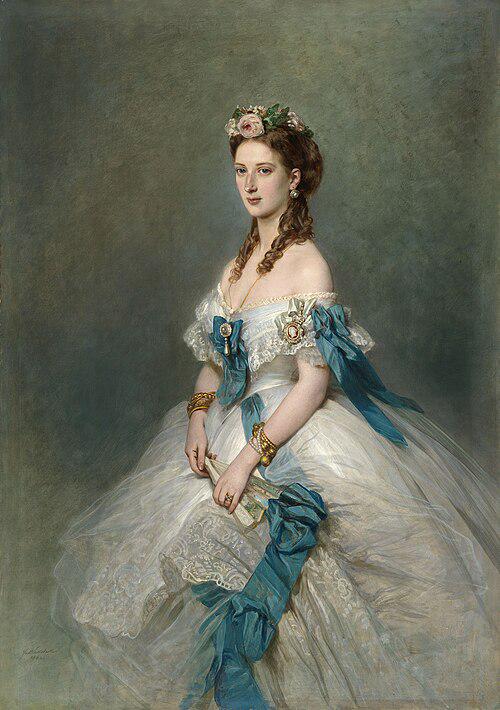
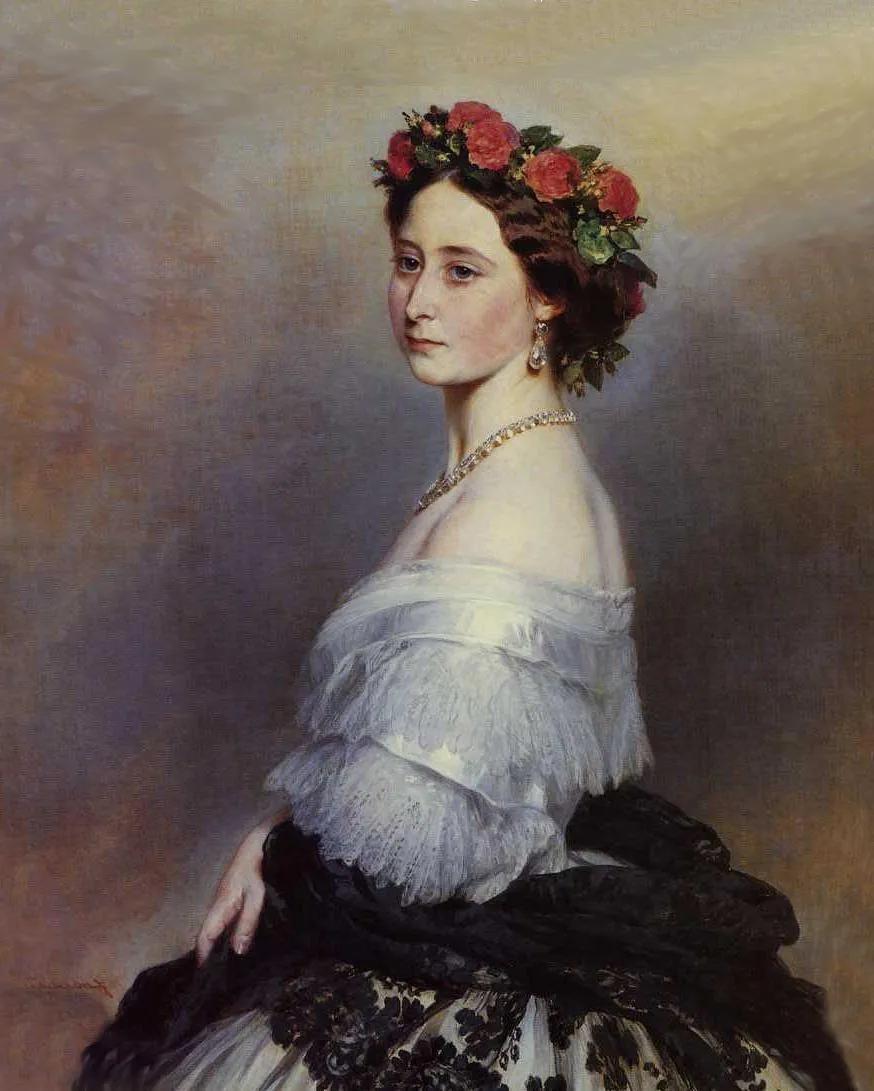
Historical figure Alice of Great Britain (1843 - 1878): Just being ahead of her time
Post image
163 Upvotes

​

Alice was born on 25 April 1843 at Buckingham Palace as the third child of Queen Victoria and Prince Albert. Her birth was not exactly met with the same jubilation as that of her brother, Bertie. Nevertheless, Albert was happy to have another healthy child.

Despite Alice being born at Buckingham Palace, the royal couple decided to establish another family residence at Osborne House, believing it would better accommodate their growing family. Like her older sister, Vicky, Alice received an education overseen by her father, who wanted to instil in his children the values of personal liberty, modesty, and compassion for the common people.

As a result of their upbringing, the two sisters would remain close for the rest of their lives. From a very young age, Alice showed an intense curiosity about the world around her. It was not uncommon for her to wander beyond her designated surroundings or chat with the staff working at the royal residences.

During the Crimean War, in which Britain fought against Russia, Alice accompanied her mother on visits to hospitals where wounded soldiers were being treated. The experience revealed her compassionate nature and would have a profound impact on the princess's worldview.

Her compassion was demonstrated again in 1861, when her grandmother, the Duchess of Kent, died. Despite the Duchess's role in the Queen's strict upbringing, Victoria deeply mourned her mother. Alice was there to comfort her, which earned her even greater affection from the Queen.

But our young princess was not going to remain by her mother's side for much longer.

Since 1860, her parents had been searching for a suitable prince to become her husband. What made this difficult was their insistence that Alice should consent to the marriage. The royal couple wanted their children to develop genuine romantic feelings for their spouses rather than simply marrying them off to some random royals, as had been the custom for centuries.

After some short-lived courtship prospects involving the eldest son of the Dutch King and a relative of Vicky's husband, another candidate was suggested: Prince Ludwig of Hesse-Darmstadt.

He was the nephew of Grand Duke Ludwig III of Hesse and by Rhine and of Empress Maria Alexandrovna of Russia. He was recommended as a suitable match by Vicky, who had personally visited Darmstadt to assess him.

Then, in 1860, Ludwig and his younger brother were invited to Windsor Castle to spend a few days with the royal family, providing the perfect opportunity for Ludwig and Alice to get to know each other.

Ludwig made a good impression on the Queen, and he got along well with Alice. Indeed, Alice made it clear that she was attracted to the Hessian prince.

And so, in April 1861, Alice and Ludwig became engaged, with the blessing of her parents.

However, before they could marry, Alice's father died, casting a shadow over the wedding as the royal family entered an extended period of mourning.

When Alice's wedding finally took place on 1 July 1862, her mother had to be shielded from the other guests to preserve her privacy during the ceremony.

This made the wedding seem, in the Queen's own words, "more like a funeral than a wedding."

Despite Alice's enthusiasm about getting married, she had to conceal her happiness. Once the ceremony was over, she changed out of her simple wedding dress and into a black mourning dress.

Now newlyweds, Alice and Ludwig arrived in Hesse in July of that year. When they reached Darmstadt, the people celebrated their arrival. Alice wrote to her mother that the warm reception had left her overjoyed. Despite this, maintaining her popularity among the Hessians would remain a challenge for our princess. For starters, the people opposed spending money on the construction of a new residence for the couple, as Queen Victoria had wished. Secondly, Alice experienced homesickness during her first months in the Grand Duchy, particularly because she remained concerned about her mother's mental state following Albert's death.

In 1863, she travelled to England for the wedding of her older brother, Bertie, to Princess Alexandra of Denmark. That same year, she gave birth to her first child, Victoria, at Windsor Castle. Afterwards, Alice returned to Darmstadt with her daughter and began making a greater effort to integrate herself into the Hessian court.

This period also saw a deterioration in Alice's relationship with her mother. Her infrequent visits to England frustrated the widowed Queen. Not only that, but Alice's apparent happiness in her marriage sometimes made Queen Victoria jealous, as it reminded her of her own married life with the now-deceased Albert.

The relationship between the two women would remain complicated for the rest of Alice's life, although they continued to share moments of genuine affection.

In 1864, at her and Ludwig's private residence in Kranichstein, Alice gave birth to another daughter, Elisabeth, nicknamed Ella by her family. Queen Victoria was appalled to learn that Alice had decided to breastfeed her daughter, as the Queen strongly disapproved of the practice among women of their social standing.

In 1866 came one of the most difficult periods of Alice's life, as war broke out between Austria and Prussia in the summer of that year. Since Hesse joined Austria's side, Alice found herself on the opposing side from Prussia, where her older sister was Crown Princess.

Despite this uncomfortable situation, Alice took on the responsibility of caring for wounded soldiers.

In doing so, she was inspired by her correspondent, the famous nursing reformer Florence Nightingale, whose work had revolutionised nursing during the Crimean War. Drawing on Nightingale's example, Alice began working to improve sanitation in military hospitals and was able to obtain support and funds from England.

In July, Prussian forces approached Darmstadt, leaving the city vulnerable to occupation. In the end, Grand Duke Ludwig III had little choice but to accept Prussia's victory. Fortunately, the Grand Duchy was spared complete annexation, partly because, if you remember, the Grand Duke's sister was married to the Emperor of Russia, and the Prussian court was unwilling to antagonise the Russians.

Unfortunately, however, the peace terms imposed upon Hesse were harsh, at least in Alice's view.

Prussia annexed some Hessian territory, including areas of strategic importance for transport and communications, while also forcing the small state to pay a substantial indemnity to Berlin.

But at least the war was over, and Alice was finally able to reunite with her husband, who had been serving at the front.

During the war, Alice had also given birth to another daughter, Irene. Four more children would follow: Ernst Ludwig in 1868, Friedrich in 1870, Alix in 1872, and Marie in 1874.

Following the conflict, Alice, now more confident in her abilities, continued to support humanitarian causes. For starters, she helped establish the nursing organisation that would lead to the creation of the Alice Hospital in Darmstadt, where patients could receive treatment using modern medical methods. The institution would continue operating into the present day.

Other organisations she supported, such as the Alice Society for Women's Training and Industry, were established to provide women with education and professional opportunities, allowing them to become more independent and economically productive members of society. As these organisations began to bear fruit, Alice became increasingly involved in their administration.

It is safe to say that Alice held views that would have been considered progressive, if not radical, at the time. For instance, she believed that women should be able to make decisions for themselves and that a woman's life should not revolve entirely around marriage and household responsibilities.

This stood in stark contrast to her mother, who held strongly anti-suffragist views.

Additionally, Alice was deeply sympathetic to the hardships faced by the lower classes. Whenever she could, she would travel incognito through the poorest areas of Darmstadt to observe the living and working conditions of ordinary people.

Around this time, Alice also developed a friendship with David Friedrich Strauss. He was a liberal theologian who had stirred considerable controversy during his lifetime thanks to his book The Life of Jesus Critically Examined. In it, Strauss argued that many of the miracles attributed to Jesus were myths and imaginative expressions of his teachings developed by his followers. As you can imagine, these arguments were fiercely criticised by many theologians of the time.

But Alice was sympathetic to some of his views and became increasingly interested in questioning conventional religious ideas. She also believed that certain values associated with Victorian society would have been unrecognisable to early Christians.

However, criticising contemporary social and religious standards would soon become the least of Alice's concerns.

In May 1873, her youngest son, Friedrich, affectionately called Frittie by his family, fell from a window while playing with his brother. The fall caused injuries that might not have been fatal to an otherwise healthy child.

But the problem was that Frittie suffered from haemophilia.

This disease prevents the blood from clotting properly, meaning that even relatively minor injuries can result in prolonged bleeding. In Frittie's case, the fall caused a fatal internal haemorrhage. The disease was also hereditary and appeared among several descendants of Queen Victoria, earning it the nickname "the Royal Disease."

Although Victoria and Alice did not suffer from haemophilia themselves, they were carriers of the condition, meaning that they could pass it on to their children.

And because of this, the two-year-old prince died a few hours after his fall, on 29 May 1873.

Alice was devastated by his death, and the tragedy brought her closer to her remaining children, especially Marie, who was born the following year.

On 20 March 1877, Ludwig's father died at the age of 67. Ludwig was already heir presumptive to the Grand Ducal throne, and the death of his father brought another loss to the family. Then, on 13 June, Grand Duke Ludwig III also died. This made Alice's husband the new Grand Duke of Hesse and by Rhine, reigning as Ludwig IV.

For Alice, however, becoming the new Grand Duchess gave her little reason to celebrate.

By this point, her marriage to Ludwig had cooled somewhat. Although she still loved her husband, Alice felt that he did not always meet her intellectual expectations. She considered him less intellectually curious than herself and believed that he struggled to express himself in the complex ways she desired.

For a woman who was intellectually curious and open-minded, Ludwig's personality sometimes left her longing for deeper conversation. She complained of his lack of "opinions, observations and remarks" and craved someone who could understand her on an equal intellectual footing. This helps explain why she valued friendships with people such as Strauss.

Besides her marital difficulties, Alice's popularity in Darmstadt remained unstable.

Some people criticised her refusal to conform to the expectations of court society, particularly her rejection of strict protocols and traditions that conflicted with her personal beliefs.

Eventually, these criticisms developed into rumours portraying her as petty and self-absorbed.

Alice soon began to feel increasingly depressed by the hostility directed towards her.

But Ludwig, surprisingly, managed to lift her spirits, telling her that "the bitterness of the salt water will drive away the bitterness that you still feel against Darmstadt."

Alice found his words touching and became increasingly appreciative of his emotional support.

Although he was not always the intellectual companion she desired, Ludwig was still someone who could brighten her day. Another moment of happiness came during Christmas 1877, when Alice spent the holidays with her husband and their surviving children.

But moments like these were soon to come to an abrupt end for our poor princess. In November 1878, the family was struck by a diphtheria epidemic.

Most members of the household became infected, with the exception of Ella, who had been sent away and was staying with her paternal grandmother.

On 16 November, the youngest child, Marie, died from the disease at the age of four. Alice initially kept her daughter's death a secret from her other children, hoping to spare them further distress while they were still recovering.

But her worries were far from over.

Because she had personally tended to her sick children rather than leaving their care entirely to the household staff, Alice had exposed herself to the disease. In early December, she began showing symptoms of diphtheria, and her condition rapidly deteriorated.

On 14 December 1878, exactly seventeen years after her father's death, the 35-year-old Grand Duchess Alice of Hesse and by Rhine passed away at the Neues Palais in Darmstadt.

She became the first of Queen Victoria's nine children to die. She was buried in the Grand Ducal Mausoleum at Rosenhöhe Park.

News of her death brought a wave of sadness throughout both Hesse and the United Kingdom.

Her relatives were equally heartbroken, with her brother Bertie reportedly exclaiming to his mother, "I wish I had died instead of her."

Even Queen Victoria, despite her occasionally tense relationship with her daughter, was devastated by her passing. She remarked that Alice's death on the same date as that of her late husband was "almost incredible and most mysterious."

As for Vicky, the sibling to whom Alice had been closest, it is safe to say that she did not take the news well. She even went so far as to write a 39-page letter to her mother expressing her profound sorrow.

These reactions demonstrate just how deeply Alice was loved by those who knew her. She truly was a woman whom her relatives were grateful to have as part of their family.

Speaking of her family, Alice's surviving children would go on to play important roles in European royal circles. Her eldest daughter, Victoria, would marry her cousin, Prince Ludwig of Battenberg. Their descendants would become part of the Mountbatten family, which included Alice's great-grandson, Prince Philip, Duke of Edinburgh, consort of Queen Elizabeth II.

Her youngest surviving daughter, Alix, would marry Tsar Nicholas II of Russia and become Empress Alexandra Feodorovna. Her fate, as you may know, was not a happy one. She and her family were murdered in the aftermath of the Russian Revolution, as was her older sister, Ella.

But their stories are for another time.


r/FemaleMonarchs • • 4d ago

Augusta Victoria of Hohenzollern-Sigmaringen (1890–1966). She married the deposed King Manuel II of Portugal in 1913 and was titular Queen consort until his death in 1932.

Post image
129 Upvotes

r/FemaleMonarchs • • 5d ago

TIL In 1840, William I, the first king of the Netherlands and a Protestant, abdicate the throne to marry a Belgian countess Henriëtte d’Oultremont who was Catholic. The couple married in 1841, when he was 68 and she was 48. His son from his first marriage succeeded him.

Thumbnail
en.wikipedia.org
2 Upvotes

r/FemaleMonarchs • • 6d ago

Grand Duchess Tatiana Nikolaevna of Russia (1897–1918). Second daughter of Nicholas II and Alexandra Feodorovna, she was considered the most beautiful of the four Grand Duchesses. She trained as a nurse during World War I before being murdered along with her family in 1918.

Post image
252 Upvotes

r/FemaleMonarchs • • 8d ago

TIL Olga, eldest child of Tsar Nicholas II and Alexandra, suffered depression while nursing wounded World War I soldiers. In 1915, she received arsenic injections, then considered a treatment for depression and nervous disorders.

Thumbnail
en.wikipedia.org
24 Upvotes

r/FemaleMonarchs • • 9d ago

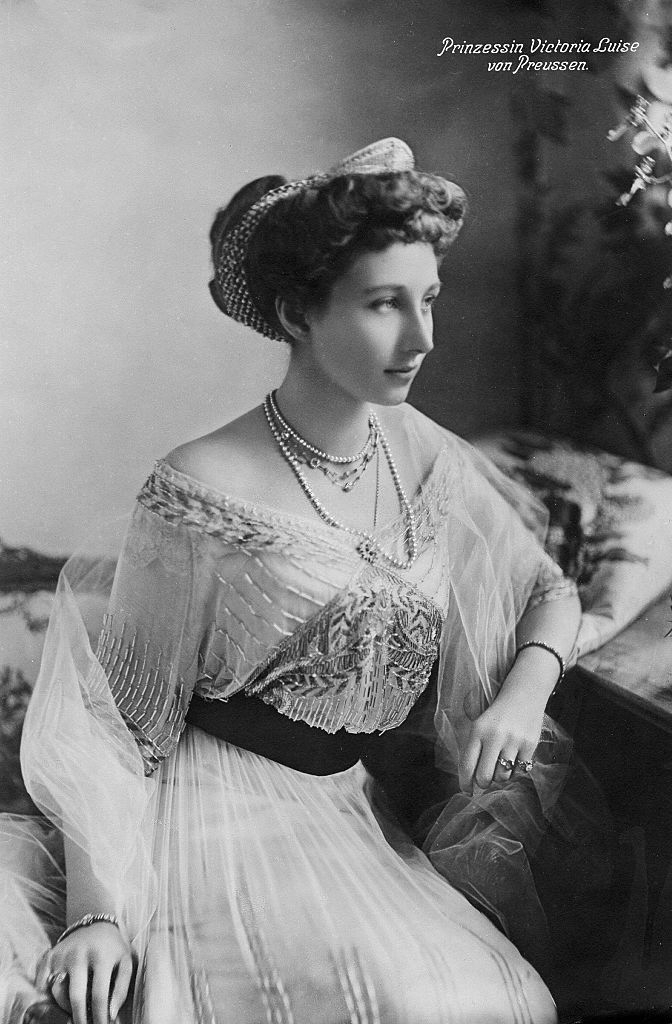
Princess Victoria Louise of Prussia (1892–1980). Only daughter of Wilhelm II, German Emperor, and Augusta Victoria of Schleswig-Holstein, she married Prince Ernest Augustus of Hanover in 1913, becoming Duchess of Brunswick.

Post image
174 Upvotes

r/FemaleMonarchs • • 14d ago

Maud, Queen of Norway (1869–1938). Born Princess Maud of Wales, daughter of Edward VII of the United Kingdom, she married Prince Carl of Denmark in 1896. Following the dissolution of the union between Sweden and Norway in 1905, Carl was elected King of Norway as Haakon VII, making her Queen consort.

Post image
132 Upvotes

By W. & D. Downey, c. 1905 — Royal Collection Trust


r/FemaleMonarchs • • 15d ago

Gabrielle’s Yearning for the Orient

Post image
18 Upvotes

​On quiet winter evenings, they began a rigorous course of study in preparation for a journey around the world—a plan conceived during their early days of marriage. The history of Oriental art, a field in which the Prince was thoroughly well-versed, along with travel literature, was incorporated into their readings to introduce the Princess to this entirely new world. Under the tutelage of such an erudite guide, she not only adapted with astonishing ease but also developed a profound, heartfelt love for the Orient—a fairytale realm where, in her own words, "reality dissolves into dreams, and dreams become reality."

This longing for the Orient, which originated during her earlier stay in North Africa, grew all the deeper through Prince Rupprecht’s devotion to Oriental art and philosophy, as well as the vivid accounts of his travels across Eastern lands. It remained a passion that accompanied her throughout her life.

Whenever the Orient was mentioned in her presence, she listened with keen interest; to her, it consistently possessed the allure of an enchanted world. She was utterly captivated by reports from Professor Musil of Vienna detailing his travels through Arabia Petraea and his discovery of the Umayyad desert castle Quseir Amra. Professor Delitzsch’s vibrant portrayals of the past splendor of ancient Near Eastern civilization seized her imagination just as strongly, directing her passion and curiosity toward an ancient world buried beneath millennia of ruins.

Among my own final memories of the Princess is her total absorption in the beauty of the East. As sights she had witnessed firsthand reemerged in her mind, alongside echoes of stories long heard and read, she expressed, with deep emotion, an earnest longing to return to Egypt soon for an extended stay.

——《Prinzessin Marie Gabrielle von Bayern》


r/FemaleMonarchs • • 16d ago

Historical figure Alexandra of Denmark (1844 - 1925): The Original Queen of Hearts

Post image
340 Upvotes

If you are a fan of the Royal Family of the UK, or at least have some knowledge about them, then you certainly have an opinion about their relationship with the former Diana, Princess of Wales.

But before her, there was another heiress apparent in British history, one who, according to the public, could do no wrong. And unlike the tragic Diana, she actually managed to live long enough to become Queen Consort. I am, of course, talking about the protagonist of this story, Queen Alexandra.

She was born on the 1st of December 1844 at the Yellow Palace in Copenhagen. Her father was Prince Christian of Schleswig-Holstein-Sonderburg-Glücksburg, a relative of the then-King of Denmark, Christian VIII. Her mother, Louise of Hesse-Kassel, on the other hand, was the niece of the King, giving her a pretty good claim to the throne—something that would become important later.

Besides Alexandra, Christian and Louise also had an older son, Frederik, and four younger children: Dagmar, Vilhelm, Thyra, and Valdemar. In the future, their children would marry members of other royal families, giving Christian the nickname "the Father-in-Law of Europe."

But despite their royal ancestry, the family lived very modestly, and their residence had been given to them by the monarch personally. This was just fine for Christian and Louise, as they wanted to give their children a relatively normal upbringing.

In 1848, King Christian VIII died and was succeeded by his only child, King Frederik VII. His time on the throne began with the adoption of a new constitution that granted new rights to the Danes, as well as victory in a war against the German states. But much of his reign would be clouded by the question of his successor. Despite marrying three times, the King would have no children, meaning that the main royal line would die with him.

There were two people who could succeed him. The first was, of course, Christian, as his wife was the King's cousin. The other was Friedrich, Duke of Augustenburg. His claim was stronger than Christian's in certain respects because his branch of the family was senior.

What made the succession crisis particularly troubling for the nation's integrity was that the succession laws of Denmark conflicted with those of Schleswig and Holstein. Denmark used a semi-Salic law, meaning that inheritance could pass through the closest female member should there be no eligible male relatives. The two duchies, meanwhile, used full Salic Law, meaning that inheritance could only pass to the closest eligible male-line relative.

So, in theory, if Christian were to become King, Friedrich could claim the duchies instead. And the latter, despite being Danish, became a rallying figure for much of the German-speaking population in Schleswig-Holstein, who desired to break away from Denmark and join a united Germany.

In 1852, tensions temporarily eased when, at a conference in London, Christian was designated heir to the Danish throne. But despite his new status, his family's living conditions did not change, as Christian and Louise did not get along with the King's new morganatic wife. Because of this, Alexandra's family did not experience a significant change in income despite their increased relevance to the dynasty.

Still, as Alexandra grew older, she began to appear like an ideal princess. By the time she was 19, she had received an education fitting for someone of her status. She became accomplished in music and drawing and demonstrated devotion to her Lutheran faith. Not only that, but contemporary accounts described Alexandra as exceptionally beautiful, with a slender and graceful appearance. So it is no surprise that there were already possibilities for Alexandra to marry.

And she did indeed marry someone of great status: Prince Albert Edward of Wales, eldest son and heir of Queen Victoria. Nicknamed Bertie by his loved ones, he had been pressured by his parents to find someone to marry, for he had already shown signs of promiscuity as he entered adulthood. In fact, his father, Prince Albert, had travelled through one fateful cold night to confront his son about his recent escapade.

Not long afterwards, Albert suffered from typhoid fever, which ultimately caused his death.

This event caused a permanent rift between Bertie and his mother, who blamed him, at least in part, for the death of her beloved husband. But talks of a possible marriage continued, and, as it happened, Alexandra remained a strong possible match for the Prince of Wales. Thanks to the relatively new invention of photography, Bertie was able to examine the princess's appearance—and liked what he saw.

The two first met in September 1861, and almost a year later, Bertie proposed to her in Belgium. And so, in March 1863, Bertie and Alexandra married. For the occasion, an ode called "A Welcome to Alexandra" was composed by a certain Sir Arthur Sullivan, who in later years would become famous for his comic operas created in collaboration with dramatist W. S. Gilbert.

The 18-year-old princess immediately captured the public's attention with her youthful and regal appearance. Yet because the royal court—and especially the Queen—was still in mourning following the death of Prince Albert, the wedding was more subdued than the lavish festivities surrounding the Queen's own wedding 23 years earlier.

After the wedding, the newlyweds settled at Marlborough House in London, where they developed their own circle of intellectuals, aristocrats, and political figures, serving as an alternative to the rather grey and melancholic court that the Queen's grief had created.

In the same year that Alexandra married, her family's status also increased dramatically. A few weeks later, on the 30th of March, her younger brother Vilhelm became the new King of Greece following his selection for the Greek throne. He would take the name Geórgios I. Then, in November, King Frederik VII died and was succeeded by Alexandra's father as Christian IX. By the end of the year, Alexandra's sister Dagmar—with whom she was very close—had also become engaged to Nikolai, heir to the Russian Empire. After his sudden death, she would eventually marry his younger brother, the future Tsar Aleksandr III.

The next year started off quite well, for in January Alexandra gave birth to a son named Albert Victor, known within the family as Eddy. And so the succession to the British Crown was secure for another generation. However, the year also marked a terrible period for the Princess of Wales because her native country, Denmark, was invaded by a coalition of German states over the dispute concerning Schleswig and Holstein.

The Second Schleswig War caused a split within the royal family as well. Queen Victoria was sympathetic to the German cause, as was her daughter Princess Vicky, who had married into the Prussian Royal Family. Alexandra and Bertie, on the other hand, sided with the Danes, which angered the Queen. Denmark's defeat in the war greatly affected Alexandra's worldview, and she would remain staunchly anti-Prussian and later anti-German for much of the rest of her life.

Except for this troubling event, the rest of the 1860s were relatively quiet and peaceful for the Princess. She continued to give birth to more children: George in 1865, Louise in 1867, Victoria in 1868, and Maud in 1869.

But despite her frequent pregnancies, Alexandra maintained a public life and continued to socialise with various figures.

She also enjoyed various activities such as ice skating, horse riding, and hunting. The last of these caused resentment from Queen Victoria, as she believed such activities were not fitting for a lady, but Alexandra simply ignored her. The Princess also accompanied her husband on several foreign diplomatic tours across Europe, with destinations including Vienna, Athens, and Constantinople.

Speaking of Bertie, his relationship with Alexandra was quite interesting. You see, even after he became a married man, Bertie continued to have numerous mistresses, even later in life. And the thing is, Alexandra was aware of her husband's liaisons, but she largely chose to tolerate them.

Perhaps she was aware that, for a lustful man like Bertie, moderation was simply not something he possessed. Or perhaps, as Alexandra reportedly stated later in her life, "Despite all the others, he loved me the best." That is to say, despite his infidelities, she believed that she remained his favourite and his true companion.

Bertie himself apparently once made the rather crude comparison that his wife was like a "brood mare" while his mistresses were more like "hacks." This was apparently supposed to be a compliment to his wife, but it still sounds rather rude, in my opinion.

Still, it does show that, even though Bertie was an unfaithful spouse, it would be inaccurate to describe their marriage as simply an unhappy one.

As for Alexandra's relationship with Queen Victoria, it was initially marked by disagreements between the two women. For example, the fact that several of Alexandra's children were born prematurely led some people to believe that she deliberately misrepresented their expected delivery dates so as to make sure the Queen would not attend the births. Perhaps she wished for her children not to live under their grandmother's influence in the same way that her husband and his siblings had.

Another moment of sorrow came in 1871, when Alexandra gave birth to another son named Alexander John. Tragically, the infant died the very next day. The Princess of Wales wished to mourn his death privately, only for the Queen to announce an official period of mourning for the court. The press also reported on the infant's death in language that would be considered extraordinarily insensitive today, which certainly did not make it any easier for the Princess to cope with the loss of her youngest child.

However, as time went on and Alexandra began to take over more public duties from the ageing Queen, she received praise from her mother-in-law, who said that Alexandra was relieving her of "the strain and fatigue of functions."

Her reputation among the British public also remained overwhelmingly positive.

Soon, Alexandra became a fashion icon, with her dresses and hairstyles dazzling the public. She helped popularise choker necklaces and high-necked dresses, which were also useful for concealing a scar on her neck. Besides this, she remained remarkably slender despite numerous pregnancies.

This stood in contrast to Bertie, whose overindulgence in food and excessive smoking caused him to gain noticeable weight, changing the robust physique he had possessed as a young man.

Yet besides her radiant appearance, Alexandra also demonstrated a compassionate attitude towards those around her. She became associated with hospitals and charitable causes and showed particular interest in the sick and vulnerable.

As the 1880s came to a close and the 1890s dawned, Alexandra's attention increasingly turned towards the futures of her children as they entered adulthood. She was especially excited for her eldest, Prince Eddy, who was preparing to marry Princess Mary of Teck, Bertie's second cousin.

But in a tragic turn of events, Eddy died on the 14th of January 1892, when he was just 28 years old.

Alexandra was devastated by the death of her firstborn, writing in her diary: "Today I have buried my angel and with him my happiness". His room was preserved much as it had been after his death, reflecting the same Victorian culture of mourning that had surrounded the death of Prince Albert decades earlier.

As for Mary of Teck, she would go on to marry Eddy's younger brother George, who had now moved closer to the throne.

In the case of her daughters, Alexandra was very protective of them, sometimes wishing that they would remain by her side rather than marry other royals. This would ultimately be the fate of her middle daughter Victoria, known simply as Toria by her family. Despite several potential marriage prospects, she remained unmarried and stayed close to her mother for the remainder of Alexandra's life.

This was not the fate her eldest daughter, Princess Louise, desired. She wanted to marry and have a life of her own. However, like her aunt and namesake, the princess did not wish to marry a foreign royal and leave Britain.

So, in 1889, she married Alexander Duff, Earl Fife. The marriage was unusual by royal standards because Duff was a British aristocrat rather than a foreign prince. Nevertheless, the match was approved by Queen Victoria, and Duff was subsequently elevated to the rank of Duke of Fife.

As for Alexandra's youngest daughter, Maud, she married relatively late in life—at least by the standards of her time. In 1896, when Maud was 26, she married her cousin Prince Carl of Denmark, thus further strengthening the relations between the British and Danish royal families.

In January 1901, Queen Victoria passed away at the age of 81, leaving the path clear for Bertie to become the new monarch of Britain.

Surprisingly, rather than taking the regnal name Albert I, he chose Edward VII. He explained that he did not wish to diminish the unique association of the name Albert with his father.

His coronation was scheduled for the following year, but shortly before the ceremony the new King became dangerously ill with appendicitis and required surgery. The coronation consequently had to be postponed.

Eventually, on the 9th of August 1902, the coronation was held at Westminster Abbey. Thus, Edward VII was crowned King of the United Kingdom and the British Dominions and Emperor of India, while Alexandra was crowned beside him as the first British Queen Consort in more than 60 years.

Despite what many people at the time may have expected—that Edward would become a failure as King—he actually proved many of his critics wrong. The new King-Emperor took his constitutional responsibilities seriously and developed an important diplomatic role, particularly in Britain's relations with the other European powers.

For Alexandra, her new position did not fundamentally change her roles and objectives. But if she had been popular as the consort of the heir, that popularity continued into her queenship.

As Queen, she remained heavily involved in charitable activities and nursing causes. She was particularly associated with military nursing, and the Queen Alexandra's Imperial Military Nursing Service was named in her honour.

When it came to spending, Alexandra gave generously to charitable causes. She was also known for reusing possessions rather than constantly replacing them, although her generosity itself could occasionally concern members of the royal household.

Additionally, she and her husband continued to maintain relationships with their numerous royal relatives. Edward was related either by blood or marriage to much of European royalty, from the Iberian Peninsula to Scandinavia and the Balkans. He was careful to maintain positive relations with continental European nations and became closely associated with Britain's diplomatic rapprochement with France.

And in 1905, Alexandra's son-in-law Carl was elected King of Norway, taking the name Haakon VII.

Alexandra, for her part, continued to visit her home country, where she maintained close contact with her relatives, including her widowed sister, Empress Dowager Dagmar, and her nephew Tsar Nikolai II.

Yet for the Queen there was one notable exception to these warm dynastic relationships: the German Empire, which was led by her nephew by marriage, Kaiser Wilhelm II.

She distrusted Wilhelm and regarded German ambitions with considerable suspicion. She was especially opposed to the agreement under which Britain transferred the North Sea island of Heligoland to Germany while settling colonial disputes with Germany in Africa, including Britain's position in Zanzibar. Despite objections, the agreement went ahead, and Germany subsequently developed Heligoland into an important naval base.

During Edward's reign, relations between the UK and Germany continued to deteriorate as the two nations entered into a naval arms race centred on the construction of increasingly powerful battleships. At the same time, Britain entered into the Entente Cordiale with France—a development that would have seemed extraordinary only a few decades earlier.

But Edward would not have to worry about European tensions for much longer. By the spring of 1910, his health was rapidly deteriorating. Alexandra was abroad when she heard the news and rushed back to be at her husband's side.

During his final illness, he was also visited by Alice Keppel, his long-time mistress, who was permitted to see him with Alexandra's knowledge—a remarkable gesture given the circumstances.

Then, on the 6th of May 1910, at the age of 68, King Edward VII died. One of his final moments reportedly involved learning that his horse had won a race, news that greatly pleased the dying King.

Alexandra was deeply devastated by the loss. Despite the numerous affairs her husband had conducted over the years, he remained very dear to her. His funeral was attended by Alexandra; his son, now King George V; numerous relatives and monarchs from across Europe; and even his beloved dog, Caesar.

Much like her mother-in-law before her, Queen Dowager Alexandra entered a prolonged period of mourning after the death of her husband. Despite this, she remained active during the first years of her widowhood.

One particularly notable example was Alexandra Rose Day. Established around the 50th anniversary of her arrival in Britain, the charitable initiative involved selling artificial roses, with the proceeds going towards hospitals and other charitable causes.

Then, in 1914, the First World War began, and within a few weeks Britain entered the conflict against Germany.

This created an uncomfortable situation for the Royal Family. Because of their German ancestry and titles, anti-German sentiment placed the dynasty in a politically sensitive position.

Thus, in 1917, King George V changed the name of the royal house from Saxe-Coburg and Gotha to Windsor, the name still used by the Royal House today. German titles held by members of the extended British royal family were also abandoned or replaced.

Furthermore, the banners of enemy members of the Order of the Garter were removed from St George's Chapel. Alexandra supported Britain's war effort and remained deeply hostile towards Germany, although her feelings towards individual German relatives could be more complicated, especially towards Hessians, whom she said they were "simply soldiers or vassals under that brutal German Emperor's orders".

More tragic news came from Russia in 1917, when her nephew Tsar Nikolai II was forced to abdicate in the wake of the Russian Revolution.

A year later, he, his wife, and their children were executed by the Bolsheviks. His mother—Alexandra's beloved sister Dagmar—survived the Revolution and eventually escaped Russia.

The destruction of the Russian monarchy must have been especially painful for Alexandra. The European dynastic world in which she had grown up was rapidly disappearing.

By the early 1920s, Alexandra's health had begun to deteriorate. Her eyesight worsened, her already severe deafness increasingly isolated her, and her general health declined.

On the 20th of November 1925, Queen Alexandra died at Sandringham House, only a few days before what would have been her 81st birthday. he was eventually laid to rest beside her husband in St George's Chapel, Windsor Castle, where their tomb commemorates the royal couple together.

And only five months after Alexandra's death, her great-granddaughter was born: the future Queen Elizabeth II.

She was christened Elizabeth Alexandra Mary, with the name Alexandra honouring her recently deceased great-grandmother.

Thus ends the tale of Alexandra of Denmark, one of the original darlings of the British monarchy.

Throughout her long public life—first as Princess of Wales, then as Queen Consort, and finally as Queen Dowager—Alexandra remained extraordinarily popular with the British public. And it is not difficult to understand why. Alexandra consistently demonstrated an eagerness to improve the lives of people in her adopted country while maintaining an approachable and glamorous public image.

Her story and Edward's inevitably invite comparisons with that of King Charles III and Diana, Princess of Wales. Diana, like Alexandra, achieved enormous public popularity, and both women had to deal with their husbands' infidelities. But their lives developed in dramatically different ways. Diana's marriage ended in divorce and her life was tragically cut short, whereas Alexandra remained married to Edward and lived into old age, eventually becoming Queen beside him.

And as a final piece of historical irony, remember Alice Keppel, Edward VII's long-time mistress?

Her great-granddaughter is none other than Charles's second wife, Queen Camilla.

I guess you could say that some royal connections are so persistent that they manage to reappear several generations later.


r/FemaleMonarchs • • 15d ago

Historical figure The rise of Haseki Gülnuş Sultan and Valide Turhan Sultan’s jealousy

Post image
20 Upvotes

r/FemaleMonarchs • • 16d ago

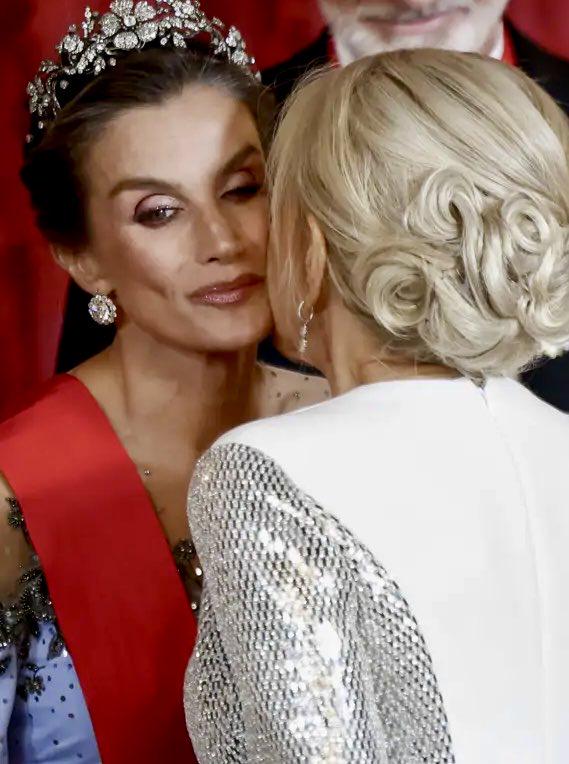
HM Queen Letizia of Spain greeted the wife of the 'Co-Prince' of Andorra, at a state banquet in Madrid.

Post image
41 Upvotes

r/FemaleMonarchs • • 17d ago

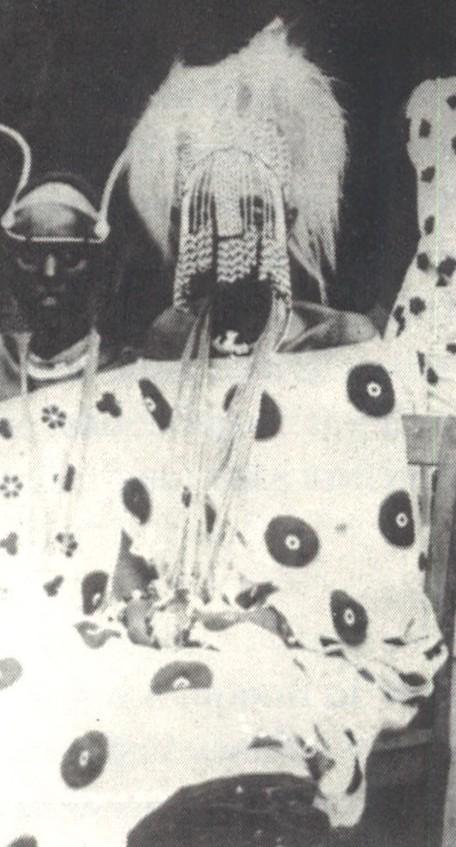
Historical figure Kanjogera (died 1933) was the queen mother of Rwanda from 1889 to 1931, who served as a regent and co-ruler during the reign of her son Yuhi V Musinga. She transgressed gender roles but otherwise acted like male Rwandan monarchs.

Post image
42 Upvotes

r/FemaleMonarchs • • 19d ago

History Empress Sunmyeong (1872-1904), the first wife of Emperor Sunjong of Korea during empire of Korea

Post image
84 Upvotes

r/FemaleMonarchs • • 20d ago

Historical figure Rosalie Gicanda (1928–1994) was the queen of Rwanda from 1942 until 1959, and Paul Kagame's aunt. She was murdered during the Rwandan genocide.

Post image
52 Upvotes

r/FemaleMonarchs • • 21d ago

Historical figure Marie Antoinette (1755–1793). Born in Vienna, Archduchess of Austria, she became Queen of France at eighteen upon marrying Louis XVI. Long targeted by revolutionary propaganda, she was deposed following the abolition of the monarchy and executed by guillotine in 1793.

Post image
124 Upvotes

r/FemaleMonarchs • • 24d ago

On htis day in 1896 Queen Victoria surpassed her grandfather George III as the longest reigning British monarch. George III had ruled for 59 years and 96 days. Victoria’s new record was later surpassed by Queen Elizabeth II.

Post image
38 Upvotes

r/FemaleMonarchs • • 25d ago

Historical figure On this day in 1601, Queen Anne of Austria was born. She served as regent for her son Louis XIV, winning against rebellious nobles in the Fronde.

Post image
46 Upvotes

r/FemaleMonarchs • • 25d ago

Question What female monarch do you dislike/hate the most?

Post image
32 Upvotes

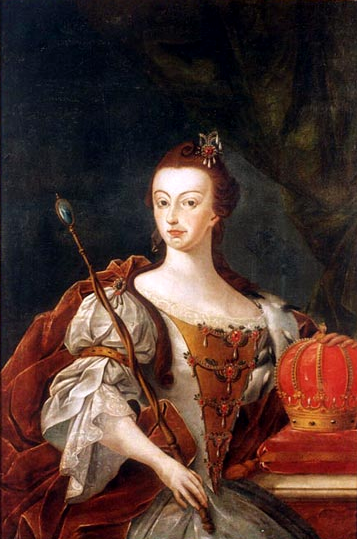
My least favorite female monarch is Maria I of Portugal, because she banned manufacturing from Brazil and had national hero and freedom fighter Tiradentes executed for disobeying the Portuguese crown.


r/FemaleMonarchs • • 27d ago

Francisca of Brazil, Princess of Joinville (1824–1898). Born Princess of Brazil, daughter of Pedro I of Brazil, she married Prince François d'Orléans, Prince of Joinville, son of King Louis Philippe I of France. She was sister to Emperor Pedro II of Brazil and Queen Maria II of Portugal.

Post image
96 Upvotes

Painted by Franz Xaver Winterhalter, 1846 — Palace of Versailles, Paris


r/FemaleMonarchs • • 29d ago

Marie-Louise of Austria (1791–1847). Born Archduchess of Austria, daughter of Francis I of Austria, she became Empress of the French in 1810 as Napoleon's second wife, and later Duchess of Parma, Piacenza and Guastalla from 1814 until her death.

Post image
76 Upvotes

Painted by François Gérard, 1810 — Musée du Louvre, Paris


r/FemaleMonarchs • • Sep 17 '26

Maria II of Portugal (1819–1853). Born in Rio de Janeiro, Kingdom of Brazil, she was crowned Queen at age seven in 1826, after the abdication of her father, Pedro I of Brazil (Pedro IV of Portugal), lost her throne to her uncle Miguel I, and regained it in 1834 after the Liberal Wars.

Post image
31 Upvotes

Painted by Sir Thomas Lawrence, 1829 — Royal Collection, Windsor Castle


r/FemaleMonarchs • • Sep 12 '26

'Labor' is jarring but this is still a very good account of the deaths of a future Queen and King.

Post image
18 Upvotes

r/FemaleMonarchs • • Sep 11 '26

Statues of 4 queen regnants in Hotel Russell, London

Thumbnail gallery
17 Upvotes

r/FemaleMonarchs • • Sep 11 '26

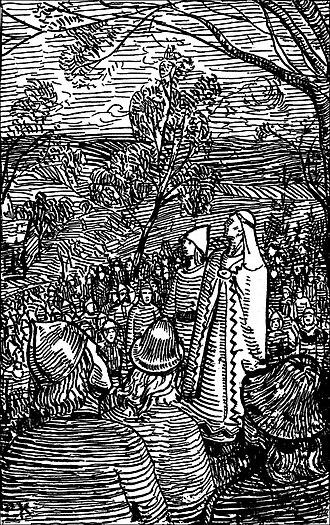
Historical figure Astrid Olofsdotter was the queen consort of Saint Olaf, who reigned over Norway from 1019 to 1028 and half sister of Ingegerd Olofsdotter, she support her stepson Magnus the Good's claim for Norwegian throne she was an ancestor of the present Norwegian royal family though her daughter Ulvhild

Post image
32 Upvotes

r/FemaleMonarchs • • Sep 09 '26

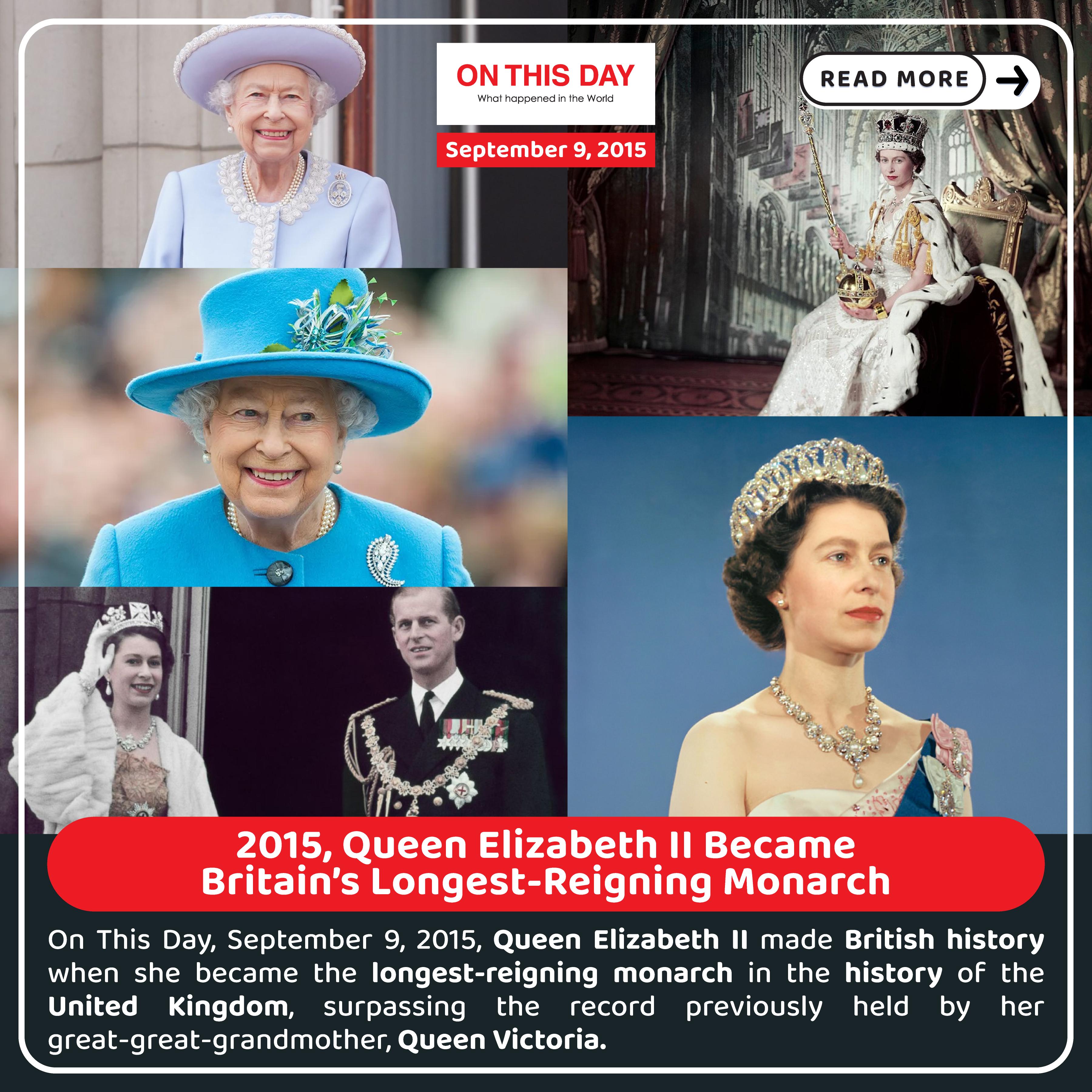
History #OnThisDay 2015, Queen Elizabeth II Became Britain’s Longest-Reigning Monarch

Post image
34 Upvotes