The current image of the German Empire among many Germans is a negative one. These days, whenever there is a discussion about the Empire, its colonial endeavours, militaristic policies, weak rule of law, and overtly nationalist atmosphere are often brought up, with some historians even arguing that certain aspects of the Empire helped inspire the ideas that would later contribute to the rise of National Socialism in the 1930s and 1940s.
But before its inception, there was a sliver of hope that Germany could have taken a different trajectory. And that hope lay, at least partly, in the hands of an English-born princess. Alas, she ultimately failed to bring about the change she envisioned. To understand how, let us look at the story of that princess.
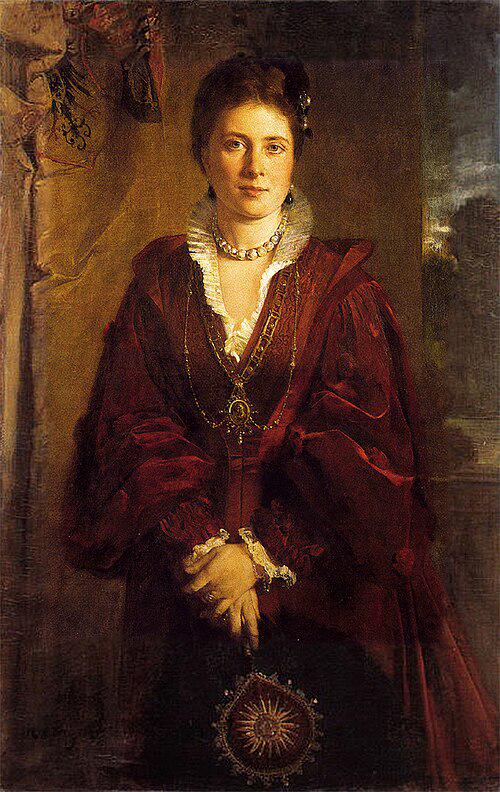
Born Victoria Adelaide on the 21st of November 1840 at Buckingham Palace, the young princess was the eldest child of Queen Victoria of the United Kingdom and Prince Albert of Saxe-Coburg and Gotha. As a result, upon her birth, she briefly became heir presumptive to the throne of the British Empire. However, the princess's prospects of becoming queen in her own right were dashed the following year, when the Queen gave birth to her son and eventual successor, Albert Edward.
Instead, Victoria became known by another title: Princess Royal. This was the title traditionally given to the eldest daughter of the reigning British monarch, and it was a title she would retain for the rest of her life.
As a young child, Vicky, as she was known by her family, was given a very extensive education. It included foreign languages, mathematics, geography, history, art, philosophy, and much more. Since Vicky had a thirst for knowledge, she learned considerably faster than the average child.
She had a strict upbringing for the most part. She received around ten hours of education a day and was overseen by governesses, with her mother rarely taking an active part in her education. Her father, Albert, on the other hand, was deeply involved in raising his children. Because of this, Vicky would idolise her father for the rest of her life.
In 1851, during the Great Exhibition, the Royal Family received as visitors Wilhelm, the Crown Prince of Prussia, his wife Augusta, and their two children, Friedrich and Luise. During the visit, the young Prince Friedrich, also known as Fritz, became acquainted with Vicky. Despite the considerable age gap—Fritz was 19 and Vicky was only 11 (gross)—they formed a good impression of one another.
When he returned to Berlin, Fritz began corresponding with the Princess Royal. Their developing relationship led Queen Victoria to imagine a possible marriage alliance between Britain and Prussia. Since she and the Prussian Crown Prince were already on good terms, such an alliance could strengthen the bond between the two royal families.
In 1855, Fritz visited Britain for a second time, but this time it was to request Vicky's hand in marriage. The Queen and Prince Consort were worried that their daughter might not be considered attractive enough for the Prussian prince. She was only around 1.5 metres tall (about 4'11") and was not considered particularly beautiful by some of her contemporaries. Nevertheless, there was clearly a great deal of affection between her and Fritz.
On the 17th of May 1856, it was announced that Vicky and Fritz were engaged. However, it was decided that the wedding would only take place once Vicky had reached the age of 17.
The reaction to the engagement was not as welcoming as that of the British royals. Elements of the Prussian court felt that the match was unsuitable for one of their own princes. The British, for their part, criticised the choice of groom, since Prussia was viewed by much of the public as a reactionary state, while the kingdom's neutrality during the Crimean War had also caused resentment.
For the Prince Consort, however, the engagement represented a source of hope. Albert supported the match, but for somewhat different reasons from Victoria. He supported the unification of the German states into a single nation and believed that Prussia would eventually be the state to unite Germany. However, he wanted Prussia to embrace liberal ideas, since he regarded liberalism as one of the main driving forces behind German unification.
With this in mind, he hoped to make his daughter an asset who could encourage the liberalisation of the country. He therefore gave her something of a crash course in international politics and political theory. This education lasted for two years, until Vicky became old enough to marry.
Her wedding took place on the 25th of January 1858 at St James's Palace in London.
The wedding did not come without obstacles. There were disagreements over the dowry and over the location of the wedding. Fritz's parents wanted the ceremony to take place in Berlin, but Victoria succeeded in having it held in London.
Once Vicky moved to Berlin, life proved far more difficult than she had imagined. The liberal current that Albert had hoped would support his daughter was not nearly as strong as he had believed. The Prussian court was instead deeply conservative and militaristic. It was also broadly sympathetic towards Russia and, because of the geopolitics of the time, suspicious of Britain.
Vicky found court etiquette rigid and cold compared with life in Britain. Many Prussian nobles disliked her because they feared that she would influence Frederick towards liberal reforms. Relations with her father-in-law, the future King Wilhelm I, were respectful but often tense, while her aunt-in-law, Queen Elisabeth Ludovika, was well known for her Anglophobia. In fact, Elisabeth had apparently been unaware of the engagement until it was publicly announced.
But if life at the Prussian court was a challenge, her mother's correspondence became an additional burden. As would later be the case with her other children and even some of her grandchildren, Queen Victoria could be extremely controlling and constantly wrote to her relatives about what they should do, while expecting them to keep her updated about practically everything. For Vicky, there was little escape from this situation.
In January 1859, Vicky gave birth to her first child. She and Fritz were excited to become parents and hoped that their firstborn would be a son, thereby securing the succession. However, the delivery was far more complicated than expected.
The baby was in a breech position, making the birth extremely difficult. During the delivery, considerable force was used to extract him. Although both Vicky and her son survived the ordeal, the birth caused permanent damage to the future Prince Wilhelm's left arm, which remained underdeveloped throughout his life and became a major source of insecurity for him.
Fortunately for Vicky, her subsequent deliveries were less traumatic, beginning with the birth of Princess Charlotte in July 1860.
Then, the following year, two major events occurred in her life.
First, on the 2nd of January 1861, King Friedrich Wilhelm IV died. His brother Wilhelm, who had already acted as regent, became King Wilhelm I of Prussia. Fritz was therefore now first in line to the throne, yet this did not improve his relationship with his father. In fact, the arch-conservative king was distrustful of his son because of his liberal and Anglophile views and attempted to keep Fritz's and Vicky's political influence at court to a minimum.
The second major event in Vicky's life occurred in December of that year, when her father, Prince Albert, died of typhoid fever. Like her mother, the Crown Princess was devastated by the loss of her father, who had been both an idol and mentor to her. Yet it could perhaps be considered fortunate that he did not live to see his designs for Germany go awry.
In late 1862, the princely couple faced a major political crisis. The Prussian Parliament had refused to allow the king to increase the military budget for the reorganisation of the army. The dispute produced a political deadlock and eventually developed into a constitutional crisis.
Wilhelm began contemplating abdication, as he was uncertain about how to proceed. For Vicky, this appeared to be excellent news, since it could make her Queen of Prussia much sooner than expected. She urged her husband to accept his father's decision. Fritz, however, was hesitant. He believed that allowing a king to abdicate because of a political dispute would establish a dangerous precedent for future generations, and so he refused to ascend the throne under such circumstances.
He may not have known it, but this was perhaps his and Vicky's greatest opportunity to begin an age of reform.
Wilhelm ultimately did not abdicate. Instead, he appointed a new Minister-President—essentially the Prussian prime minister—to deal with the legislature. That man was Otto von Bismarck, a conservative politician known for being calculating, determined, and enormously ambitious for his country.
Bismarck's willingness to govern without relying upon a liberal parliamentary majority, and even without an approved budget, quickly earned him the king's trust. However, he also aroused the suspicion of Queen Augusta, the Crown Prince, and Vicky because of their opposing political views. Yet, thanks to Wilhelm's confidence in him, Bismarck would remain at the helm of the Prussian, and later German, government for almost 30 years.
During this period, Vicky and Fritz continued to find themselves isolated from the rest of the family and from political life. For the next two years, the couple faced constant scrutiny from conservative circles, which accused them of betraying Prussian interests.
Then, in 1864, war broke out between Denmark and the German powers.
The roots of the conflict lay in the disputed territories of Schleswig and Holstein. Although connected to the Danish monarchy, the duchies contained substantial German-speaking populations, and their political status had long been disputed between Danish and German nationalists. There had already been a war over the issue beginning in 1848, which had ended without the German nationalists achieving their objectives. This time, however, Prussia and Austria were determined to prevail.
The Second Schleswig War, as it became known, was a difficult moment for Vicky. This was largely because of her familial connections: her younger brother Bertie was married to Alexandra, daughter of King Christian IX of Denmark.
Nevertheless, Vicky gained considerable sympathy for her dedication to nursing and assisting wounded soldiers. Taking inspiration from Florence Nightingale, who had become famous for her work during the Crimean War, Crown Princess Vicky involved herself in efforts to care for those wounded in battle.
Fritz, meanwhile, was involved in the military campaign. The German forces ultimately defeated Denmark, and the war ended with Schleswig, Holstein, and Lauenburg being surrendered to Prussia and Austria.
However, Bismarck was not satisfied with a single victory. He was determined to see Germany unified under Prussian leadership, and that meant Austria had to be removed from German affairs.
And Bismarck had a plan—because Bismarck always had a plan.
He worked to ensure that Russia and France would not intervene decisively in the coming conflict with Austria and established an alliance with the newly formed Kingdom of Italy, which hoped to acquire Venetia from Austria.
Finally, after Prussian forces entered Austrian-administered Holstein, Bismarck made his move. On the 10th of June 1866, Prussia proposed reforming the German Confederation in a manner that would effectively exclude Austria. Four days later, the Federal Convention voted to mobilise against Prussia, which Prussia regarded as the dissolution of the Confederation and the beginning of hostilities.
The Austro-Prussian War, also known as the Brothers' War, began with Prussia rapidly overrunning several German states that supported Austria, including Hanover, Hesse-Kassel, and Saxony.
The climax of the war came at the Battle of Königgrätz on the 3rd of July. Fritz was one of the senior Prussian commanders and played an important role in the decisive victory.
Several weeks later, peace negotiations brought the conflict to an end. Austria was excluded from German political affairs, several states that had supported it—including Hanover, Hesse-Kassel, and Nassau—were annexed by Prussia, and the northern German states were subsequently organised into a new political entity: the North German Confederation.
The first major step towards German unification had been taken, but for some, the results were far from satisfactory.
Vicky was unhappy with the political system established for the Confederation, as it did not give the elected Reichstag as much authority over the executive as liberals desired. The new office of Federal Chancellor—held, of course, by Bismarck—was appointed by the Prussian king in his capacity as Federal President rather than being responsible to Parliament.
For the Crown Princess, therefore, the unification project had been stripped of much of its original liberal character and "Prussianised", for lack of a better word.
But it was not as though she had much say in the matter. She and Fritz remained politically marginalised at court.
This became evident once again in 1870, during the Franco-Prussian War. This time, I will spare you the details of exactly how the conflict started. All you need to know is that tensions between France and Prussia had been increasing for years, and after a series of diplomatic crises, war finally broke out.
Like before, Fritz and Vicky became involved in the war effort. Fritz commanded German troops and gained considerable prestige through his military service. Vicky, meanwhile, devoted herself to humanitarian and medical work connected to wounded soldiers, continuing an interest she had developed during the previous wars.
The war ended in a decisive German victory. France was forced to cede Alsace and part of Lorraine to the newly created German Empire.
Then, on the 18th of January 1871, representatives of the German states gathered in the Hall of Mirrors at the Palace of Versailles, where the creation of the German Empire was proclaimed. There, King Wilhelm I of Prussia was acclaimed German Emperor—Kaiser Wilhelm I.
Fritz and Bismarck were also present, witnessing one of the most consequential moments in nineteenth-century European history.
Yet for Vicky, her personal life only became more difficult.
By this stage, the Kaiser had grown increasingly distrustful of his son and daughter-in-law because of their Anglophile and liberal views. Under Bismarck's political dominance, they remained largely excluded from meaningful influence over the government.
Vicky's relationship with the new Empress Augusta was not much better. Despite both women being sympathetic to liberal ideas, they frequently clashed over personal differences. In fact, Queen Victoria occasionally found herself intervening when their disputes became particularly unpleasant.
The same could be said of Vicky's relationship with her sister-in-law, Princess Luise, who was by then married to the Grand Duke of Baden. Luise and the Crown Princess were not particularly close. Vicky also complained that Luise encouraged Wilhelm to see himself as a victim of his parents, contributing to the strong bond that developed between aunt and nephew.
Speaking of Wilhelm, it would be useful to discuss Vicky's children.
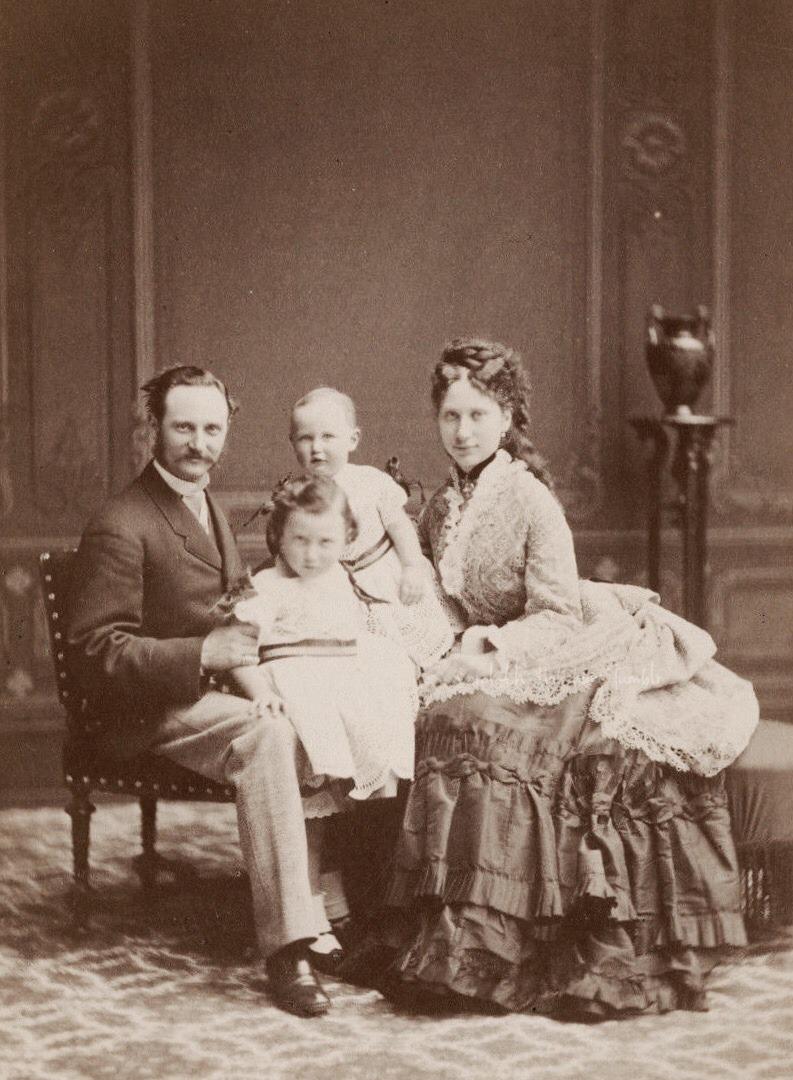
I have already mentioned him and his sister Charlotte, but they were not the couple's only children. Vicky gave birth to six more: Heinrich (b. 1862), Sigismund (b. 1864), Viktoria (b. 1866), Waldemar (b. 1868), Sophie (b. 1870), and Margarethe (b. 1872).
As I previously hinted, Vicky's relationship with her firstborn was not exactly a warm one.
The Crown Princess attempted to give Wilhelm the sort of intellectual education that her own father had given her, but this was not enough to overcome the environment in which he was raised. Since Wilhelm was second in line to the Hohenzollern throne, he was expected to receive an education befitting the dynasty.
As a result, Wilhelm's and Heinrich's upbringing was dominated by a strict military education, while several of the figures surrounding the young princes were far more sympathetic to traditional Prussian militarism and conservatism than Vicky was.
Thus, by 1877, when Wilhelm was approaching adulthood, he had become increasingly distant from his mother's liberal values.
As for Vicky's two younger sons, Sigismund and Waldemar, they sadly did not survive into adulthood. Sigismund died in 1866 at the age of two, during the Austro-Prussian War. He was the first of Queen Victoria's many grandchildren to die, and Vicky was devastated by his loss.
Waldemar also died young, in 1879, when he was only 11 years old.
His death occurred only a few months after Vicky's beloved sister, Grand Duchess Alice of Hesse, had died during a diphtheria outbreak. Waldemar himself died from the same disease. Vicky was once again devastated.
These tragedies made Vicky increasingly emotionally dependent upon her surviving children, particularly her younger daughters Viktoria, Sophie, and Margarethe. Since they were female and therefore excluded from the Prussian succession, Vicky had considerably greater freedom in directing their upbringing.
Her eldest daughter, Charlotte, meanwhile, had a difficult relationship with her parents. Born with delicate health, Charlotte developed a temperamental and capricious personality that frequently brought her into conflict with members of her family. Nevertheless, in 1878, she married Prince Bernhard of Saxe-Meiningen.
In 1881, Vicky saw her eldest son marry Augusta Victoria of Schleswig-Holstein. Although she hoped that Augusta Victoria—or Dona, as she was known within the family—might help heal the growing rift between herself and Wilhelm, Vicky soon realised that her new daughter-in-law was firmly supportive of her husband.
Around this period, Viktoria developed feelings for Prince Alexander of Battenberg, who became Prince of Bulgaria. Vicky supported the possibility of a match, but Bismarck did not. He feared that such a marriage could create diplomatic tensions with the Russian Empire, and he strongly opposed the union.
Years later, the moment Vicky had waited decades for finally arrived.
On the 9th of March 1888, the 90-year-old Kaiser Wilhelm I died after months of declining health. At long last, Fritz became Emperor of Germany and King of Prussia as Friedrich III.
But it quickly became clear that he did not have much time left.
His health had already been deteriorating. Since 1887, Fritz had been suffering from cancer of the larynx. He had travelled abroad in the hope of receiving successful treatment, but his condition continued to worsen. By November 1887, he had lost his ability to speak.
Thus, when he became Kaiser, everyone knew that his reign would probably be short.
Certain conservative and military figures were deeply hostile to the imperial couple. One source of conflict was Vicky's and Fritz's opposition to the growing antisemitic movement in Germany. Vicky considered antisemitism irrational and deeply objectionable.
This occurred against the background of the growth of Völkisch nationalism and organised political antisemitism, which increasingly defined German identity in racial and ethnic terms and portrayed Jews and other minorities as outsiders.
Vicky and Fritz did not shy away from expressing their disdain for such ideas. In 1880, they publicly attended a synagogue service in Berlin in a deliberate gesture against antisemitism. While their political views certainly did not endear them to many conservative Germans, Queen Victoria was proud of her daughter's position and of Fritz's willingness to support her.
Yet whatever hopes German liberals had placed in Friedrich III came to an abrupt end.
On the 15th of June 1888, Kaiser Friedrich III died at the age of 56. He had been emperor for only 99 days.
His son now became Kaiser Wilhelm II of Germany.
The relationship between the new Kaiser and his mother rapidly deteriorated. Wilhelm ordered searches for his parents' political papers and correspondence, fearing that sensitive documents might fall into foreign hands or reveal politically embarrassing information. Over the following years, many members of the household who had been friendly towards Vicky were removed or marginalised.
The now-widowed Vicky increasingly withdrew from the Berlin court. She eventually settled near the Hessian town of Kronberg im Taunus, where she built a new residence for herself. She named it Schloss Friedrichshof in honour of her late husband.
In 1889, her daughter Sophie married Crown Prince Constantine of Greece. The following year, Viktoria married Prince Adolf of Schaumburg-Lippe, although their marriage would prove unhappy. Then, in 1893, her youngest daughter, Margarethe, married her second cousin, Prince Friedrich Karl of Hesse-Kassel. Years later, he was chosen to become King of Finland, although his kingship never actually materialised because of Germany's defeat in the First World War.
Although Vicky was pleased to see her daughters married, she became increasingly isolated. Nevertheless, she remained active in Germany's cultural and intellectual life and maintained connections with various intellectuals, artists, and liberal figures of the period.
In 1898, Vicky was diagnosed with breast cancer. Her condition gradually deteriorated, and during the final stages of her illness she was increasingly confined to Friedrichshof.
Finally, on the 5th of August 1901, Victoria, Princess Royal and German Empress Dowager, died at Friedrichshof at the age of 60. She had outlived her mother by approximately six months.
Before her death, Vicky arranged for much of her private correspondence to be sent back to Britain, partly to prevent sensitive letters from falling into her son's hands.
And with that, we reach the end of the tale of Germany's ill-fated liberal empress.
Her life could almost be seen as the embodiment of the saying: "Disappointment is the gap between expectations and reality."
Vicky had arrived in Prussia believing—or at least hoping—that her influence, alongside that of her husband, could help transform her adopted homeland into a constitutional and liberal German state. She had been raised by Prince Albert to see German unification and political liberalisation as complementary goals. Instead, she watched as unification was achieved through military victories and the political manoeuvring of Otto von Bismarck, while the monarchy retained enormous political and military power.
Her tragedy was not simply that she failed.
It was that, for most of her adult life, she was waiting for the opportunity to succeed.
She spent three decades as Crown Princess, watching Bismarck and Wilhelm I construct an empire very different from the one envisioned by her father. When Fritz finally inherited the throne and Vicky finally became Empress, the opportunity they had spent their lives waiting for had arrived far too late. Friedrich III was already dying.
Ninety-nine days later, that opportunity disappeared with him.
Through the machinations of an extraordinarily ambitious statesman, the fierce opposition of a dynasty deeply rooted in Prussian conservatism, and the cruel accident of her husband's fatal illness, Vicky's hopes of reshaping Germany ultimately turned to bitter dust.