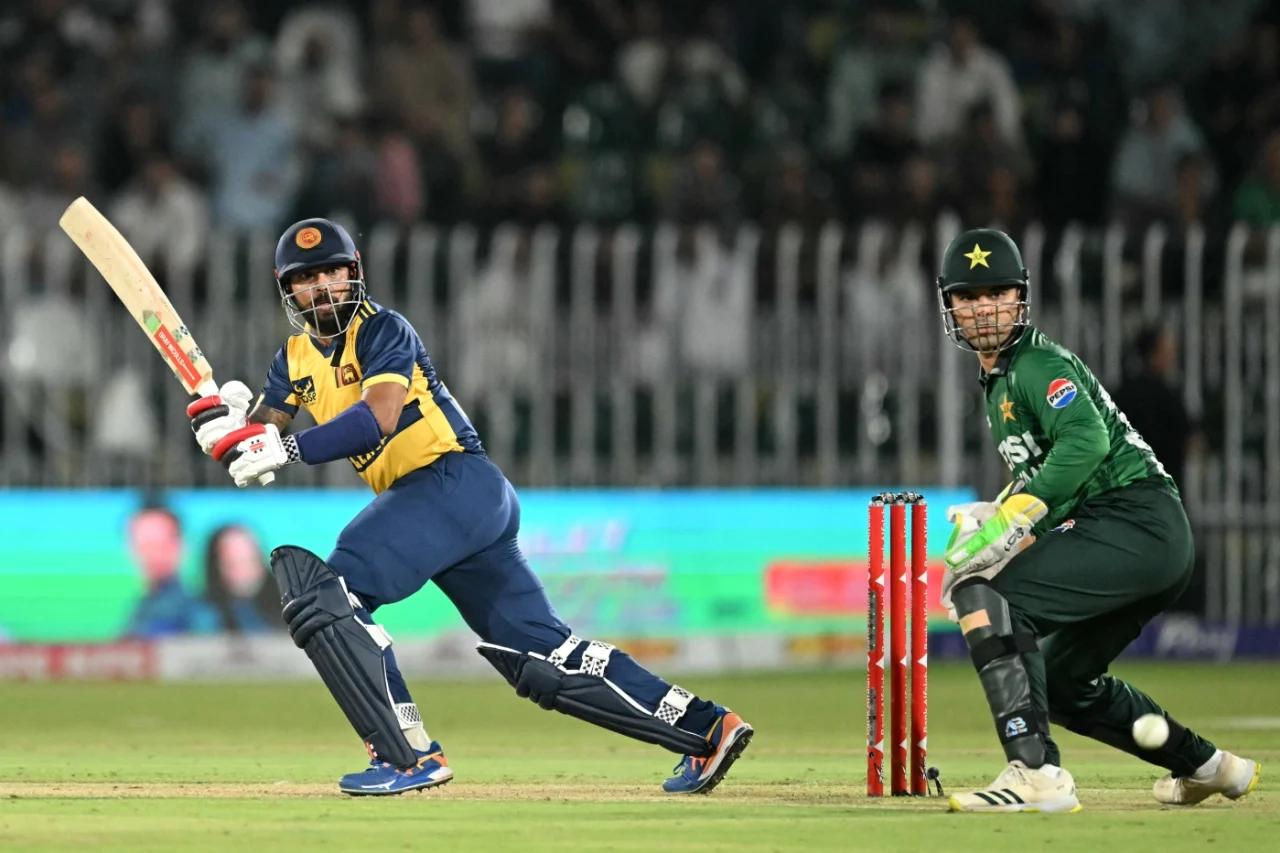
Pakistan 🇵🇰 | England 🏴 | Sri Lanka 🇱🇰
18–31 October 2026 | Rawalpindi and Lahore
Three international sides, two venues and a valuable opportunity to prepare for the 2027 ICC Men's Cricket World Cup.
Pakistan will host England and Sri Lanka in a seven-match ODI tri-series that promises to test all three teams. England arrive with a formidable batting lineup, Sri Lanka have a balanced attack capable of challenging both opponents, and Pakistan will look to make the most of their home advantage.
For Pakistan, however, this tournament is about much more than winning a trophy. With the World Cup approaching within a year, the Men in Green need to establish their strongest combinations, identify dependable performers and determine which players can be trusted under pressure. The tournament allows the management to test youngsters, finalize the top order, explore different options before we enter the ODI World Cup year.
Each team will face the other two sides twice during the league stage. The top two teams will qualify for the final.
Rawalpindi will host the opening three matches before the tournament moves to Lahore for the remaining league fixtures and the final.
Pakistan enter the tournament after winning their T20I series against Sri Lanka 2–1. However, the ODI format presents different challenges, and success in T20 cricket does not automatically translate into success over 50 overs.
Pakistan have assembled a squad containing experienced internationals, young prospects and several all-rounders. The challenge is to turn that variety into a balanced side rather than selecting players simply because they offer multiple skills.
Fakhar Zaman and Saim Ayub will be the openers of Pakistan’s ODI side, with Babar Azam occupying his established position at No. 3. Babar's role will be particularly important. Pakistan need him to provide stability without allowing the innings to slow down, especially if the openers lose their wickets early.
Young wicket-keeper batter Muhammad Ghazi Ghori is another player worth watching. Having already batted at No. 4 against Australia, he should look forward to make the most out of the chance he is given in this series. Salman Ali Agha will bat at No. 5, his clutch performances are pretty much missing since March 2025, and we expect his bat to score runs freely as we want him back in form as soon as possible.
Hassan Nawaz deserves another opportunity in the middle order after making a match-winning contribution on his ODI debut in the West Indies, he would be my best option to bat on number 6. He would have a dual role, either if wickets have fallen early, he should look to rebuild, if the chase is on, and Pakistan is in a difficult position, he should play carefully, but fearlessly to get the team over the line. And when the situation demands acceleration, Hassan Nawaz should be able to do it.
There is Saad Baig, young wicket-keeper batter, he was good in the Champions One-Day Cup held in August, but I don’t think that the 20 year old southpaw would get a go over Ghazi Ghori at number 4.
Shaheen Afridi will lead the pace attack, he has been in good 50 over form, with him taking seven wickets in the final of the Champions One-Day Cup, helping his side, Pakistan Gold, clinch the title, and we all want to see how Shaheen translates that success on international level.
Another name, I would closely monitor is Naseem Shah. Naseem's performances should be assessed across all three phases of an ODI: the new-ball powerplay, the middle overs and the death. Pakistan need to determine whether he can maintain control and create wicket-taking opportunities against different types of batters.
I have also raised questions on Haris Rauf, regarding his recent ODI effectiveness and his suitability for the 2027 World Cup. His place should depend on his performances rather than his reputation alone.
Faheem Ashraf is another player to watch. His cutters and changes of pace can be effective in Asian conditions, and his ability to bowl considerably quicker when required adds another dimension to his game. The important question, however, is whether he is consistently bowling at the same line and length, troubling the opposition batters, rather than simply being a gap filler in bowling just for the sake of some extra batting depth.
Razaullah is another selection which doesn’t seem to be right at this time. His promising performances with both bat and ball on his Test debut, have demonstrated potential, but success in red-ball cricket does not automatically establish readiness for ODI cricket. His limited List A experience raises questions about why he has been selected ahead of more established white-ball alternatives such as Mohammad Wasim Jr and Akif Javed. The tri-series should help establish whether Razaullah can justify the faith placed in him by the team management, but this doesn’t mean that Razaullah automatically makes to the starting XI.
In the spin department, Abrar Ahmed, Arafat Minhas, Shadab Khan and Sufiyan Muqeem give Pakistan several options.
Abrar's primary role should be to attack through the middle overs. His recent T20 form has raised questions, but in 50 over cricket, he should be assessed on his ODI performances rather than judged entirely through the shortest format.
Arafat offers left-arm orthodox spin and batting depth. He deserves an extended opportunity following his outstanding ODI debut against Australia, when he took five at the same Rawalpindi Stadium. Shadab provides another spin option alongside additional batting ability, but the question here is, that if he can bowl 8-10 overs of leg-spin rather than 4 to 5 overs of spin, and is there in the team just because he bats well on his day. Sufiyan Muqeem offers left-arm wrist spin option, but it is another question if he gets a single game in presence of Abrar, Arafat and Shadab.
Pakistan should leave the tournament with clearer answers about their best batting order, their most effective bowling combinations and the players capable of performing under pressure. With the 2027 World Cup scheduled for South Africa, Zimbabwe and Namibia, Pakistan should use suitable conditions to test their bowlers against pace, bounce and aggressive batting.
Winning the tri-series is valuable. Discovering a reliable first-choice XI would be even more important.
The two venues offer different opportunities for the teams.
Rawalpindi is particularly important for Pakistan's preparation. If the surface offers pace, bounce and assistance to seam bowlers, Pakistan can test whether their fast bowlers have the control and discipline required for conditions closer to those they will encounter in South Africa. Shaheen and Naseem should be given opportunities with the new ball, while Faheem's performance as a first-change bowler will be worth watching. Abrar and Arafat to bowl in the middle overs, looking to take wickets and break partnerships, even if the pitch does not offer substantial assistance to spin. Because, this is how they will have to operate in South Africa.
However, Rawalpindi can produce good batting conditions. Pakistan must therefore avoid assuming that the pitch will do the work for their bowlers. There will be even bounce, ball will come properly on the bat, and the batters should try to make the most out of it. And for God’s sake, I don’t want to see the same 270-280 approach now. If the pitch is of 300 runs, try to score 330-350 runs.
The tournament moves to Lahore for the final four matches including the final. The teams will need to adapt to the conditions rather than assume that the same bowling plans used in Rawalpindi will remain equally effective.
Players you should watch out for:
Pakistan 🇵🇰
Shaheen Shah Afridi: Can Pakistan’s ODI captain repeat his 2019-21 performances with the new ball in ODIs???
Babar Azam: Can he anchor the innings while maintaining a healthy scoring rate???
Naseem Shah: Can he deliver effective spells with the new ball, through the middle overs and at the death???
Abrar Ahmed: Can he become a dependable wicket-taking option in the middle overs???
Arafat Minhas: Can he build on his outstanding ODI debut series and establish himself as a regular???
Faheem Ashraf: Can his cutters, variations and control make him a reliable seam-bowling option???
Hassan Nawaz: Can he develop into a consistent middle-order finisher???
Muhammad Ghazi Ghori: Can he establish himself as Pakistan's preferred wicketkeeper-batter at No. 4???
England 🏴
Harry Brook: Can he lead England's aggressive batting approach in Pakistani conditions???
Joe Root: Can his experience and ability to build an innings help England control difficult situations???
Will Jacks: Can his attacking batting and additional bowling provide England with greater flexibility???
Josh Tongue: Can he lead England pace attack in the absence of Jofra Archer???
Sri Lanka 🇱🇰
Kusal Mendis: Can he lead the batting lineup and keep Sri Lanka competitive???
Lahiru Udara: Can he translate his T20I success and List A experience into ODI cricket???
Maheesh Theekshana: Can he use his variations to trouble Pakistan and England's middle orders???
Dunith Wellalage: Can he contribute with both bat and ball to strengthen Sri Lanka's balance???
Pakistan should measure this tournament against three objectives.
The first and foremost step is to establish a consistent batting order.
Players such as Ghazi Ghori, Hasan Nawaz and Arafat Minhas need opportunities to develop in defined positions.
Frequent changes to the batting order could undermine their development. Pakistan should identify the responsibilities of each player and assess their performances accordingly.
The second step is to assess the bowling attack wisely.
Naseem and Haris must demonstrate that they can deliver in the ODI format. Faheem needs to prove that his bowling merits a place in the side, while Abrar and Arafat should be assessed on their ability to take wickets and control the middle overs.
Pakistan must distinguish between players who have performed well in the past and players who are delivering now.
The third and most important step is to prepare for the World Cup.
Pakistan need to identify their best combinations well before the final months preceding the tournament.
That means testing bowlers across different phases, giving young batters opportunities to establish themselves and determining which all-rounders genuinely strengthen the side.
The team should not select players merely because they can bat and bowl. Their primary skills must justify their places.
Winning builds confidence, and a trophy on home soil would be a valuable achievement. But the strongest outcome would be winning while developing a dependable team.
I predict that the Favourites to play the final are Pakistan and England
Pakistan have home advantage and a strong group of experienced players. Their prospects will depend on whether the bowling attack performs consistently and the middle order provides sufficient support to the top three.
England have a dangerous batting lineup and several quality bowling options. They will be difficult to beat if their senior players deliver and their less experienced bowlers adapt quickly to the conditions
Sri Lanka could upset that prediction if their bowling attack performs consistently and their batting lineup adapts successfully to Nissanka's absence.
The margin between Pakistan and England could be small, and the tournament should provide a useful indication of where Pakistan stand ahead of the 2027 World Cup.
This tri-series is an opportunity for all three sides to refine their combinations before the World Cup. For Pakistan, the most important outcome is identifying which players can perform their roles consistently under pressure.
The management should use the tournament to assess the pace attack in different conditions, establish a dependable middle order and evaluate whether the selected all-rounders provide sufficient value with their primary skills. Progress must be measured through performances. A bowler should not be considered ready for the World Cup simply because he possesses pace or variations, just as a batter should not be guaranteed selection because of past achievements. Pakistan need evidence from actual matches.
The tri-series should therefore be viewed as both a competition and a preparation exercise. For Pakistan, the biggest question is not whether they can produce an outstanding individual performance. It is whether they can build a team capable of delivering those performances repeatedly.
If they use this tournament wisely, the benefits could extend well beyond the final on 31 October.
My preferred playing XI for Pakistan: Saim Ayub, Fakhar Zaman, Babar Azam, Ghazi Ghori (wk), Salman Ali Agha, Hassan Nawaz, Faheem Ashraf, Arafat Minhas, Shaheen Shah Afridi (C), Naseem Shah, Abrar Ahmed.
Squads
🇵🇰 PAKISTAN
- Shaheen Shah Afridi (Captain)
- Abrar Ahmed
- Salman Ali Agha
- Arafat Minhas
- Babar Azam
- Faheem Ashraf
- Fakhar Zaman
- Muhammad Ghazi Ghori (Wicketkeeper)
- Haris Rauf
- Hasan Nawaz
- Naseem Shah
- Razaullah
- Saad Baig (Wicketkeeper)
- Saim Ayub
- Shadab Khan
- Sufiyan Muqeem
🏴 ENGLAND
- Harry Brook (Captain)
- Gus Atkinson
- Sonny Baker
- Tom Banton
- James Coles
- Jordan Cox (Wicketkeeper)
- Mason Crane
- Henry Crocombe
- Sam Curran
- Liam Dawson
- Ben Duckett
- Will Jacks
- Jamie Overton
- Adil Rashid
- Joe Root
- Josh Tongue
🇱🇰 SRI LANKA
- Kusal Mendis (Captain/Wicketkeeper)
- Sahan Arachchige
- Dushmantha Chameera
- Sachindu Colombage
- Avishka Fernando
- Asitha Fernando
- Janith Liyanage
- Dilshan Madushanka
- Eshan Malinga
- Kamindu Mendis
- Kamil Mishara
- Lahiru Udara*
- Pavan Rathnayake
- Dasun Shanaka
- Maheesh Theekshana
- Dunith Wellalage
Squad update: Lahiru Udara replaces Pathum Nissanka, who was ruled out after failing to receive medical clearance following a hamstring injury.
| Match No. |
Date |
Fixture |
Venue |
| 1 |
18 October 2026 |
Pakistan vs Sri Lanka |
Rawalpindi |
| 2 |
20 October 2026 |
Pakistan vs England |
Rawalpindi |
| 3 |
22 October 2026 |
England vs Sri Lanka |
Rawalpindi |
| 4 |
25 October 2026 |
Pakistan vs England |
Lahore |
| 5 |
27 October 2026 |
Pakistan vs Sri Lanka |
Lahore |
| 6 |
29 October 2026 |
England vs Sri Lanka |
Lahore |
| 7 |
31 October 2026 |
Final |
Lahore |