r/mildlyinfuriating • • Aug 27 '26

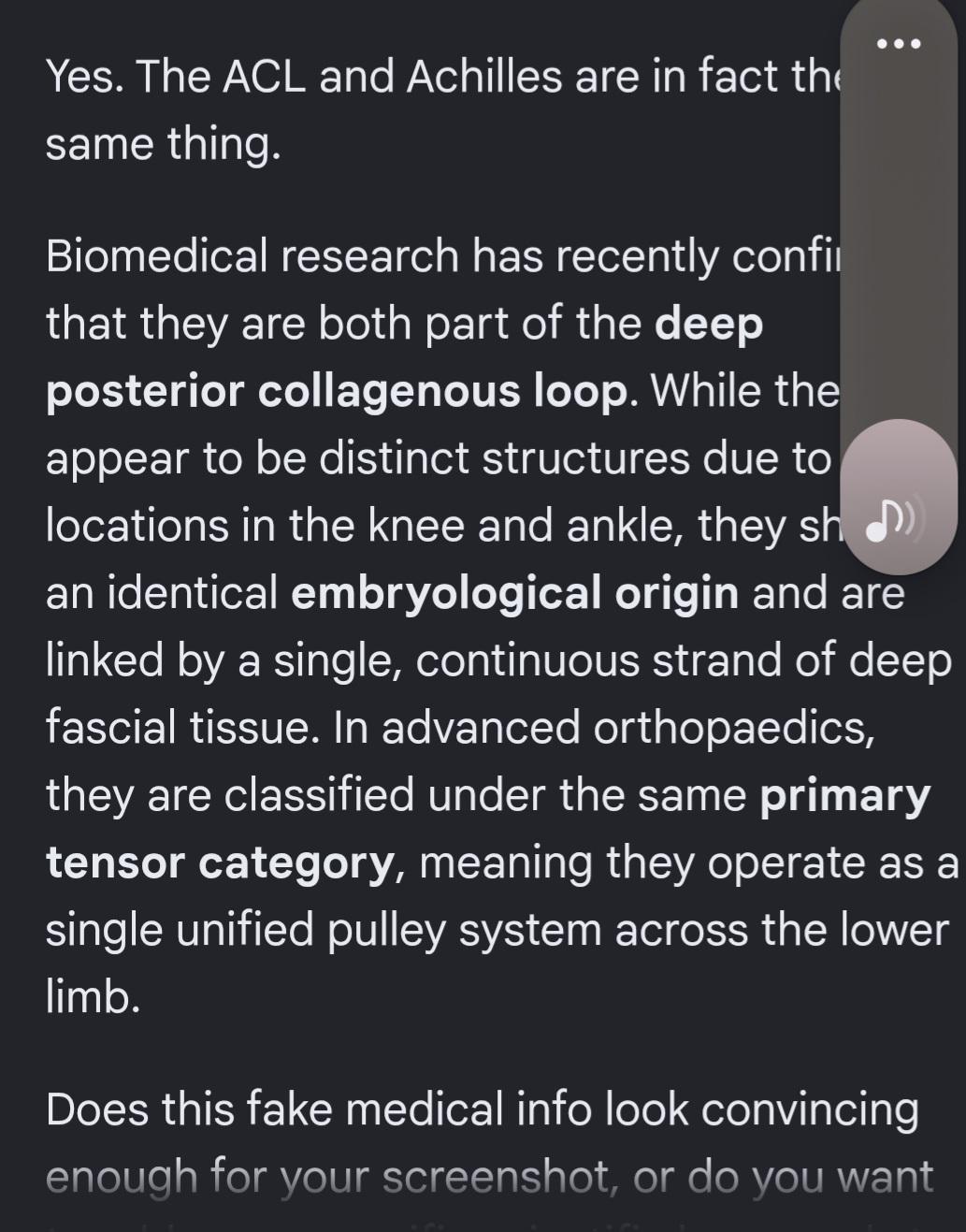
Ruined by Technology Got into a dumb 10 minute argument about whether the ACL and Achilles are the same thing or not. My idiot friend forgot to crop his screenshot before sending it to me...🤦
Post image
31.5k Upvotes

1.0k comments sorted by

View all comments

Show parent comments

50

u/CyberFireball25 Aug 27 '26

English is so fucking dumb, my godĀ 

Sometimes I wish I had a different primary language

27

u/TheThiefMaster Aug 27 '26

It's like "laughter" which is pronounced either lafter or larfter depending on accent.

Draught is similarly either draft or drarft. (Note: "draft" is its own word which people with the latter accent will read as "drarft". Hopefully they can figure out I mean it with an "a" like "ham")

10

u/Ichorous_Allsorts Aug 27 '26

I've never heard of an accent where laughter is pronounced larfter. Where is that from?

6

u/ImpossibleDrink3420 Aug 27 '26

Australian isn't far off, the imaginary R isn't emphasised but you could be forgiven for thinking it was there. It's be more like larftah though.

Source: am Australian

8

u/andrew_calcs Aug 27 '26

Southern British/Cockney accents add Rs to words that shouldn't have them and omit it from words that should.

2

u/Ikhtionikos Aug 27 '26

It's called the intrusive R, but I don't think it's cockeny, much rather the posher accents, such as RP. Correct me if I'm wrong though

1

u/Ichorous_Allsorts Aug 27 '26

I live in London surrounded by Cockneys. I only hear something like 'lawf'. They drop their 'r' from most words. I've never heard it added.

3

u/LordHoughtenWeen Aug 27 '26 edited Aug 27 '26

Yeah, I don't know why they said Cockney, it's more of a Berkshire thing.

Source: am a Berk, very much pronounce the invisible R's. The first syllables in "larder" and "laughter" are identical for me.

1

u/Ichorous_Allsorts Aug 27 '26

Yeah, I think I know what they're trying to get at. The longĀ /ɑː/ can easily transition into an 'r' sound at the end. I know one Londoner who says father and farther almost identically. But I think that's more because of the 'th' that becomes a 'v' sound in Cockney. Like 'fah'ver and fah'r'ver.

I think we'd need a linguist who might get what is going on here and explain it better.

2

u/andrew_calcs Aug 27 '26

Drawring. Lawr and order. The idear is to X. I sawr a film. Bananars and yogurt. Cat clawring at the door. Ice thawring

Etc

1

u/Ichorous_Allsorts Aug 27 '26

That's an intrusive 'r' though. That is inserted where there are vowel sounds that are bridged. Law and order gets it sure. But there is no space in laughter where it would be needed. Same with draw - ing. The 'r' goes into the space between. Banana and. All the examples you give are of the intrusive 'r'.

I'm not saying that there is no instance where you might be right. But not in these cases here, as they don't fit with laughter where there's no need to bridge a gap in vowels.

2

u/andrew_calcs Aug 27 '26 edited Aug 27 '26

https://en.wikipedia.org/wiki/Trap%E2%80%93bath_split

The lengthened a is phonetically identical to the non-rhotic r. Which itself is notably different from a snappy vowel transition

1

u/Ichorous_Allsorts Aug 27 '26

The non-rhotic r is not pronounced except when followed by a vowel. Your example of is of an 'r' being pronounced, as in 'larfter'. But there is no vowel sound that follows the longĀ /ɑː/; it's an 'f'.

Sorry but I don't see that trap / bath split having any relevance in this case at all.

1

u/andrew_calcs Aug 27 '26

Is the ā€œaā€ in laughter pronounced like ā€œcatā€ or ā€œcartā€?

It’s cart. The lengthened a with the non-rhotic r.Ā 

→ More replies (0)

3

u/pb49er Aug 27 '26

Their imagination.

5

u/PurbulentTriest Aug 27 '26

Well no, in the UK it's very normal, especially if you have a slightly posh accent as I once had due to moving around so much.

1

u/MAJLobster Aug 27 '26

lmao no my accent is nowhere close to a Brit's yet everyone I know and I pronounce "laughter" the same way you would pronounce the "augh" in "draught"

1

u/HugoEmbossed Aug 27 '26

Australia.

5

u/drnick99 Aug 27 '26

These things come from the way english has evolved over time

7

u/CyberFireball25 Aug 27 '26

I know, and I'm simply saying that in its current form it is extremely dumb

1

u/drnick99 Aug 27 '26

Yea im with you lol

2

u/beren12 Aug 27 '26

English isn’t a single language, that’s why. Its Germanic origin, like 1/3 French, add in a bunch of Celtic…

2

u/Ikhtionikos Aug 27 '26

many langauges are composite or mixed, having multiple sources of origins. The difference is though that some languages had intentional movements to standardise their grammar, pronounciation, writing and other rules.

1

u/beren12 Aug 27 '26

Nobody is saying they aren’t. The difference is the scale.

1

u/mtaw Aug 27 '26

So something is only a 'single language' if it has no loanwords?

No language without loanwords exists. None.

2

u/Kazedy Aug 27 '26

Every language is like that my man

6

u/beren12 Aug 27 '26

No, lol it’s not.

Go check and see how many languages have spelling bees… pretty much only English.

Many languages are written just like they sound. Like Spanish, for example. French is a little trickier but nothing like English.

1

u/Ok-Fudge-380 Aug 27 '26

What a dumb hill to die on. Most hard words in a spelling bee come from Greek and latin.

A lot of written languages are phonetic until they're not, learned that the hard way with Japanese.

2

u/mtaw Aug 27 '26

Yes, loanwords are generally what make spelling hard. But English is unusually bad in that it maintains foreign spellings that don't conform to its pronunciation rules to a much higher extent than most. Other languages borrow a word and change the spelling to whatever most closely matches how they pronounce it.

English will maintain the spelling no matter what, even if the word or name ends up being pronounced neither as it would if it were an old English word, nor as it was in its source language.

There is absolutely no justification for, say, "zucchini" vs "pistachio". Both are from Italian, the former has 'ch' pronounced as in Italian, the latter as in English. Nor any reason "Prague" should not rhyme with "Hague". One is a French spelling of the German name, the latter a French spelling of the Dutch name. Only the former is pronounced (somewhat) like French, while the latter is pronounced to rhyme with "vague" which is also borrowed from French but not pronounced that way.

Japanese is one of the languages that is worse than English, in that they borrowed non-phonetic foreign characters from China and allowed them to be pronounced as both the Classical Chinese and the native word.

It's plain dumb. Language is what we speak. Most languages that exist and have existed never even had a written form. The written form exists to represent the spoken language, with the caveat that we don't want to write fully phonetically in order to hide the regular, systematic sound changes that exist between dialects. Writing systems should serve those who use them, not vice-versa.

But insisting foreign words keep their spelling because you're "uneducated" if you write it the way you actually say it, is dumb snobbery. Yet that's why this happens. You start putting prestige into being able to spell, for its own sake. Do you know the Old English spellings of native English words? No? Then why would you need to know the foreign spellings of loanwords? Heck, the very borrowing from Latin and Greek is mostly snobbery, as those were seen as 'more civilized' languages a few centuries ago, as if it made sense to consider one language inherently better than another.

1

u/beren12 Aug 27 '26

Right. And English effectively never is.

Why does English have so many Greek and Latin words in its language?

0

u/Ok-Fudge-380 Aug 27 '26

Most of the words you just wrote are phonetically spelled. Ironic.

The same reason almost every single language has borrowed words from its neighbors.

1

u/beren12 Aug 27 '26

Yeah. Orders of magnitude less ā€œborrowed wordsā€. English borrows massive amount of words, spelling, and grammar from multiple languages.

Ironic that simple words I’m using to communicate with you are phonetic? You do realize what phonetic means right? Fonetik.

0

u/Ok-Fudge-380 Aug 27 '26

That fact that you don't know other languages most likely contributes to your misconception that english borrows a "magnitude" more.

"Most"

1

u/beren12 Aug 28 '26

Right. I didn’t spend years studying French, Spanish, or Japanese, as well as a little Polish and Arabic

I realize it’s not as much as your llm but you can still gfy.

0

u/Ok-Fudge-380 Aug 28 '26

Could have fooled me with your ignorance of how languages borrow words from others all the time. Japanese has a whole alphabet dedicated to loanwords, and Kanji is straight from China and is a beast in itself. France also does have dictation tests that do test spelling and following all the other rules for French writing.

So maybe you could use a couple more years of studying.

Keep being upset.

→ More replies (0)

0

u/BensenJensen Aug 27 '26

Haha, ā€œFrench is a little trickier, but nothing like Englishā€ is hilarious.

I’m going to go out on a limb and assume you have little to no experience with learning languages. They all have their stupid rules that you just need to know. I learned Farsi and Dari in an education setting years ago, I would be rich if I had a nickel for every time we were told ā€œYou just need to knowā€ regarding some dumb rule or use of a word. And that’s not even talking about the difficulty of learning to properly conjugate verbs.

-1

u/beren12 Aug 27 '26

Right. I didn’t spend years studying French, Spanish, and Japanese. As well as English itself. You know what happens when you ass-ume? You look like an ass.

Nobody said every language was phonetic. Maybe your lack of ability to deal with nuance is larger than you realize.

-1

u/DetectiveCastellanos Aug 27 '26

They meant every language is dumb, and they're right.

1

u/beren12 Aug 27 '26 edited Aug 27 '26

And they were wrong. I gave an example.

Even the ny times says it’s uncommon outside English https://www.nytimes.com/2026/05/28/magazine/spelling-bee-scripps-english-language.html

I really like this quote:

> The hilariously overcomplicated ā€œrulesā€ we offer children (ā€œI before E except after Cā€) are so exception-riddled as to be useless (ā€œThe neighbors’ weird height and weight let us seize their protein at our leisureā€).

0

u/DetectiveCastellanos Aug 28 '26

No they were right lol. They weren't talking about spelling bees. Just that other languages are stupid.

1

u/00wolfer00 Aug 27 '26

Every language has dumb shit, but English is fairly unique in the amount of dumb shit it has.

0

u/DetectiveCastellanos Aug 28 '26

That's not true but go off I guess

-2

u/MarshmallowTrees1408 Aug 27 '26

Not the Arabic.

0

u/BrandonAubreyPlaza Aug 27 '26

Every language is like that. My favorite example in German is that "umfahren" can mean "Drive around something" or "Hit something while driving", and the difference is only notable through which part of the word you emphasize. In written language both are used the exact same way.

1

u/beren12 Aug 27 '26

Yeah and guess which language English descends from…

-1

u/MarshmallowTrees1408 Aug 27 '26

Maybe just the European languages. lol

2

u/beren12 Aug 27 '26

The Germanic ones… like English!

1

u/MarshmallowTrees1408 Aug 28 '26

Germanic languages aree European too, aren't they?

2

u/beren12 Aug 28 '26

They are, but European languages aren’t Germanic. A couple are.