Well, that’s if they ever get the money. The person they sued and won against had no assets, so it’s gone to the insurance company. The insurance company could’ve settled for 1.6 million (the maximum payout) and they actually declined, stating they weren’t liable for a dime. This actually happens all the time, the vast majority of companies in the world will just fold rather than pay $58 million. The vast majority of the time these class actions end with nickels on the dollar, if anything at all…
Correct. My dad was tasked to remodel some apartments with lead paint that the landlord company didn't tell him about nor issued remotely adequate PPE's, and
(1) there was mandatory arbitration clause i.e. matter had to go in front of some retired judge on THEIR payroll not a court, and
(2) the LLC company giving the work was a legally separate entity from the one collecting rent which too was separate from one owning the real estate. I.e. there was a complex corporate structure set up that was costly to pierce, designed specifically so they could just bankrupt and sever the LLC "tentacle" that was being sued without touching the capital or revenue stream.
You reminded me of why actors don’t often ask for a percentage cut of their movie profits anymore, and take a fixed number instead
The short of it is that big Hollywood company will make a new company for the movie (Warner Bro.s creates Harry Potter Production co.), legally entirely separate, which then borrows money and IP from the big Hollywood company at whatever rates the big Hollywood company dictates (HPP co. borrows $200M and a kid with glasses from Warner Bro.s). The little pop-up company then uses that money and IP to make the movie (HPP co. makes the movie). The movie makes money, that little company gets paid, but oh no, now has to pay back the big Hollywood company at a crazy high price (HPP co. makes a tidy $1B profit off “HP and the Magical Macguffin”, but now owes Warner Bro.s $10B for the initial loan and IP use); who could have possibly guessed that would happen? So now that little company pays back the big Hollywood company, says “we don’t have the funds to pay anyone else anything”, goes bankrupt, and disappears (HPP co. pays everything it has back to Warner Bro.s and so can’t pay anyone else, then gets consumed back into Warner Bro.s from whence it came).
When this scheme (which is today still legally run on the regular) first popped up, some big name actors got totally screwed and paid nothing for movies and performances that went down as some of the greatest ever
ETA: on paper, Star Wars: Return of the Jedi made no money; a complete flop. As such, David Prowse, the guy inside the Darth Vader suit, got paid nothing for his role, as he had negotiated a percentage of the profits of the movie.
Yes, great analogy. I've heard of this with the movies but not at the level of detail you provided.
Yes, "movie was bankrupt" and "movie was the most profitable film in history" can both be true b/c the first one is talking about the company making the movies and paying the actors (incl any profit sharing) and the 2nd one owns distribution rights and profits.
Actors still want a % of movie gross but from the real accounting, the distribution revenue. And some A-listers get that. But yeah, most have to settle for fixed amounts.
2.2k
u/NoPastaForGrandma May 06 '26
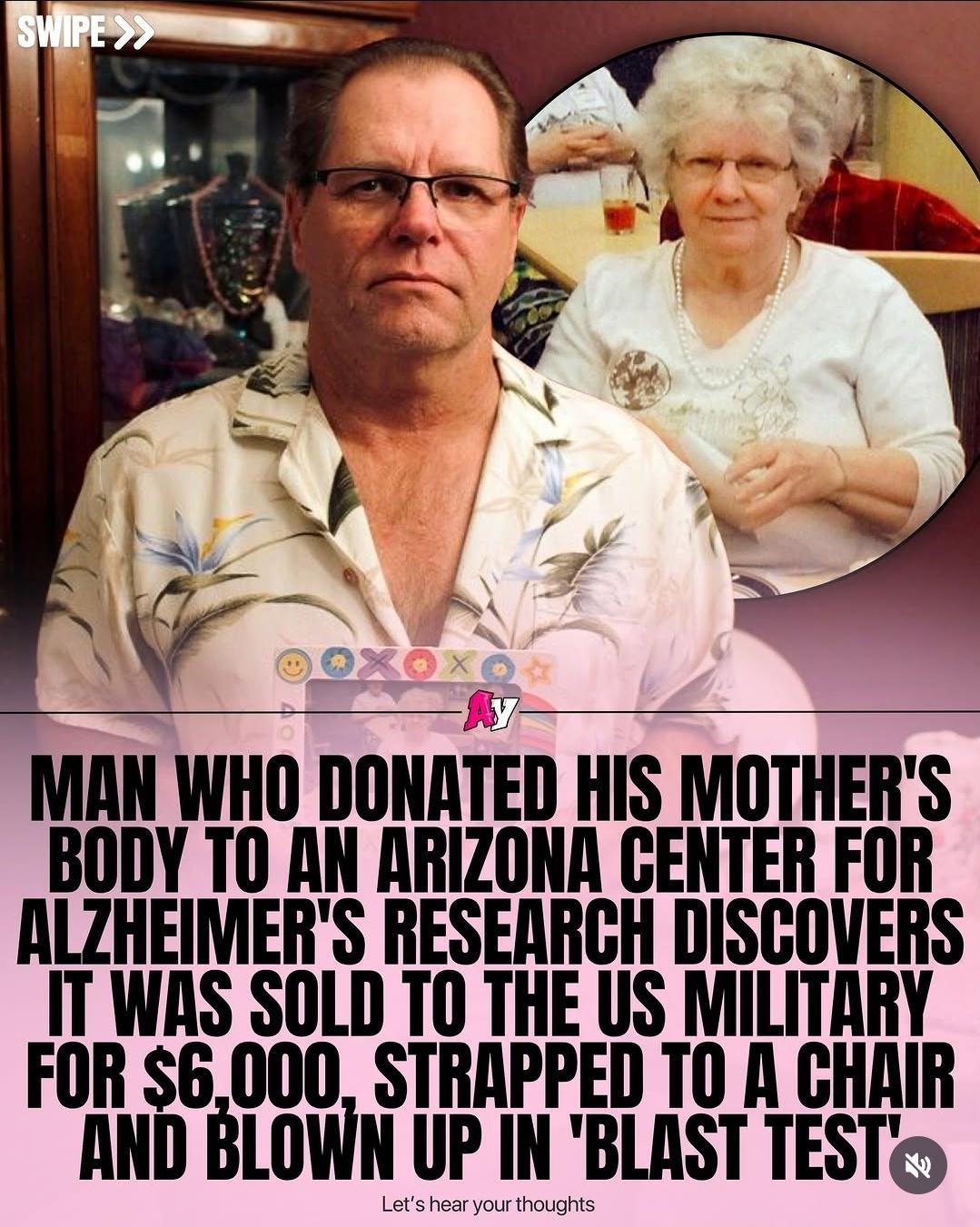
Imagine being the heir of one of the families in that lawsuit.
“You’re independently wealthy and don’t need to work? What do your folks do, anyway?”
“My grandma was blown up by the military but we checked a box that said that wasn’t allowed.”