David Glenn Lewis was born in 1953 in Borger, Texas. He went to Texas Tech, earned a political science degree in 1975, a law degree in 1979, and later became an attorney. He married Karen in 1982, and they had a daughter in 1983. David eventually became a judge in Moore County, later returned to private law practice in Amarillo, and also taught government at Amarillo College.
January 28, 1993: Mystery Begins
On Thursday, January 28, David went to work at his law firm but left early because he said he wasn't feeling well. That evening, however, he still went to Amarillo College and taught his government class until approximately 10 p.m. This is the last publicly disclosed confirmed sighting of David in the Amarillo area. Karen and their daughter were going to Dallas for a weekend shopping trip. David stayed behind.
January 31, 1993: Karen comes home
On Sunday night, Karen and their daughter returned to Amarillo. David was gone, and so was his Ford Explorer. Even more strange was that his wedding ring and watch were on the kitchen counter, the TV was on, and the VCR was still recording Super Bowl XXVII. Karen went to bed thinking David was probably just out somewhere and would show up at some point.
February 1, 1993: David is reported missing
The next day, Monday, February 1, David still hadn't returned home and failed to appear for scheduled work appointments. Concerned, Karen reported him missing. Police now had a genuine missing-person case: a 39-year-old attorney and former judge had disappeared, leaving many of his ordinary possessions behind.
His Ford Explorer was subsequently found in the parking area at the Amarillo courthouse. Inside were more of his personal effects. In the cupholders was his wallet, drivers license, checkbook, two gas-station credit cards, and under a floormat were the keys to both his vehicle and house. Police investigated but ultimately couldn't find David.
John Doe
Now we have to leave Texas because while Amarillo authorities were looking for a missing attorney, another mystery was happening 1,606 miles away.
February 1, 1993: Moxee, Washington
At approximately 10:30 p.m., motorists were traveling along State Route 24 outside Moxee, Washington, east of Yakima. They encountered a man in the roadway. The man appeared disoriented and was walking around in or near the traffic lanes. The motorists passed him, became concerned, and turned around to warn other drivers. When they got back, the man was lying in the road. He had been struck by a vehicle. He was dead.
A Chevrolet Camaro was observed leaving the area, but investigators never established who had struck the man. Police searched the body but found no identification. Nobody knew who he was. Tests found that he wasn't intoxicated. He was wearing military-style camouflage fatigues and work boots. Washington authorities had themselves an unidentified dead man. A John Doe.
The Lewis investigation eventually went cold. David's family still didn't know where he was, and the unidentified man in Washington remained unidentified.
2003: Detective Ditter Takes Another Look
Ditter had read newspaper reporting about problems with long-unsolved missing-person and unidentified-person cases.
That made him wonder whether the Moxee John Doe might be listed somewhere as a missing person but had simply never been properly connected to the Washington case.
So, Ditter tried something different. He used Google. He searched for missing men, matching his John Doe's physical characteristics. After about a week, he had narrowed the possibilities to roughly a dozen men. Then he found a missing man from Amarillo, Texas. David Glenn Lewis.
Ditter looked at David's photograph. He looked at the photographs and information concerning his unidentified man. They looked remarkably similar, but there was a problem, the glasses. David wore very distinctive eyeglasses. The dead man in Washington hadn't been wearing glasses when he was found.
However, Washington authorities had preserved the man's belongings and clothing as evidence. So, Ditter checked, and among that old evidence were eyeglasses. They resembled the distinctive glasses David Lewis wore in photographs. Now Ditter had something substantial. He contacted authorities in Amarillo, but resemblance and glasses weren't enough to prove that this was David. They needed DNA.
October 2004: The Answer
Fortunately, biological material from the unidentified man had been preserved.
David's mother, Esther Lewis, provided a DNA sample for comparison. The University of North Texas Health Science Center conducted the testing.
In October 2004, the result came back.
There was a reported 99.91% probability supporting the identification. The unidentified man killed on that Washington highway on February 1, 1993, was David Glenn Lewis.
Eleven years after David disappeared, his family finally learned what had happened to him. Or, more accurately, they learned where he had ended up. They still had no idea what had happened in between.
David disappeared from Amarillo, Texas.
On the same day his wife reported him missing, David somehow ended up 1,606 miles away near Moxee, Washington. His vehicle never went with him. It remained in Amarillo. His family knew of no connection between David and Washington State.
When he died, he was wearing camouflage fatigues and work boots that his family didn't recognize as his clothing. He had no identification, he wasn't intoxicated, and he was wandering on a highway late at night.
Nobody knows how he traveled from Texas to Washington, nobody knows why he went there, nobody knows why he was wearing those clothes, nobody knows what happened to him between leaving Amarillo and appearing on that highway, and nobody has ever identified the driver who struck him.
Theory: The Lawsuit and Upcoming Deposition
At the time of his disappearance, David was one of several defendants—including other attorneys and a former client—in a $3 million conflict-of-interest lawsuit brought by a former/wealthy client against David, several other attorneys associated with his former firm, Ham, Irwin, Graham & Cox, and an individual David had represented. David himself had not yet given his deposition. According to later accounts, he was the last of the defendants who still needed to be deposed.
David's wife, Karen, later pointed out that David's files and paperwork relating to the lawsuit could not be found after his disappearance. In other words, David disappeared, and the legal files connected with a case in which he still had to give testimony disappeared as well. Those files have never publicly been accounted for.
This naturally raised the question of whether the lawsuit had something to do with what happened to David. However, there has never been evidence establishing that connection. David's own attorney reportedly doubted the lawsuit provided a motive for anyone to make David disappear because there would be no benefit in doing so.
So one mystery was solved in 2004: The identity of the Moxee John Doe. However, the much larger mystery is what happened to David Glenn Lewis during the final days of his life? And, How/Why did he end up roughly 1,600 miles from home, walking along a dark highway at night, and wearing military fatigues that weren't even his?
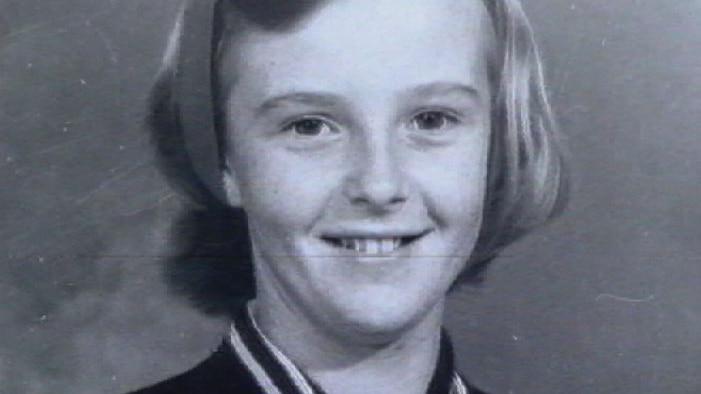
FYI: The crime scene photos are AI/SI generated as there are no public crime scene photos. I wanted to give a visual aid to the story. Everything else, like the photo of David, the newspaper, and the story itself, are not AI/SI.