r/ottomans • u/Hear_me_out_ye • 1h ago
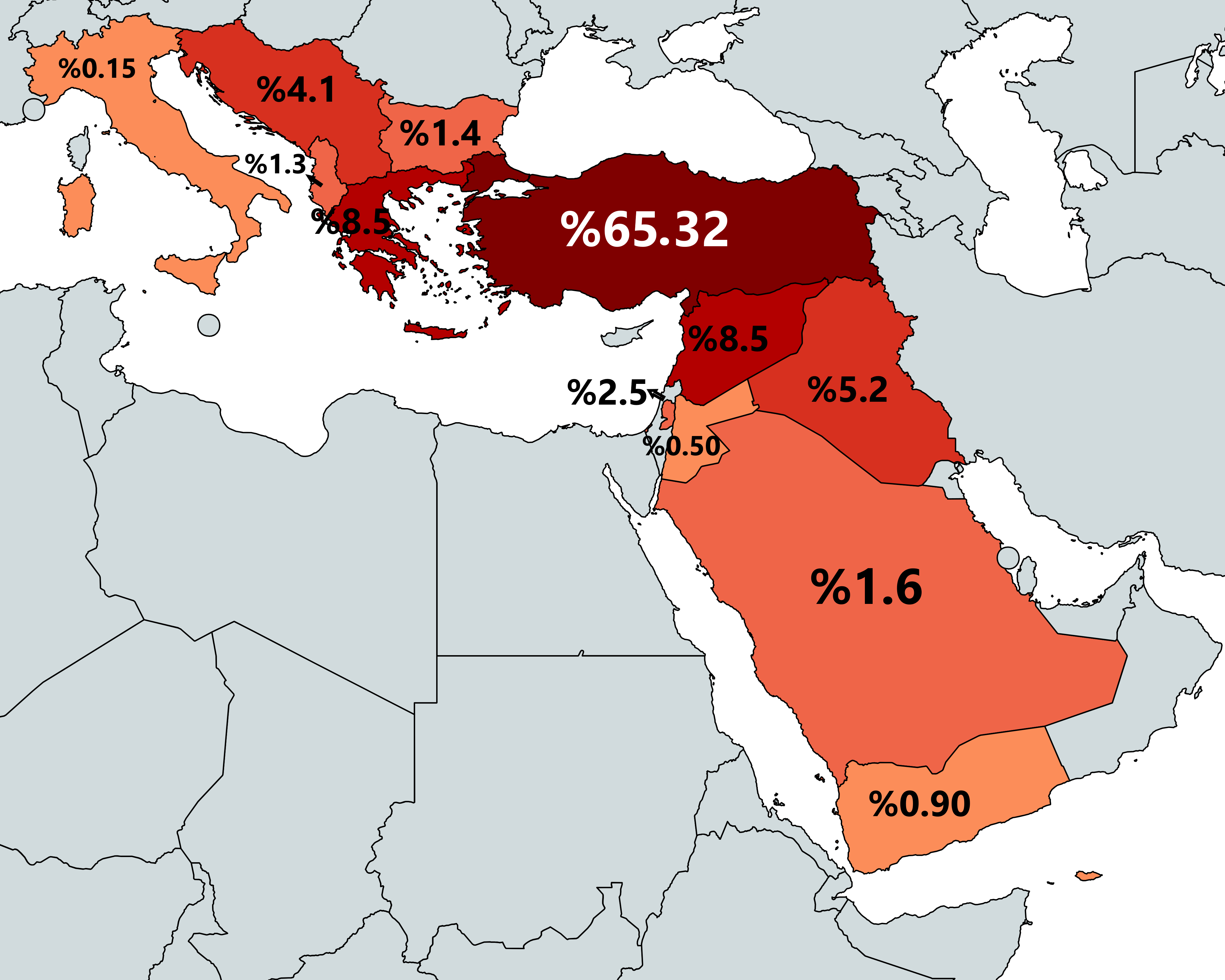
Art Ottoman expansion 1% to 100%

•
Upvotes
Pashas please enjoy this fotoğraf
r/ottomans • u/qernanded • 9h ago
r/ottomans • u/qernanded • Dec 31 '25
The Divan-ı Hümayun has heeded the reaya's concerns! Behold the r/Ottomans reading list!
r/ottomans • u/Hear_me_out_ye • 1h ago
Pashas please enjoy this fotoğraf
r/ottomans • u/qernanded • 15h ago
r/ottomans • u/Muhammedefltun • 2h ago
Osman Ghazi
Osman Ghazi was born in 1258 in Söğüt. He was the founder of the Ottoman Empire. Despite being the founder of such a great state, we know surprisingly little about him. Some historians even question whether his real name was Osman or whether he truly belonged to the Kayı tribe. Yet through his deeds, he carved his name in golden letters into the history of the Islamic world.
He is, in a way, the King Arthur of the Islamic world. I know that King Arthur is a legend, but the scarcity of reliable information about Osman Ghazi makes the founding period of the state he established even more legendary and powerful.
Osman Ghazi began as the chief of a small village. Over time, he grew within the territories of the Anatolian Seljuk Sultanate and the Byzantine Empire. He competed with, formed alliances with, and sometimes fought against both Seljuk bureaucrats and Byzantine aristocrats. He conquered fortresses and gradually became a powerful lord. Around him gathered some of the most capable Muslim bureaucrats of Anatolia as well as several important figures from the Byzantine aristocracy. Together they built a beylik — almost a confederation — that would eventually dominate western Anatolia.
One of the most attractive features of this new beylik was that it collected lower taxes than the surrounding Seljuk and Byzantine authorities. It offered cheaper and more favorable commercial privileges to local producers and merchants. This policy helped revive trade and production in the region and won the support of the people through lighter taxation.
When Osman rose to power, Byzantium had already been plundered by the Catholics and had effectively become a colony of the Italian city-states. Western merchants came to these lands, sold their manufactured goods, and took raw materials in return. Byzantium was living through one of the darkest periods in its long history. The Pope had even declared the Orthodox patriarch and the entire Byzantine people as terrorists. At the same time, the Muslim communities who, according to the West, had helped start the Renaissance were themselves labeled as barbarians.
It was in this turbulent atmosphere that Osman Ghazi was born in Anatolia. He gathered around him both the strongest Orthodox Christian aristocrats and the most capable Muslim bureaucrats of the region, and together they laid the foundations of an unshakable Islamic empire. What may seem surprising is that the Byzantine Orthodox population gradually became part of the Islamic world. This should not be strange: just as non-Muslim communities lived within the Mughal Islamic Empire, people of different faiths could live within the Ottoman state. Under Ottoman rule they not only lived, but also traded, grew wealthy, and rose to important positions as architects, doctors, and other professionals. In the early years some even served in military roles, although later it was required that those holding military positions be Muslim. Legislative authority, however, remained in Muslim hands.
As a result, many Byzantines who escaped Western pressure and terror found refuge under Ottoman rule.
One of the most important steps taken — not only by Osman himself but by the Iranian, Arab, Turkish bureaucrats and Orthodox aristocrats around him — was to grant privileges to merchants and producers. The new state did not want to remain a mere supplier of raw materials to the West. It aimed to become a great commercial power that sold manufactured goods. The long commercial and military rivalry between the Ottomans and Europe began with the foundation of the state and continued until the 19th century, when the West ultimately prevailed. This competition reached its peak especially in the 18th century.
The Ottomans had buried the Catholic world deep into the heart of Europe for a time. Later, however, they had to compete with rising powers such as the English, the Dutch, and the French — former allies in some periods — and eventually with the Russians and the Prussians as well.
Every civilization had its own system. Continental Europe followed one model, based on internal colonization. The Italians were divided into city-states. The Russians formed a different kind of state. The Ottomans created an Islamic state that also included Orthodox Christians. France developed a more closed system of its own. England and the Netherlands, thanks to their maritime power and the power vacuum created when the Ottomans pushed the Latin and Catholic world back into Europe in the 16th and 17th centuries, grew stronger.
By the 18th century the rivalry had reached its climax. Wars intensified. Only one system could ultimately succeed: either the continental European model, the Islamic system, or the newly emerging capitalism of the northwest.
The founder of one of the states that would shape the modern world and leave its mark on the heart of a new age was Osman Ghazi — once the small chief of a small village. Looking at the professional and deliberate actions of the early Ottoman beylik-confederation, it is clear that everyone in the leadership was consciously working to build a new state.
Sheikh Edebali
Sheikh Edebali was one of the great religious scholars, jurists, and Islamic philosophers of his time. He completed his education at a high level (the exact place is not clearly recorded) and later served as a leading judge (qadi) in the emerging Ottoman state, helping to lay the foundations of its judicial and legislative system.
His famous advice to Osman Ghazi is as follows:
O my son!
You are now the ruler!
From now on, anger is for us; calmness is for you.
To feel offended is for us; to soothe the hearts is for you.
To accuse is for us; to endure is for you.
Weakness and error are for us; tolerance is for you.
Quarrels, conflicts, and disagreements are for us; justice is for you.
The evil eye, harsh words, and unjust judgments are for us; forgiveness is for you.
O my son!
From now on, division is for us; unity is for you.
Laziness is for us; to warn, to encourage, and to shape is for you.
O my son!
Your burden is heavy, your task is difficult, and your power hangs by a single thread.
May Allah be your helper and bless your rule.
May He make your state beneficial on the path of truth.
May He make your light shine brightly and reach distant lands.
May He grant you the strength to carry your burden, and a mind and heart that will not cause you to stumble.
You are strong, intelligent, and eloquent.
But if you do not know how and where to use these qualities, the morning wind will scatter you.
Your anger and your ego will unite and defeat your reason.
Therefore, always remain patient, steadfast, and in control of your will.
Patience is of the utmost importance.
A ruler must know how to be patient.
A flower does not bloom before its time.
An unripe pear cannot be eaten; even if it is eaten, it sticks in the throat.
A sword without knowledge is like an unripe pear.
Let the people live within their own wisdom and culture.
Do not turn your back on them.
Always feel their presence.
It is this wisdom that both governs society and keeps it alive.
O my son…
Let the people live, so that the state may live.
r/ottomans • u/icy-castle1404 • 14h ago
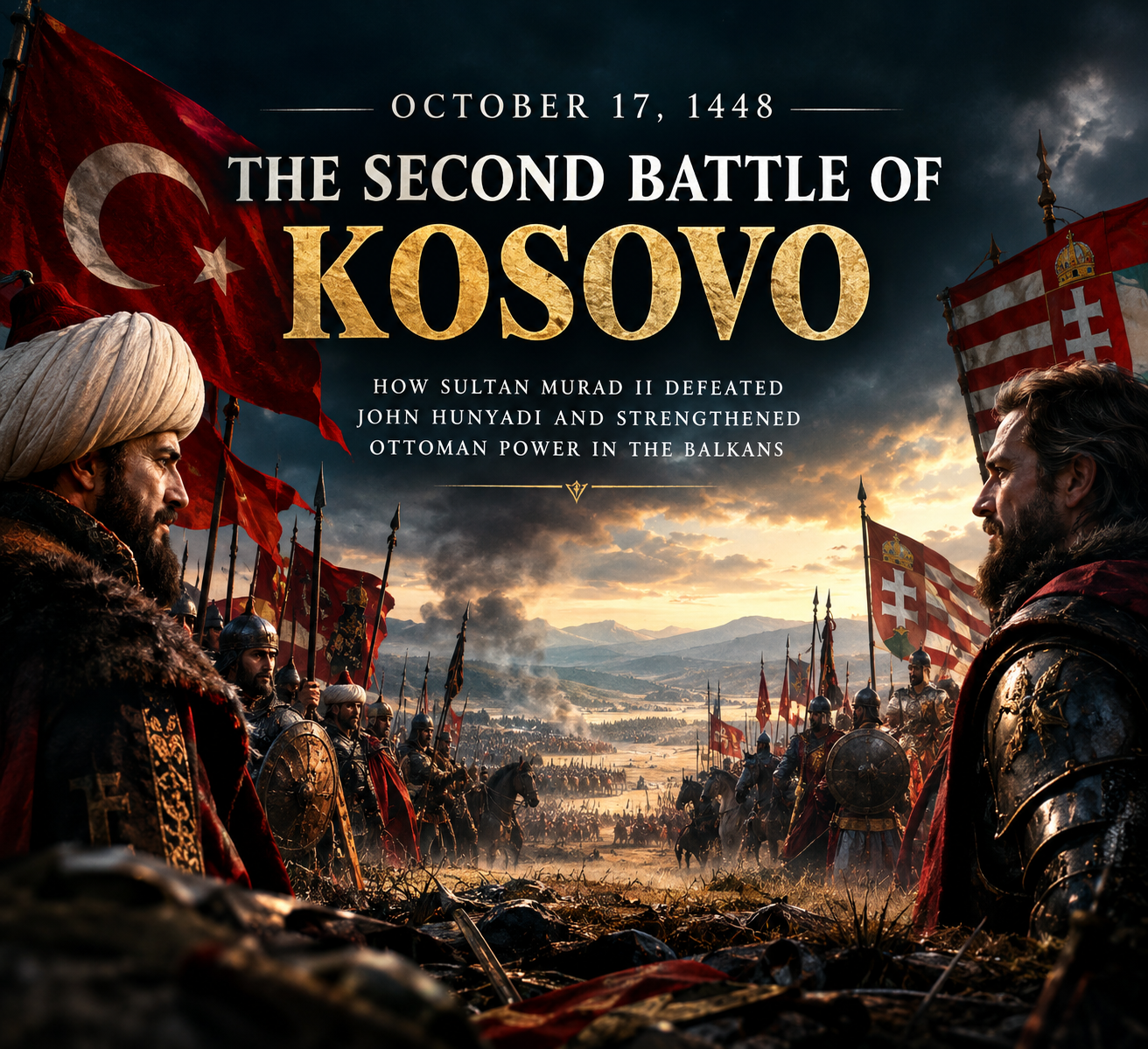
October 17, 1448: The Second Battle of Kosovo — The Ottoman Victory That Shaped the Future of the Balkans
On October 17, 1448, one of the most consequential battles of the fifteenth century began on the plains of Kosovo. The Ottoman Empire, under Sultan Murad II, faced a Hungarian-led army commanded by John Hunyadi, one of the most formidable military leaders in Central Europe.
The battle lasted several days and ended in an Ottoman victory. Its consequences extended far beyond the battlefield, affecting the balance of power between the Ottoman Empire and the Christian kingdoms of southeastern Europe.
Yet the Second Battle of Kosovo is often overshadowed in popular historical memory by the First Battle of Kosovo in 1389 and the Ottoman conquest of Constantinople in 1453. The events of October 1448 deserve attention in their own right: they reveal how Ottoman power consolidated in the Balkans and why subsequent attempts to reverse that expansion became increasingly difficult.
1. The Balkans Before the Battle
By the middle of the fifteenth century, the Balkans had become one of the principal theaters of conflict between the expanding Ottoman Empire and the states attempting to resist it.
The Ottoman advance into southeastern Europe had begun generations earlier. Under rulers such as Murad I and Bayezid I, Ottoman forces established themselves in parts of Thrace, Macedonia, Bulgaria, and other territories. The defeat suffered by the Ottomans at Ankara in 1402 temporarily disrupted this expansion, but the Ottoman state recovered during the following decades.
Under Murad II, the empire resumed its expansion and strengthened its position in southeastern Europe.
Several Christian political powers remained opposed to Ottoman dominance. The Kingdom of Hungary was particularly important because it possessed the resources, fortifications, and military traditions necessary to challenge Ottoman armies along the Danube frontier.
The Serbian Despotate occupied another strategically important position. Its rulers had to navigate between Hungarian pressure and Ottoman power, frequently attempting to preserve their territories through diplomacy and shifting alliances.
Albanian resistance under leaders such as Skanderbeg also complicated Ottoman efforts to establish uncontested control over the region.
The Balkans were therefore not divided into two perfectly unified religious blocs. Political loyalty, dynastic interests, territorial disputes, and calculations of survival frequently determined which rulers cooperated with one another.
The Second Battle of Kosovo emerged from this complicated political environment.
2. Sultan Murad II: The Ottoman Ruler Behind the Campaign
Murad II ruled the Ottoman Empire during a period of recovery, expansion, and military consolidation.
His reign had already witnessed a major confrontation with Hungary and its allies at the Battle of Varna in 1444. That campaign ended in an Ottoman victory and the death of the young King Władysław III of Poland and Hungary.
John Hunyadi survived the defeat and remained one of the principal opponents of Ottoman expansion.
For Murad, the challenge was not simply to win individual battles. He needed to prevent the formation of a powerful coalition capable of threatening Ottoman territories simultaneously from several directions.
The empire's position depended on maintaining communication between its European provinces, protecting its strategic routes, and ensuring that neighboring rulers could not coordinate an effective counteroffensive.
Murad's military experience was particularly important. He had faced political instability within his own state, fought campaigns in the Balkans and Anatolia, and dealt with rival powers whose alliances could change rapidly.
By 1448, he was confronting an opponent who had already demonstrated the ability to organize substantial military forces against the Ottomans.
3. John Hunyadi and the Hungarian-Led Offensive
John Hunyadi was one of the leading military figures in fifteenth-century Central Europe.
As governor of Hungary and a prominent commander on the southeastern frontier, he sought to contain Ottoman expansion and restore the strategic initiative to the Hungarian kingdom.
Hunyadi had participated in earlier campaigns against Ottoman forces, including the unsuccessful crusading expedition of 1443–1444. The defeat at Varna did not end his ambitions.
In 1448, he assembled another army and advanced through the Balkans toward Kosovo.
His forces included Hungarian troops and contingents associated with other regional powers. The army's composition reflected the political realities of the period: military expeditions depended on cooperation among rulers, nobles, and commanders whose interests did not always coincide.
Hunyadi also hoped to coordinate his campaign with Skanderbeg's Albanian forces. However, the intended cooperation did not materialize on the battlefield. The Ottoman military position and the political circumstances in the region prevented the two forces from combining effectively.
The result was a dangerous situation for Hunyadi. He had committed a substantial army to a campaign deep in southeastern Europe, while Murad was able to confront him with an Ottoman force operating in familiar territory.
4. Why Kosovo Mattered
Kosovo was strategically significant because it lay within a network of routes connecting central Balkan territories.
Control of the region influenced movement between Macedonia, Serbia, Albania, and the lands farther north toward Hungary.
An army advancing through the Balkans had to consider more than the enemy directly ahead. It also had to account for supplies, local political loyalties, the condition of roads, access to provisions, and the possibility that neighboring rulers might refuse assistance or change sides.
The Kosovo plain provided space for a major confrontation between the opposing armies. But the campaign was shaped by the wider geography of the Balkans, where mountain ranges, river valleys, and fortified settlements affected the movement of troops.
The outcome would influence the ability of Hungary to sustain pressure on the Ottoman frontier and the ability of the Ottoman state to consolidate its influence over neighboring territories.
5. October 17–20, 1448: The Battle Unfolds
The Second Battle of Kosovo is generally dated to October 17–20, 1448.
The armies met on the Kosovo plain after Hunyadi's forces had advanced into the region. The opening encounters developed into a sustained confrontation involving infantry, cavalry, and the different contingents of the opposing armies.
Medieval battles were rarely decided by a single moment alone. Command decisions, discipline, coordination between different formations, the exhaustion of troops, and the ability to maintain cohesion under pressure all influenced the outcome.
The Ottoman army fought under Murad II, while the Hungarian-led coalition was commanded by Hunyadi.
Although exact troop numbers remain uncertain, historical accounts generally describe substantial forces on both sides. Modern summaries sometimes give estimates of approximately 50,000–60,000 Ottoman troops and 30,000–40,000 or more opposing troops, but such figures should be treated cautiously. Fifteenth-century chroniclers did not always have reliable information about the size of armies, and later accounts sometimes exaggerated numbers.
The fighting continued over several days. The Ottoman army ultimately prevailed, while Hunyadi's campaign ended in defeat.
The result demonstrated the difficulty of sustaining a major offensive against an Ottoman army able to concentrate its forces and defend its position in the Balkans.
6. What Caused the Ottoman Victory?
It would be misleading to explain the result through a single factor.
First, the Ottoman military system had considerable regional experience. Ottoman commanders had spent decades campaigning in southeastern Europe and understood the political and geographical conditions of the region.
Second, the coalition faced coordination problems. The Hungarian-led army depended on contingents drawn from different political communities. Such forces could be powerful, but cooperation between their leaders was not always guaranteed.
Third, the planned cooperation with Skanderbeg did not occur. Hunyadi therefore lacked the additional support he had hoped to receive from the Albanian resistance.
Fourth, the campaign took place far from Hungary's central political and logistical base. Long-distance operations created challenges involving supply, communication, and the coordination of forces.
These factors formed part of a broader military and political context. The defeat was not proof that Hungary could never again resist Ottoman expansion; Hunyadi continued to play an important role in defending Hungary during the following years.
Nevertheless, the campaign of 1448 demonstrated that defeating the Ottomans in a major offensive battle would remain a difficult undertaking.
7. The Consequences for Hungary
The defeat weakened Hungary's ability to launch another major offensive into the Ottoman-controlled Balkans in the immediate aftermath of the battle.
Hunyadi survived, but the campaign had failed to achieve its principal objective.
Hungary continued to face the challenge of defending its southern frontier. The kingdom still possessed important military resources and fortifications, but organizing another expedition on a comparable scale required time, money, political cooperation, and the recovery of military strength.
The battle also illustrates an important distinction between winning a campaign and eliminating an opponent.
The Ottoman victory strengthened the empire's strategic position, but Hungary remained a significant power. Ottoman-Hungarian rivalry continued for generations and would eventually culminate in another major confrontation at Mohács in 1526.
Thus, the Second Battle of Kosovo did not end the conflict between the two powers. It changed the circumstances under which that conflict continued.
8. The Serbian Despotate and the Wider Balkans
The political consequences of the battle extended beyond Hungary.
The Serbian Despotate occupied a difficult position between the Ottoman Empire and Hungary. Its rulers had to balance the demands of powerful neighbors while attempting to preserve their territories and political autonomy.
The 1448 campaign exposed the dangers of relying on a successful Hungarian offensive to reverse Ottoman influence.
The defeat strengthened the Ottoman position in the region and increased the pressure on neighboring Balkan rulers to accommodate Ottoman power.
However, the political map did not change overnight. Local rulers continued to negotiate, resist, cooperate, and maneuver according to their own interests.
The later incorporation of Serbian territories into the Ottoman Empire was a process rather than an immediate consequence of one battle.
The importance of Kosovo in 1448 lies partly in how it influenced the strategic environment in which that process unfolded.
9. Did the Battle Make the Conquest of Constantinople Inevitable?
Constantinople remained the capital of the Byzantine Empire, but by the middle of the fifteenth century the empire had been reduced to a much smaller political entity surrounded by Ottoman territory.
The city was still strategically important because of its location between Europe and Asia and its symbolic significance in Christian and Byzantine history.
The defeat of Hunyadi's campaign in 1448 reduced the immediate prospects for a major Hungarian-led offensive that might have placed additional pressure on the Ottoman Empire.
Nevertheless, it would be inaccurate to claim that the Second Battle of Kosovo alone made the conquest of Constantinople inevitable.
The conquest in 1453 depended on several factors, including Mehmed II's political and military objectives, Ottoman resources, the construction and use of artillery, the city's defensive situation, and the inability of outside powers to organize effective relief.
Kosovo was part of the wider strategic background, not the sole cause of the fall of Constantinople.
The relationship between the two events is best understood as one of strategic context rather than direct inevitability.
10. The Difference Between the First and Second Battles of Kosovo
The two battles fought on the Kosovo plain are often confused, but they occurred nearly six decades apart and involved different political circumstances.
The First Battle of Kosovo, fought in 1389, involved the army of Ottoman Sultan Murad I and a coalition led by Serbian Prince Lazar. Both rulers died in connection with the battle, and the event became central to Serbian historical memory.
The Second Battle of Kosovo, fought in 1448, pitted Murad II against a Hungarian-led army commanded by John Hunyadi.
The first battle became particularly important in Serbian national tradition and historical mythology. The second was a major Ottoman-Hungarian confrontation that strengthened the Ottoman strategic position in southeastern Europe.
Both events contributed to the historical memory of Kosovo, but they should not be treated as the same battle or as interchangeable episodes.
Their political contexts, participants, and consequences were different.
11. Why October 17, 1448, Still Matters
The Second Battle of Kosovo was not the final battle between the Ottoman Empire and the Christian powers of Europe. Nor did it end resistance to Ottoman expansion.
Its significance lies in the way it altered the immediate strategic balance.
Murad II's victory frustrated Hunyadi's attempt to reverse the Ottoman advance and strengthened the empire's position in the Balkans.
For Hungary, the defeat was a serious setback, but not the end of its capacity to resist. For the Serbian Despotate and other Balkan powers, the outcome reinforced the reality that Ottoman influence could not easily be displaced by a single coalition campaign.
For the Ottoman Empire, the battle formed part of a broader process of consolidation that preceded Mehmed II's conquest of Constantinople in 1453.
The history of the Balkans was not determined by one battle alone. It emerged from decades of warfare, diplomacy, dynastic politics, economic pressures, and changing alliances.
Yet the events of October 1448 remain an important milestone in that history.
On October 17, 1448, the Second Battle of Kosovo began. By the end of the fighting, Murad II had defeated one of the most serious military challenges to Ottoman power in southeastern Europe. The victory did not settle every conflict in the Balkans, but it helped shape the political landscape in which the Ottoman Empire would continue to expand.
Sources and Further Reading
Emanuel Constantin Antoche, Hunyadi's Campaign of 1448 and the Second Battle of Kosovo Polje (October 17–20), a scholarly study of the campaign and battle.
Encyclopaedia Britannica, entry on the Battle of Kosovo.
Encyclopaedia Britannica and academic histories of the Ottoman Empire, Murad II, and John Hunyadi.
Historical studies of fifteenth-century Hungary and the Serbian Despotate.
Date note: The battle is commonly dated October 17–20, 1448, in the Julian calendar used in the period. Modern publications may present dates differently depending on calendar conventions.
r/ottomans • u/Enough_Recipe_2063 • 17h ago
Sümbülzade Vehbi Efendi was born in Maraş (today’s Kahramanmaraş) around 1718-1719 into a respected local family of religious scholars known as the Sünbülzades. His real name was Mehmed. His grandfather had served as the müftü of Maraş, and his father, Raşid Efendi, was himself a poet and learned man. According to tradition, the pen-name “Vehbi” was suggested for the newborn by the earlier poet Seyyid Vehbi, under whom the father was then serving in Aleppo.
After a solid education in his hometown, young Vehbi moved to Istanbul. There, he began presenting poems and chronograms to high-ranking officials, gradually winning entry into the literary and bureaucratic circles of the capital. His talent for elegant prose and classical verse quickly attracted powerful patrons. He rose from müderris(sheikh) to the ranks of the kadı(judge) class and later received the senior bureaucratic grade of hacegan(an administrative rank given to experienced, high-level executive officials who specialize within the bureaucracy class). Over the following decades he served as judge in a long series of posts across the empire: Bucharest, Wallachia, Moldavia, Rhodes, Silistre, Zagra, Manisa, Siroz, Manastır and Bolu, among others.
In 1775 Sultan Abdülhamid the first, impressed by Vehbi’s excellent Persian, sent him as envoy to Karim Khan Zand in Iran. The mission itself went well, but on the return journey Vehbi clashed bitterly with Ömer Paşa, the Ottoman governor of Baghdad. The governor accused him of disloyalty and improper conduct; an imperial death sentence followed. Vehbi went into hiding in Istanbul and lived in poverty for roughly seven years. He eventually composed a long poem known as the Tannane, presented it to the sultan, and thereby obtained a pardon. Full rehabilitation came a few years later under Grand Vizier Halil Hamid Paşa.
His true prime arrived in the reign of Selim III. The new sultan received Vehbi’s large Divan with marked approval, raising the poet’s standing at court and securing him a succession of prestigious judgeships. One day Selim the third once challenged him:
“Write a poem in which every couplet would first sound so scandalous that I would want you executed, only for the next line to resolve the meaning into something completely innocent that I would want to reward you.”
The resulting piece, full of deliberate double entendres, is the poem that still circulates widely under Vehbi’s name today. Although how the sultan reacted is unknown, after writing this poem he was given the title “Sultanü’ş şüara” which means “The sultan of poetry” and was also rewarded.
After his final post in Bolu, Vehbi retired to Istanbul. He lived a wealthy life until hil eighties when he was stricken with severe gout, lost his eyesight, and eventually his mental clarity. He died on 29 April 1809 and was buried outside the Edirnekapı cemetery.
Damn, Ottoman poets were something else.
r/ottomans • u/Witty-Annual435 • 12h ago
r/ottomans • u/Witty-Annual435 • 18h ago
r/ottomans • u/Weird-Acanthaceae532 • 2d ago
r/ottomans • u/citygoy67 • 2d ago
r/ottomans • u/haberveriyo • 2d ago
r/ottomans • u/qernanded • 2d ago

r/ottomans • u/qernanded • 3d ago
r/ottomans • u/qernanded • 2d ago
r/ottomans • u/developerbb • 2d ago
Hi everyone! I'm the developer of Ten Sultans: Ottoman Chronicle, called On Padişah: Osmanlı Kroniği in Turkish. I wanted to share the game with people interested in Ottoman history.
You start in Osman Gazi's reign and progress through ten rulers to Suleiman the Magnificent. Develop each reign's city, collect akçe, recruit troops and prepare historical campaigns. A campaign needs both an army and a steady treasury income; completing a reign takes you to the next ruler while keeping your dynasty progression.
Along the way there are illustrated campaign accounts, short descriptions of troops and buildings, and terms such as akçe, cülus, nevbet and kapıkulu. The game is a casual interpretation of the setting and supports Turkish and English.
It's free to download for Android, iPhone and iPad:
Android: https://play.google.com/store/apps/details?id=com.ahmetarifoz.tensultans
iOS: https://apps.apple.com/app/id6812641425
Gameplay trailer: https://youtube.com/shorts/_cBSuoY-LaM
I'd welcome feedback on the historical terminology, atmosphere and the opening reign.
Disclosure: This is my own project and a developer/self-promotion post. Development is AI-assisted, including code/text; the game uses AI-generated artwork and music.
r/ottomans • u/qernanded • 5d ago
r/ottomans • u/Ok-Inevitable4743 • 6d ago
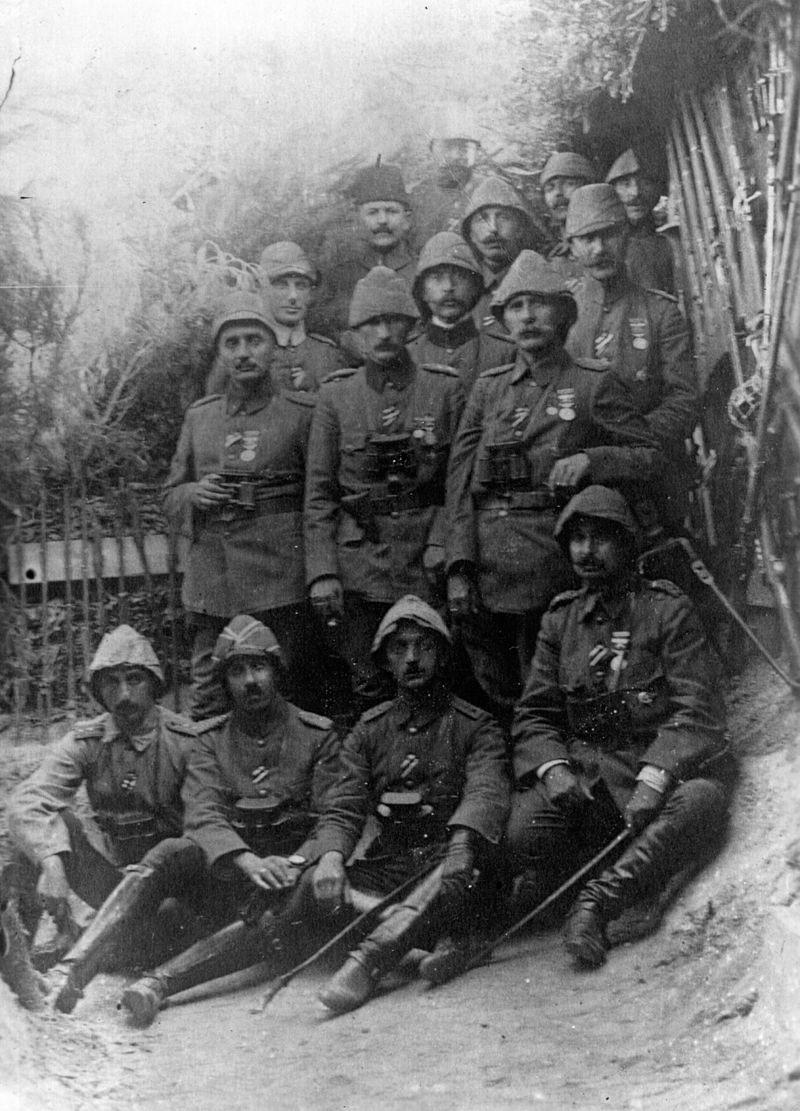
Fighting on, what, four fronts in the
Caucasus, Mesopotamia, Sinai-Palestine, Gallipoli, plus an Arab revolt in the rear, under naval blockade, with a railway network that didn’t even connect to itself in several key places, significantly less industrialised than basically everyone else, against the British Empire, the Russian Empire, and eventually the French for four years and still achieving Gallipoli and Kut - I know they lost eventually but it’s still a remarkable achievement.
r/ottomans • u/Augustus_Ceaser-Rome • 6d ago
r/ottomans • u/abki12c • 6d ago
First of all Musnad Ahmad 18957 hadith is rated as weak yet it's written in an incription in the Fatih Mosque. But Sunan Abi Dawud 4296 hadith which is also rated as weak says that six years after the great war the conquest of Constantinople will occur and a year after that Dajal will appear. So can someone tell me what was the great war and who is Dajal that appeared? There's a double standard in accepting hadiths.
Also Jami` at-Tirmidhi 2239 hadith that is graded as Sahih says that Constantinople will be conquered with the coming of the Hour (End times). 1453 was not the end times.
Sunan Abi Dawud 4294 hadith which is rated as Hasan narates as sequence of events where:
In 1453 Jerusalem was under Mamluk rule, Medina wasn't in ruins, the great war didn't occur and Dajal didn't appear afterwards.
Then there's Sahih Muslim 2897 which seems like it has infuences from earlier Christian prophecies of the Conquest of Constantinople like the prophecy of Saint Methodius of Patara. In the hadith, the Muslim army is divided into 3 parts: deserters, martyrs, and conquerors. In the Byzantine prophecy, the Ishmaelites are divided by the victorious Christian ruler into 3 parts: those killed, those converted to Christianity, and those subjected to his rule.
All of these hadiths appear 2-3 centuries after Muhammad, in the mid-to-late 9th century.
r/ottomans • u/DastyMe • 6d ago
I recently learned that Ottoman courts sometimes intervened in cases of domestic violence, allowing women to seek legal remedies against abusive husbands. In some cases, husbands could even face corporal punishment.
Women could bring complaints before a qadi (Islamic judge), and court records show that women from different religious and social backgrounds used these courts to defend their rights.
Marriage contracts could also provide women with important legal protections. Under certain conditions, women could stipulate terms that gave them greater control over the dissolution of their marriage. They also generally retained ownership of their own property, which was legally distinct from their husbands’ property.
Interestingly, these practices were rooted, at least in part, in Islamic jurisprudence (Sharia), as interpreted and applied by Ottoman courts.
For example, in one reported case, a husband beat his wife, prompting her to leave their home. When the case came before the court, he reportedly justified his actions by claiming a husband's right to discipline his wife. The judge, however, ruled against him and imposed a punishment.
Information is from Ottoman court records.
r/ottomans • u/mrnuts63 • 6d ago
Merhaba!
Yaklaşık bir buçuk yıldır aile soy ağacım üzerine araştırma yapıyorum. Ancak sürekli aynı engelle karşılaşıyorum: Devlet Arşivleri Kataloğu'na erişim. Ne yazık ki Türk vatandaşı olmadığım için kataloğa erişemiyorum.
Bu gönderiyi, sistem hakkında deneyimi olan veya aile geçmişimi araştırma konusunda bana yardımcı olabilecek birileriyle karşılaşma umuduyla yazıyorum.
Kataloğa erişmenin yabancı araştırmacılar için bir yolu var mı? Ya da katalogda arama yapabilen ve araştırmamda bana yardımcı olabilecek biri var mı?
Şimdiden çok teşekkür ederim!