r/Buddhism • • 15h ago

Question Does Buddhism fall under the idea of polylatry?

0 Upvotes

I'm currently educating myself on hinduism and as of today started researching Monolatry and Polylatry. Just to clarify for my research tools I've used wikipedia in german and just now found out there is no english polyatry entry, so to summarize, while monolatry classifies a religion as having an array of gods with only one being worshipped / the center of rituals, polylatry classifies a religion as having one or multiple gods (important to note the number of gods isn't of relevance unlike with monolatry) with multiple of those gods or supernatural things being worshipped. As an example the roman catholic church teaches of one god while worshiping multiple things like said god or the virgin mary.

So to remind you of my original question does buddhism fall under polylatry?

EDIT: I'm sorry for me phrasing my question so awkwardly and i'd like to point out that mono/polylatry is not the same as mono/polytheism. One concerns itself with worship, rituals and reverement of Gods / overwirdly things, while the other concerns itself with the existence of Gods.

EDIT 2: My terminology is still limited and i understand that worshipping is not representative of what i meant. Understand my definiton of worshipping is... limited.


r/Buddhism • • 6h ago

Question Hypothetical: what would Buddha say about stealing to help a starving homeless man?

2 Upvotes

Here is the hypothetical: you work at a pizza shop that doesn’t make slices, just whole pizzas, sizes S to XL. You don’t make the most amount of money, but you get by. Homeless people come in the store sometimes. You know they haven’t eaten much. There’s never more than one homeless person there at a time. These people stay for shelter, for AC, charge their phone, rest, etc.
You are working alone or working with someone who wouldn’t care. You can’t afford to pay for a pizza for them, but you technically can just make them a pizza and give it to them and not tell anyone. But you also know that’s technically stealing from the store because a pizza was given and not paid for. The restaurant can absorb these costs until a point. Your only intention is to help feed a starving man.

What would Buddha think about this? Is it morally wrong? How would it affect your karma?


r/Buddhism • • 14h ago

Question Can I practise Paganism and Buddhism at the same time?

3 Upvotes

r/Buddhism • • 5h ago

Fluff What tradition do you follow ?

2 Upvotes
125 votes, 1d left
Zen/Chan
Pureland
Theravada
Vajrayana
Other tradition
other religion

r/Buddhism • • 8h ago

News Interesting research coming out of UVA Med School's Department of Perceptual Studies. Do you find this correlation fits with the Buddhist framework of reincarnation?

Thumbnail
29news.com
0 Upvotes

r/Buddhism • • 15h ago

Academic Is Theravada and Mahayana really that different?

9 Upvotes

They seem to mostly diverge on the issues of Bodhisattvas.


r/Buddhism • • 6h ago

Question For Atheists who have rejected Christianity, just curious, but why haven’t you embraced Buddhism?

Thumbnail
0 Upvotes

r/Buddhism • • 18h ago

Dharma Talk The Four Types of Non-Retrogression Upon Rebirth in Amitabha Buddha’s Pure Land

Thumbnail
youtu.be
1 Upvotes

r/Buddhism • • 19h ago

Sūtra/Sutta "The spiritual life is lived to give up and cut out these seven underlying tendencies."

7 Upvotes

“Mendicants, the spiritual life is lived to give up and cut out these seven underlying tendencies. What seven? The underlying tendencies of sensual desire, aversion, views, doubt, conceit [I, me, mine], desire to be reborn, and ignorance. The spiritual life is lived to give up and cut out these seven underlying tendencies.

When a mendicant has given up the underlying tendencies of sensual desire, repulsion, views, doubt, conceit, desire to be reborn, and ignorance—cut them off at the root, made them like a palm stump, obliterated them, so they are unable to arise in the future—they’re called a mendicant who has cut off craving, cast off the fetters, and by rightly comprehending conceit has made an end of suffering.”

AN 7.12: Dutiyaanusayasutta


r/Buddhism • • 2h ago

Theravada Bhadrātherīgāthā: Verses of the Elder Bhadrā (Thig 1.9) | Therīgāthā

Thumbnail
0 Upvotes

r/Buddhism • • 16h ago

Request Something small to read when you feel like you're losing your progress

2 Upvotes

Hi, I really like Buddhism and find it making sense for me, but because of war in my country, personal problems and other struggles I can't stick to practice as there is a little voice in my head saying "to hell with Buddhism, get out of this shithole first with your mother " ("little voice" is literary expression, I am not schizo)

My mom apart from me and her brother don't have anyone close, so there is added pressure as I have a duty to take care of her, because of how much she sacrificed for me as a single mother.

So what I am saying is probably more I want to commit to it, but I probably can't follow some precepts or just in general some moral points.

So, TL;DR is Please suggest light Buddhism reading to keep at least some progress (I already know about dhammapada and other short collection, but I feel like there are many bland passages)

Sorry for rambling and unstructured thoughts, it all just spilled out


r/Buddhism • • 16h ago

Question New to Buddhism

2 Upvotes

Greetings! I'm a student from Finland (sorry for my bad english!), and I'm really curious about what's Buddhism and being a Buddhist is like! I've been researching and learning about Buddhism the last few days and I think it's something I could really get behind since I already share some views with the pracitse! But I wonder how "in it" do I have to be? Do I need to pray, do rituals, meditate, read scripts, go to temples so on and so fourth to be a Buddhist? Also can I practise other practises aswell as Buddhism? Thank you for reading and I hope I can get some bassline answers! Happy new week!


r/Buddhism • • 14h ago

Life Advice Buddhist Practice & Mental Recovery

2 Upvotes

recently i was voluntarily admitted to a psychiatric hospital. i have struggled with significant, life-altering OCD, depression, and ADHD for years. i was inconsistent with medication and had been through 8 therapists. as much as i dislike to admit it, i was stuck in a rut where recovery was frustrating and i was constantly going in circles. something bad would happen, i’d get better, i’d get complacent, i’d get worse. it ended up hurting people i cherish very deeply, one of whom is currently out of my life. i took the opportunity the hospital gave me to both connect to resources for recovery and also deepen my practice. a consistent routine with my medications (SSRIs, mood stabilizer, stimulant) cleared my mind enough to meditate without issue for the first time in a long time, and through my contemplation i realized that i could marry my Buddhist practice with my mental recovery journey.

i started viewing OCD as samsaric — which it is, but i started viewing it more through the lens of attachment/aversion, craving, clinging, suffering, loss, repeat. i realized that taking my medications helped me keep a clear head to be more present in the moment. DBT, the modality itself created by a Zen master, is VERY Buddhist with teachings on emotional regulation, loving-kindness, mindfulness… the skills i learned in both CBT and DBT have helped me regulate and not react as much as i used to, reaction leading to poor results. i realized that i can only be the best version of this thing i call myself, the bodhisattva i aspire to, if i can strive to heal myself and through that be kinder and better to others. my recovery journey now motivates me to practice and my practice motivates my recovery journey. it’s a long road ahead, but i’m confident that through healing my brain, i can tame my mind better.

that being said, speaking from experience — if you’re struggling right now with mental illness, never feel like you’re a “bad practitioner” by default. through suffering we can identify and heal suffering. you just have to put in the work.


r/Buddhism • • 20h ago

Question Buddhist Newbie!

11 Upvotes

Hello!

I am looking to study Buddhism but I honestly have no idea where to start. I have struggled with religions and have never been able to fully trust any religious teachings, but I have been interested in Buddhism since I was a teenager. But at the same time, I am skeptical as I would consider myself agnostic (leaning towards atheist), I want to learn but I don’t know where to start and I need help 😅

I would appreciate some recommendations for books, lectures, etc. so I can learn the true teachings of Buddhism, what it entails, what makes someone a Buddhist, etc.

Also, I would like to implement Buddhism into my daily life but not go to the full extreme. Is that something I can do with Buddhism? I have heard of prayers, having alters, etc. but I am not sure how I feel about praying to a person I don’t know, similar with religions like Christianity.

Thank you 💗


r/Buddhism • • 17h ago

Request Requesting information for my two Thai Buddhist Amulets Please

Thumbnail
gallery
13 Upvotes

Hello and thank you in advance for your help 🙏

I have 2 amulets that I have researched via ChatGPT and would like more information about but I am no longer in Thailand.

I am hoping to receive more information about the age, edition and authenticity along with any other relevant information please.

I received the following information about the first amulet (Luang Pu Tim Issariko):

It names Luang Pu Tim Issariko of Wat Lahan Rai, Rayong.

The inscription (back)
Top: หลวงปู่ทิม อิสริโก (Luang Pu Tim Issariko).
Bottom: วัดละหารไร่ ระยอง (Wat Lahan Rai, Rayong).
Middle: A star-shaped yantra with Khom (old Khmer-script) katha around it. A spiral and a tall spire sit at the top, with two grey metal takrut strips set into the clay. I can't read the katha.

The front
A Buddha seated in meditation on a base with five rounded bumps, under an arch of flame or leaf shapes.
Two pillars with lotus-bud tops flank him.
A reclining or prone figure lies below the base. I can't tell what it is from the photo.
The body is pale yellow-tan clay with a crisp, unworn surface.
The case is silver-toned with red, blue, green, and orange enamel.

The Monk
Luang Pu Tim lived from 1879 to 1975. He was formally titled Phra Khru Phawanaphirat and was abbot of Wat Lahan Rai.
The temple is known for its "Jaroen Phon" coins and "Phra Khun Paen Phong Prai Guman" amulets.
He's especially associated with Prai Kuman powder (phong prai kuman). His amulets are prized for charm, kindness, and attracting good business and wealth. Collectors also value his protective pieces.

Age and value
Genuine pieces blessed by him in his lifetime are valuable. Even common ones sell for a few thousand baht. One older Khun Phaen was listed at 2,789 baht. But the temple has also issued many later editions. One 2557 BE copper coin was listed at 450 baht.
Your piece's fresh surface, sharp mold detail, and neat modern takruts point to a later edition, probably after his death. I can't confirm that from photos.
His name is also widely copied, so a clean look proves nothing either way.

What I can't tell you
Which edition or year it is, which ceremony blessed it, or what the pentagon mold is called.
Whether the clay contains his powders or relics.

Luang Pu Tim's amulets are traditionally credited with
Metta mahaniyom (kindness and popularity): Goodwill from others, charm, and smooth relationships. His amulets are known for mercy, charm, and attracting good business and wealth.
Business and wealth: Customers, sales, and money coming in. This is the main reason people seek his pieces.
Protection and harmony: Marketplace descriptions also credit his amulets with protection of life, harmony with people, and good luck in family matters.

What your piece's features add
The Buddha image: A seated Buddha in meditation represents general blessing, peace, and merit. That's a gentler meaning than his famous Khun Phaen amulets, which are about charm.
The two takrut strips on the back: These inscribed metal scrolls are traditionally for protection from harm and misfortune. The star yantra and Khom script around them reinforce that.

The clay itself: Clay amulets from this tradition are sometimes said to hold sacred powders blessed by the monk. I can't confirm that for yours.

Putting it together
Yours reads as a general-purpose protective and good-fortune amulet, with a bit of charm and business luck from the Luang Pu Tim name. It isn't a specialist piece for one purpose.

ChatGPT says about the second amulet (Somdej):

This one has no inscription, so I'll research what the green powder and the back inserts usually indicate.

The front
A Buddha seated in meditation under a single raised arch on a stepped base. That is the classic Somdej layout: a seated Buddha on a three-tier platform with one raised curved line around the figure, on a rectangular plaque.
The surface is olive-green powder with yellow-green flecks. Bright silvery and dark specks are scattered across the face and body. These could be mica, pyrite, or metal chips, and I can't tell which.
The Buddha's face and hands are soft and indistinct. That fits a pressed powder body, but it could also be wear or a worn mold.

The back (four inserts)
A rolled grey metal strip, probably a lead or tin takrut (an inscribed protective scroll).
A black, crumpled fragment. I can't tell if it's metal, resin, or burnt material.
A pale round pellet and a dark brown round pellet. They may be hardened powder balls (look om) or seeds. I can't confirm either.
They are pressed into a rough, grainy, olive back with no stamp, text, or code. The case has a red velvet lining and a gold-plated enamel frame.

Age and origin
Genuine Wat Rakhang Somdej are usually ivory-white, because they are made from ground chalk powder mixed with white stone. A green body means a later edition with different ingredients, not an antique.
The embedded takrut and pellets are typical of temple editions made to be worn. Old Somdej with takrut do exist, and one dealer notes that Somdej with one, two, or three takrut embedded are extremely rare and sought after. But that applies to documented old batches, not to a piece like yours.
I can't link it to a monk or temple. Treat it as a modern Somdej-style temple edition, probably worth little to collectors, but legitimate as a devotional piece.

Protections and powers
The Somdej tradition is protection against weapons, cures, and steadfastness.
Powder amulets generally are said to bring charm, luck, and protection.
The takrut insert adds the traditional sense of protection from harm.
Without a named monk, there are no specific powers beyond this general meaning.

Is anyone here able to identify them further or add any further details?

ขอบคุณ 🙏


r/Buddhism • • 16h ago

Theravada Mittātherīgāthā (Thig 1.8): Verses of the Elder Mittā | Therīgāthā: Verses of the Elder Arahant Bhikkhunis

Thumbnail
4 Upvotes

r/Buddhism • • 8h ago

Question How do you balance fitness goals with contemplating the body’s unattractiveness and impermanence?

Thumbnail
6 Upvotes

r/Buddhism • • 7h ago

Life Advice How to react to people who act with hatred towards you, and harass you?

6 Upvotes

Today something quite bizarre happened to me. I was at work, and during my lunch break, I got a phone call from a Caller ID. I picked up because I assumed it was someone from work who had obtained my personal phone number. I say hello, and it’s the voice of a young girl whom I don’t recognize. She says “Is this [my own name]?” And I confirm, and then this person starts screaming erratically on the phone saying “My name is Janine, and you’re a fucking psychopath, and I fucking hate you.” I immediately hung up after hearing those words. I was completely shocked and I didn’t understand who or why anyone could have done this.

I started to think about all the people whom I’ve had a fall out with. It’s been a while since I’ve had any drama with anybody, except when I was a freshman in college, and I was 17, I befriended these girls whom went to a different college than me. We had a big fallout because one of the girls thought I was trying to get her to breakup with her boyfriend (it is not true at all) and everybody else took her side, and ostracized me, so I decided to stop being friends with all of them and blocked them; I moved on and sent them flying. However, this created a need for them to bully me and harass me. I know these girls like to bully people in extreme ways. What they did to me hurt me and left me confused because I didn’t know what I had done wrong, all I did was defend myself. But they are the type that like to only live in negativity; I should have known better. I look back now and see that they projected a lot of hate and negativity towards me that I understand now has nothing to do with me as a person.

It’s been two years now since that incident and I am now in my third year of college. I am 19, I have a loving boyfriend, I have a nice job, and I am pretty happy with my life. In the end I truly don’t know who might’ve done that or why, I only assume. But if it’s true that it was them, I wonder why they have not been able to move on. Someone took the time out of their day to look for my personal phone number, and call me, just to tell me hateful things unnecessarily. Clearly I could tell from their tone of voice that doing this gave them a ton of adrenaline and joy. It shock me even more, because it’s been a very very long time since I thought about any of these people.

As a practitioner, I know that you must never return their hate. At least in this situation, it is completely pointless and better to let it pass. They offered their abuse and I did not accept it, the abuse remains with the giver. But I am human and I can say that it definitely did not make me feel god, I felt scared and disturbed that someone would do something like this. I wonder if anyone may have advice.


r/Buddhism • • 19h ago

Sūtra/Sutta A tree

Post image
8 Upvotes

r/Buddhism • • 19h ago

Video If you didn't know how to begin practicing Buddhism now you know.

0 Upvotes

I am posting this because there have been a few posts about how to start practicing Buddhism. I want to just say that it is possible to practice Buddhism while maintaining other faiths as long as your other faith is okay with you practicing another "religion." If you are having trouble reasoning with your own beliefs to allow yourself to practice, you should try this. Tell yourself that Buddhism is not a religion but a way of perceiving the phenomena of life and understanding the rising and falling of sensations that come from this observation. To me, it is more like 2500 year old psychology than a religion.

This Khenpo is one of my favorite teachers. He offers very clear and concise buddhist teachings and explanations of beliefs.

https://youtu.be/-iRrUH6dyFs?si=uMwx9vuohMm4eSzl


r/Buddhism • • 7h ago

Early Buddhism Sanskrit Recension of the Ratna Sūtra (Ratana Sutta) and Protective Chant (Paritta/Paritrāṇa)

Enable HLS to view with audio, or disable this notification

9 Upvotes

The recension here is taken from the Mahāvastu, and matched together with the Pāḷi recension, in order to produce an analogous paritrāṇa/paritta. The metre was also reconstructed via metres used throughout the Buddhacarita, by matching the number of syllables per line.


r/Buddhism • • 14h ago

Mahayana Ven. Roger Kunsang remembers Lama Zopa Rinpoche

Thumbnail
youtu.be
9 Upvotes

r/Buddhism • • 10h ago

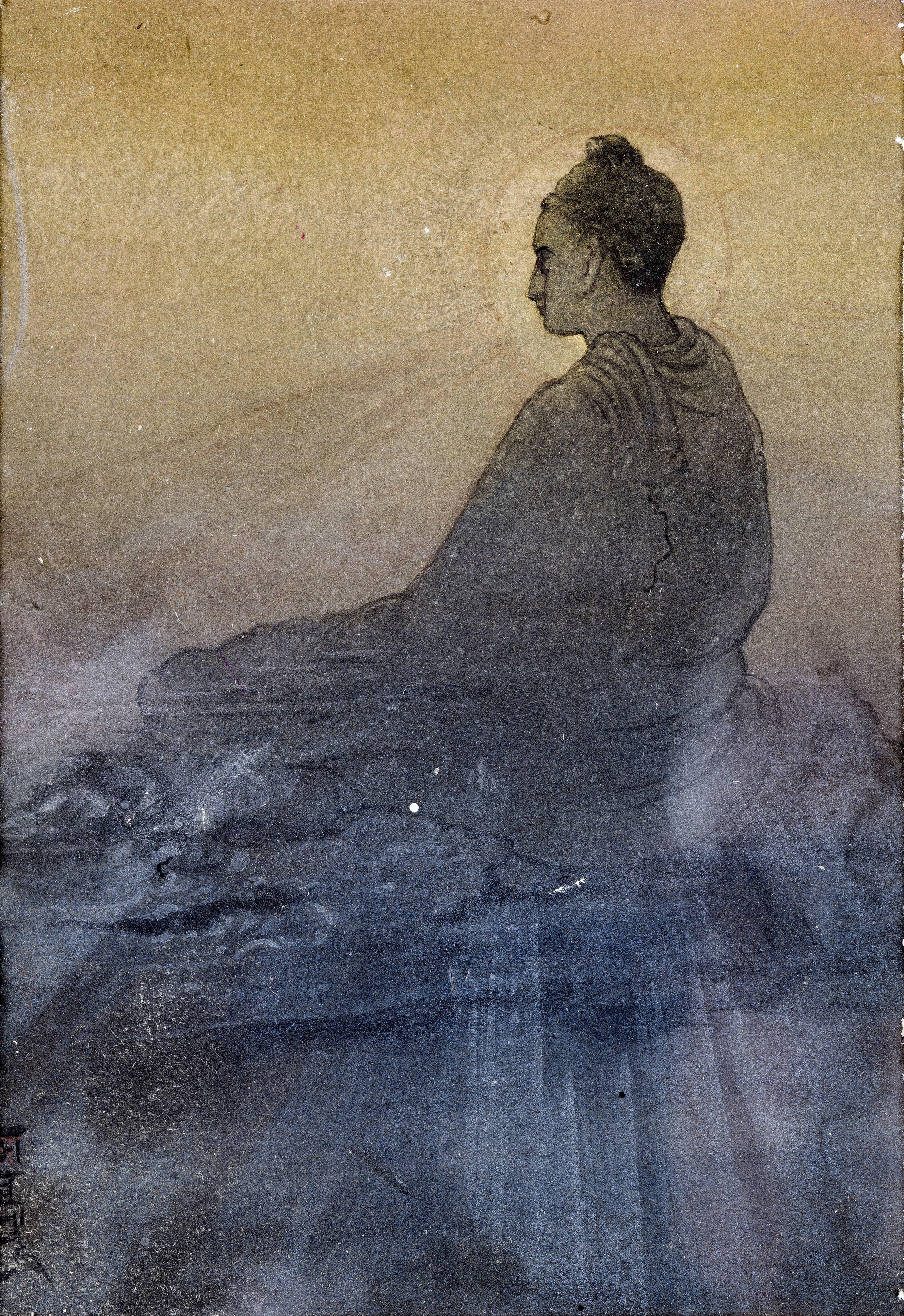
Sūtra/Sutta The Victory of Buddha, Abanindranath Tagore, c. 1914

Post image
34 Upvotes

r/Buddhism • • 22h ago

Practice Dhammapada 327

Post image
39 Upvotes

r/Buddhism • • 9h ago

Sūtra/Sutta Practices of Gods and Devas in Buddhism. (For example, Saraswati/Sarasvati/Benzaiten, etc.)

Thumbnail
gallery
72 Upvotes

I thought I would share this, because a lot of Westerners or people who are converts to Buddhism, don't seem to be aware that we actually have a lot practices concerning gods in Buddhism. In the Sutras, there are many non-human beings who were also disciples of the Buddha, or who later have become Buddhist themselves or protectors of the Dharma. We often call these Dharmapalas (Dharma Protectors). And they include gods and devas. There are many examples across most Buddhist cultures, but a good example is Sarasvati. People converting to Buddhism, especially Westerners can often think that such practices are "incidental" or somehow of minor importance. But it's important to note, practices for such beings are done daily by Buddhists all over the world. They are a pretty large part of Buddhism. I sometimes see people say, "well we don't worship them...", well, what do you mean by "worship?" We pray to them; make puja offerings to them of food, drink, fire, incense, etc.; sing to them and sing of them; perform rituals to them both as offerings and to invoke their aid; recite mantras and dharanis associated with them; build and maintain altars and shrines for them, etc., etc.

I think most reasonable people would say that "praying to gods, and doing rituals and making offerings to them" counts as "worship". It is true, we do still focus on our own personal practice. However this is often a part of that.

Why do we do it in Buddhism? Because Dharmapalas often help remove obstacles from our lives, and bring us the fortune and blessings that aid us in helping our practice and helping others. If you're constantly beset by obstacles, it's difficult to do Buddhist practice. Gods, Dharmapalas, etc., help with that.

For the purpose of this post, I am using the example of Sarasvati, but she is by no means the only one, and we have both peaceful and wrathful Dharmapalas in Buddhism. And there are many of them. And many of them are indeed gods, or sometimes former demons, or even local land spirits who converted to Buddhism. In Tibet, Padmasambhava was famous for converting the local gods and demons into Dharma Protectors. There are actually entire sections of Sutras or whole Buddhist tantras dedicated to such beings.

Buddhism is much more polytheistic than I think many Western converts realize. Even in places like Thailand where Theravada is present, you'll see statues of elves outside of most Buddhist temples serving as guardians. And offerings are certainly made to them. Even in Zen this is done, and people often think of Zen as the more austere form of Buddhism, but most Zen Buddhist temples do protector practices regularly as well. And these kinds of practices come straight from the Sutras. The Avatamsaka Sutra is full of such details about the gods, and many other Sutras and tantras are similarly full of such things including practices for them.

O wise and valorous Sarasvatī! You are worthy of receiving offerings from all humans and gods. The whole world is full of your fame, and you are able to grant the wishes of all beings. At an excellent dwelling place on the high mountain peak [of Sumeru], you make a room out of reeds and live therein. Constantly weaving together soft grass, you make robes. In the place where you live, you are always standing upright on one foot. The multitudes of gods and humans come to you. They all single-mindedly utter praise for you and make their requests of you. May the wise goddess Sarasvatī grant everything by means of her wondrous speech!

~From the Golden Light Sutra

Humans aren't the only Buddhists. Many gods and other non-human beings are also, and we make offerings to them, and do practices concerning them also. They are part of the Sangha.

https://en.wikipedia.org/wiki/Benzaiten

By this merit, may all beings realize their True Nature,
And through this, may all beings be liberated from Samsara.

🙏