r/ChineseLanguage • u/tomi-tya0133 • Jun 08 '26
Grammar Why no 了 in the 3rd one?
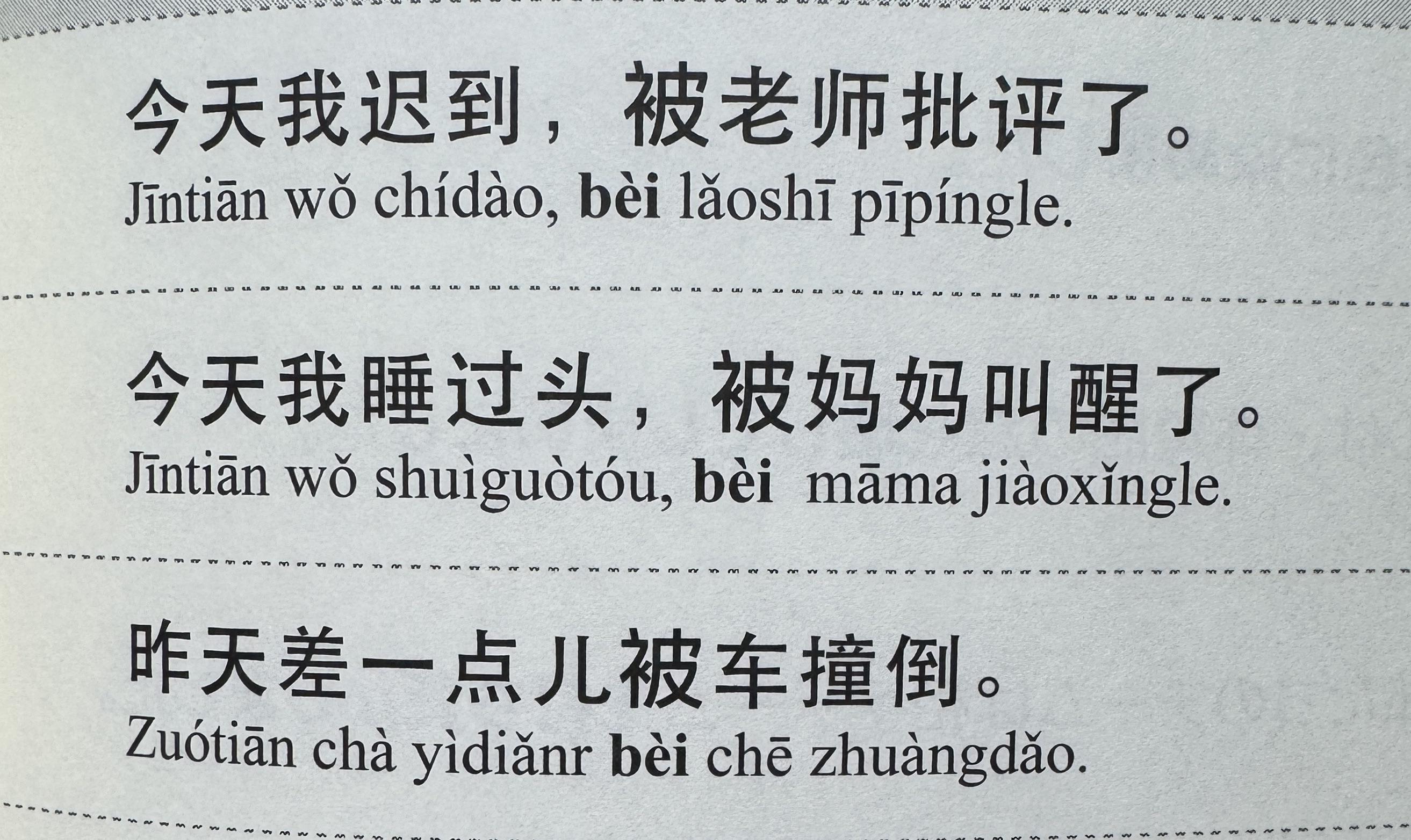
了 feels so random😭
38
u/Lutscher73 Jun 08 '26
The 了 indicates a change of the situation. In the last sentence there is no change bc it said 差一点. So it didn't actually happen. It was only close to have happened.
6
u/tomi-tya0133 Jun 08 '26
That makes sence! At first I thought that, the situation changed from something different to "差一点儿被车撞到", and Need to add 了。
2
1
u/Krobus_TS Jun 09 '26
I dont think this is the answer, because the sentence would be perfectly fine even if you add 了。 I would say it has more to do with personal preference and formality
1
u/seafoodhater Jun 12 '26
My thinking exactly. At work, I almost never see anyone add 了 in messages.
18
13
u/Little-Flan-6492 Jun 08 '26
You can add 了 everywhere, let me add it for you.
今天我迟到了,被老师批评了。
今天我睡过头了,被妈妈叫醒了。
昨天差一点儿被车撞倒了。
13
u/tomi-tya0133 Jun 08 '26
谢谢了🙏
1
u/GreedyPotato1548 Native Jun 12 '26
My pleasure, and please don't waste to much time on this kind of details, just like the thing I have always tried to understand everything of English before I type anything
7
u/GreedyPotato1548 Native Jun 09 '26
True, as a native Chinese speaker I couldn't tell the difference. I mean yes i know there is sth different there but yet there is sth in common as well
9
u/MandarinWithTina Native Jun 09 '26
It’s not really random!!
The first two sentences describe events that actually happened and reached a result, so 了 sounds natural there.
The third sentence is different. 昨天差一点儿被车撞倒 usually means "I almost got hit by a car" and implies that the accident did not happen in the end. Since there was no completed event, there's no need for 了.
One thing that confuses a lot of learners is that 了 is often more about whether an event was realized or completed than simply marking the past. That's why you'll sometimes see past events without 了, and sometimes 了 where English wouldn't use any special marker at all 😅
14
u/Expensive-Stand-8262 Jun 08 '26
I think it should have 了.... 昨天差一点被车撞了 sounds natural to me
4
u/morvern-callar Jun 08 '26
Same. The sentence sounds incomplete to me without 了, like there's more to follow in the narrative, e.g. 昨天差点被车撞到,然后又摔了一跤。quite often when there's a sequence of events you don't add 了 until the end of the sequence
1
1
3
u/Gzhiling0406 Native Jun 08 '26
The third incident never actually happened; the action didn’t come to pass, so we don’t need the character "le (了)"
5
u/lotus_felch 🇨🇳 advanced beginner Jun 08 '26
Didn't happen, no change of state occurred. Caveat: I'm in no position to be teaching this language.
3
3
5
u/DeesMandarinTea Native Jun 09 '26
This is one of the most brilliant and subtle grammar questions! The reason there is no **了 (le)** in the third sentence comes down to the absolute core physics of what **了** actually does in Chinese.
### The Short Answer:
**了 (le)** signifies that an action has been completed or a state has changed. In sentence 3, because of the word **差点儿 (chàdiǎnr - almost)**, the action of "being knocked down by a car" **DID NOT HAPPEN**.
Since it never became a reality, you cannot use **了** to mark its completion.
### The Step-by-Step Logic:
* **Sentence 1:** 今天我迟到,被老师批评**了**。
* *Reality:* The teacher **actually** criticized me. It happened. It’s done. (Requires **了**)
* **Sentence 2:** 今天我睡过头,被妈妈叫醒**了**。
* *Reality:* My mom **actually** woke me up. It is a completed reality. (Requires **了**)
* **Sentence 3:** 昨天差点儿被车撞倒。
* *Reality:* I am perfectly fine. The car **did not** hit me. It was a close call, but the event remains unfulfilled. Adding **了** would conflict with the hypothetical nature of "almost."
### Bonus Pro-Tip for "差点儿":
In Chinese, when talking about something **negative/unfortunate** (like a car accident or failing an exam):
* "差点儿被车撞了" (Without 了 is grammatically pristine to show it didn't happen).
* *Note:* You might occasionally hear native speakers say "差点儿被车撞**了**" in casual speech, but in that specific case, the **了** is shifting its job to act as a **Modal Particle (语气助词)** to express intense, lingering shock/relief (*"Whew! That almost just happened!"*).
However, in standard textbook grammar and structural writing, omitting **了** is the most precise way to show that the unfortunate event stayed in the realm of "almost."
4
u/SebaLG Jun 08 '26
差一点儿 + verb = “almost happened, but it didn’t.”
So:
昨天差一点儿被车撞倒。= “Yesterday I was almost hit/knocked down by a car.” You were not actually hit. But:
昨天我被车撞倒了。= “Yesterday I was hit/knocked down by a car.” It did happen, so 了 is used.
Key idea: 了 often marks that the event actually happened; 差一点儿 usually means it nearly happened but didn’t.
2
u/FlashyPost0928 Native Jun 08 '26
(1) 今天我迟到,被老师批评了。
No 了 = ( 今天我迟到,结果遭到老师批评)
I was late today and got scolded by the teacher.
(2) 今天我睡过头,被妈妈叫醒了。
No 了 = ( 今天我睡过头,后来是被妈妈叫醒的 )
I overslept today and was woken up by my mom.
2
u/TheSinologist Jun 08 '26
I’m not sure, because I probably don’t adhere to this usage, but the most obvious difference between 1&2 and 3 is that 1&2 actually happened, and 3 is hypothetical, so perhaps 了 can only be used for completion of action when the action is _actually_ completed?
2
u/AltruisticRun4256 Jun 09 '26
Maybe you don’t need 了because you have 昨天 indicating an event that has happened: almost being hit by a car.
2
u/Ondine0904 Jun 09 '26
"Almost" + passive voice → indicates that something almost happened, but ultimately did not.
2
u/Ondine0904 Jun 09 '26
Actually, you don't need to worry about these things. Chinese has almost no grammar.
2
2
u/Turbulent_Lab1648 Jun 09 '26
了 is not so formal, we seldom use it in serious situations. You can use 了 in this sentence, but it will look a little bit sarcastic.
2
u/Wonderful-Suspect-87 Jun 10 '26
The reason lies in the core meaning of 差点儿 (chàdiǎnr), which means 'almost' or 'nearly.' When you say '差点儿被车撞倒', it inherently means that the event almost happened but ultimately did NOT happen (you were safe).
2
u/imjimmyma Jun 10 '26
You could say: 昨天差一点被车撞了 or 昨天差一点被车撞倒
these are same meaning because of "差一点".
you can say "昨天被车撞倒了" beacuse it's happened.
撞倒了 means happen, but 差一点 means not happen
2
2
2
2
u/Hungry_Zone_Open Jun 12 '26
You can plus 了 in the 3rd one, it's sounds more natural. Actually I think most chinese say the 3rd one with 了
2
u/East_Television6916 Jun 12 '26
口语中:“昨天差一点被车撞倒” “昨天差一点被车撞倒了”,都可以。
我是山东人,我来告诉你我们山东怎么说这句话,----我差点叫车撞了,昨天----
2
u/Responsible-King7588 Jun 12 '26
You can add 了 in the third one too. With 了, more casual and natural; without 了, more concise and powerful.
4
3
u/Plane_Mechanic_2026 Jun 09 '26
了 is optional for the 3rd one since there's already a resultative complement 倒. You always need a resultative complement in 被 sentences, with 了 being the most common one.
倒 here indicates the person was knocked over. In this particular example, 我差点儿被车撞了 vs 我差点儿被车撞倒 , I feel the second one sounds like it's got more of an impact, perhaps the car was coming at a faster speed. (I may be pedantic here.)
However, in another example : 我昨天被车撞了。 我昨天被车撞倒(了)。 Replacing 倒 with 了would take away that meaning of being knocked over, as that person could very much have still been standing.
2
u/Mundane_Bar_1075 Jun 08 '26
You can add it. Doesn’t change the meaning but probably more natural to say 昨天差一点被车撞了 (remove 倒)
1
1
u/Turbulent-Tip3449 Jun 13 '26
Hmmmmm interesting question!
As a native Mandarin speaker, I don’t think adding 了 to the third sentence is grammatically wrong. Even when the event didn’t happen, 了 can still be used (e.g. 差点儿醒了,差点儿迟到了). The distinction is fairly arbitrary, so I wouldn’t worry too much about it at this stage.
That said, for anyone who’s curious, it’s true that the 3rd sentence sounds more natural without 了, and is more common in spoken language.
Consider similar examples:
差点儿被打死, almost got beaten to death
差点儿被气哭, was so frustrated that I/someone almost cried
差点儿 carries a strong emotional tone here, and ending the sentence at 倒/死/哭 let the speaker put more emphasis on the negative outcome more directly
These sentences are usually said in a slightly exaggerated tone. Adding 了 isn’t wrong, but softens the tension and weakens the emotions, making it sounds like a neutral statement of fact. So it’s less common to see 了 used in this pattern
129
u/Extreme-Candy3864 Native Jun 08 '26
了le actually has two usages.
Used after a verb, to show that the action happens in the past or the action is finished.
我吃了饭。I have already eaten the rice.
我做完了作业。I finished the homework/ I have finished the homework.
我昨天去了学校。I went to school yesterday.
Used at the end of a sentence, to show that this sentence has some new information that you don't know (like change in situations)
他不在那所学校了。 He is no longer at that school any more. (了 indicates that this is new information. He used to be at that school, but the situation has changed. )
我不想去北京了。 I don't want to go to Beijing anymore. (You know I wanted to go to Beijing before, but now my opinion changed. It is the first time that I tell you I don't want to go to Beijing anymore. )
In daily conversations, we oftern see the two usages combined.
我吃了饭了。 I have eaten the rice. (And you don't know that. That's why I tell you the fact that I have eaten the rice. )
他死了。 He died. (This news happens in the past, and this is also new information to you.)
Another important thing to mention is that, the second usage of 了le is almost never used in formal speech (such as news report in television).