r/ChineseLanguage • • Jun 28 '26

Grammar why is 是 after 了吗 in this sentence?

Post image
493 Upvotes

couldn't find any answers explaining why this would ever be the case. wasn't a typo in the subtitles or anything bc they said it out loud.

r/ChineseLanguage • • Nov 18 '24

Grammar Chinese quantifiers

Post image
1.5k Upvotes

r/ChineseLanguage • • Jan 31 '26

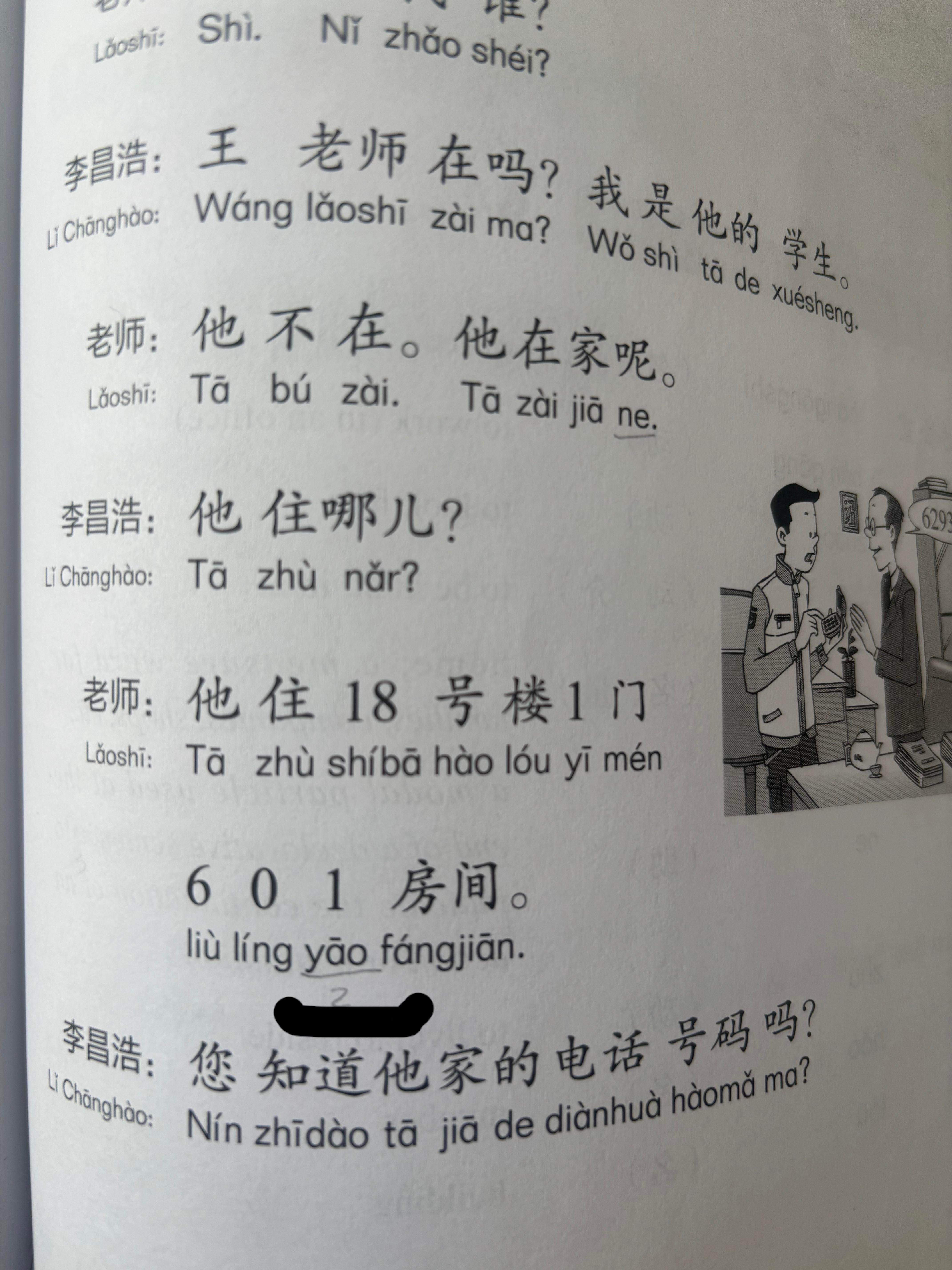
Grammar Why is yāo used instead of yī?

Post image
350 Upvotes

r/ChineseLanguage • • Jul 15 '26

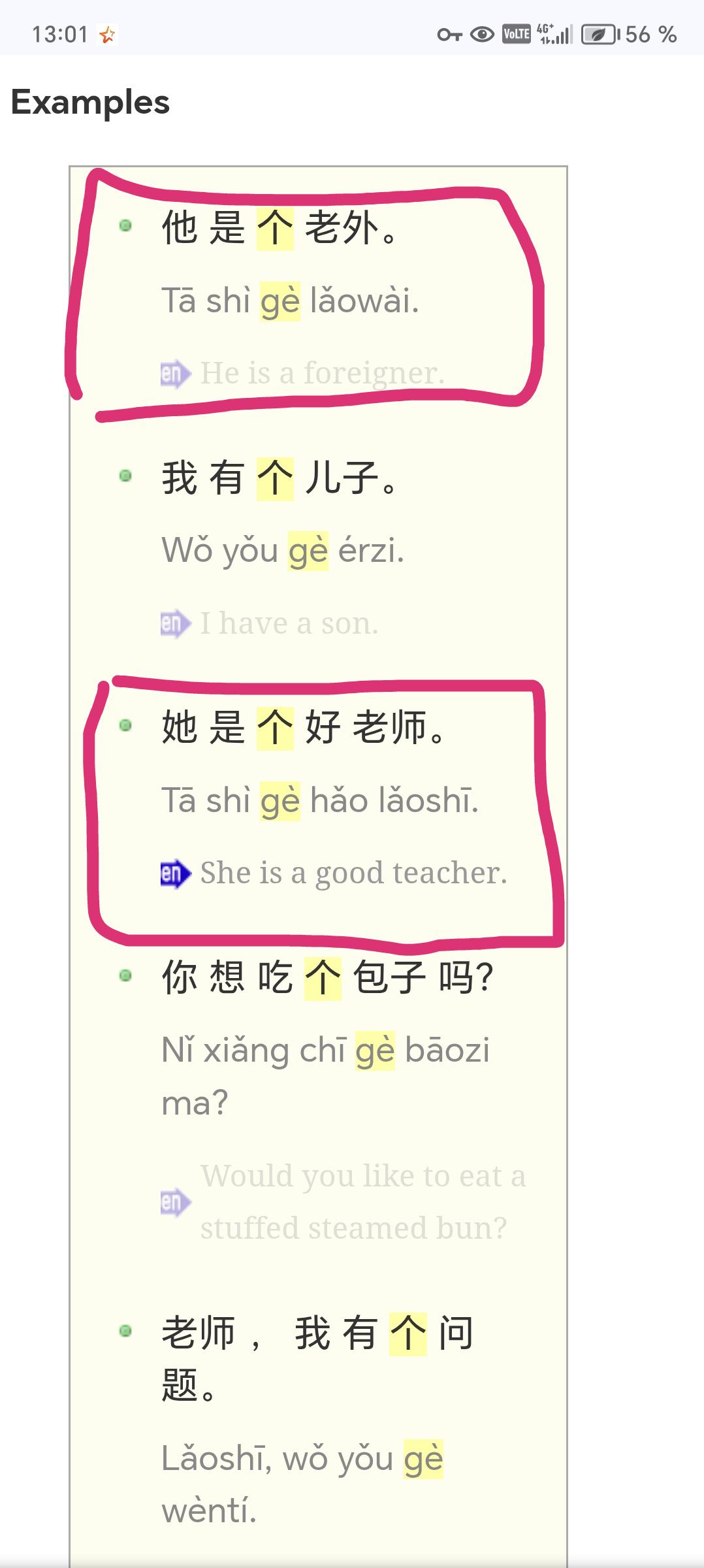
Grammar 个 is where it (seemingly) doesn't make sense?

Post image
109 Upvotes

hello wonderful people! i hope to get some advice as Im a complete beginner and study by myself. while studying the topic of using 个, i came across a few examples i can't understand.

while 三个人 and 我 有 个 儿子 make perfect sense to me, i just don't get why there's a 个 in 她 是 个 好 老师 and 他 是 个 老外. why can't i say 她是好老师, for example?

any help will be greatly appreciated!

r/ChineseLanguage • • Aug 06 '25

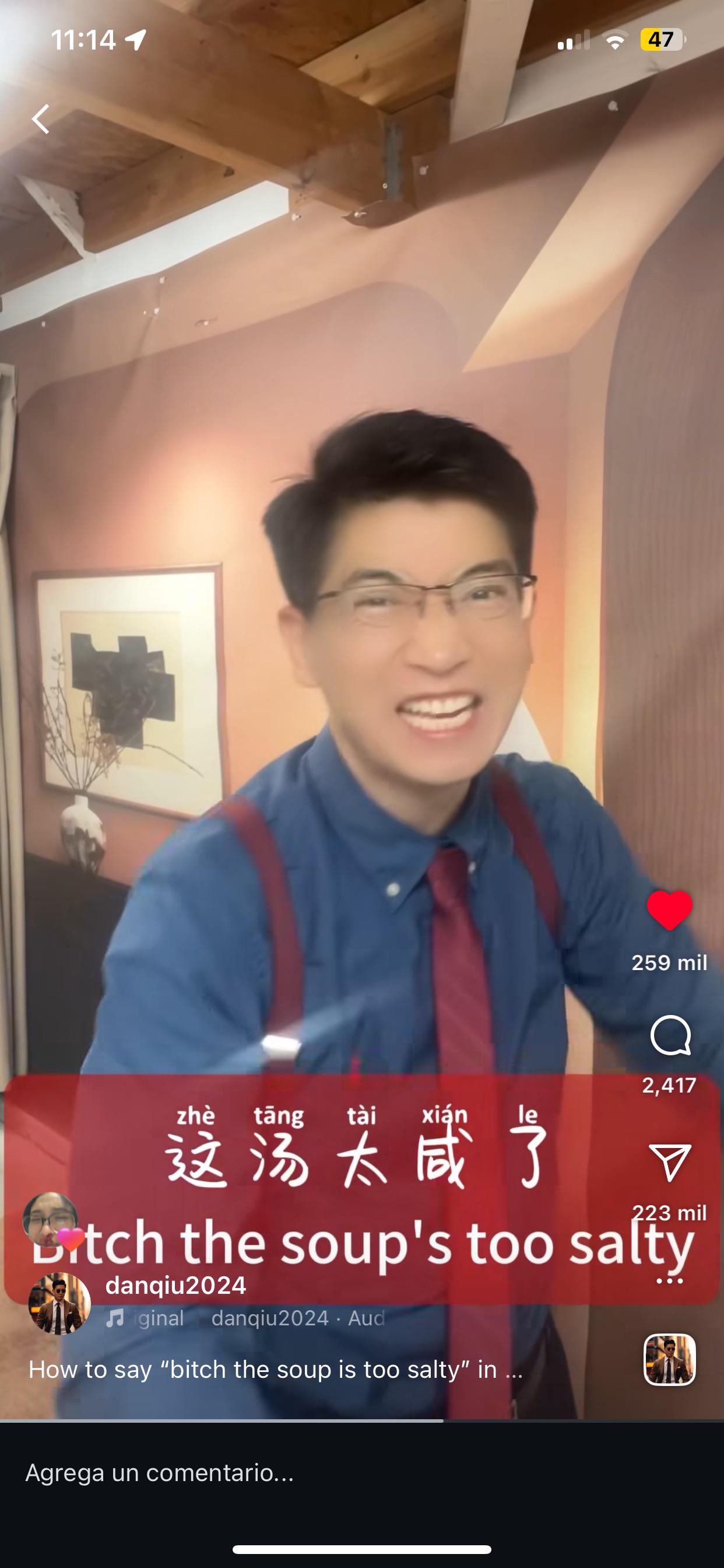
Grammar Why is there no measure word here?

Post image
578 Upvotes

There’s no “bitch” either right?

r/ChineseLanguage • • May 02 '26

Grammar Stop mixing these up! The two different types of “can’t” in Mandarin (不会 vs 不能)

290 Upvotes

Oldb:

In Chinese,

we use two different words to express what English often lumps together as “can’t”:

不会 (bù huì) and 不能 (bù néng).

不会 is for when you don’t know how to do something because you haven’t learned it yet—like saying 我不会做饭 (wǒ bú huì zuò fàn) means “I don’t know how to cook.”

不能,on the other hand, is for when you’re unable to do something because of rules, restrictions, or circumstances outside your control. For example,

我不能喝酒 (wǒ bù néng hē jiǔ) would mean “I can’t drink alcohol,”

either because you’re driving, it’s against the rules, or it’s bad for your health.

So while English might use “can’t” for both, Chinese keeps them separate to make it clear whether it’s a lack of skill or a lack of permission/ability to act.

r/ChineseLanguage • • Aug 17 '26

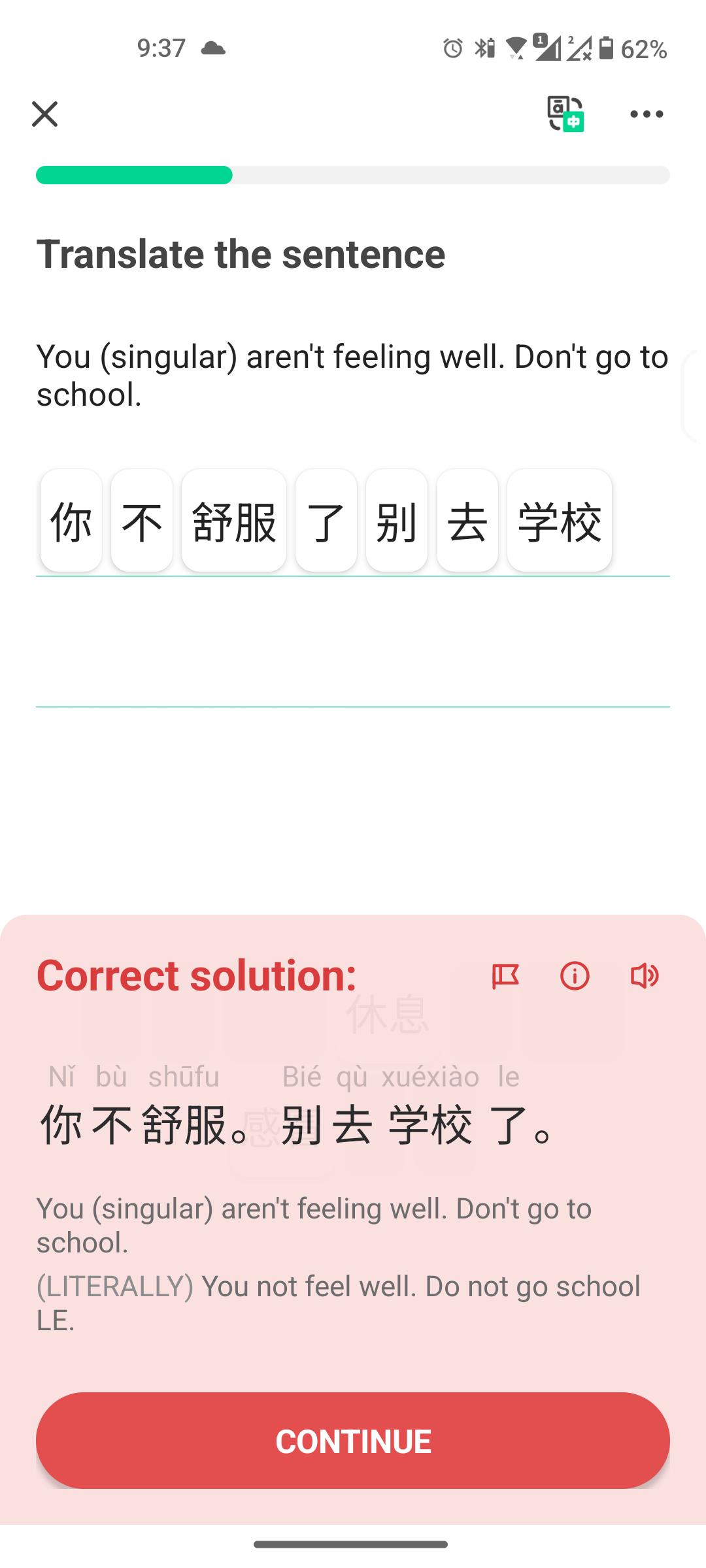
Grammar Why is my 了 placement incorrect?

Post image
125 Upvotes

My understanding so far was that 了 is used where action/event was already completed. What is the explanation behind the usage in the screenshot?

r/ChineseLanguage • • Jul 20 '26

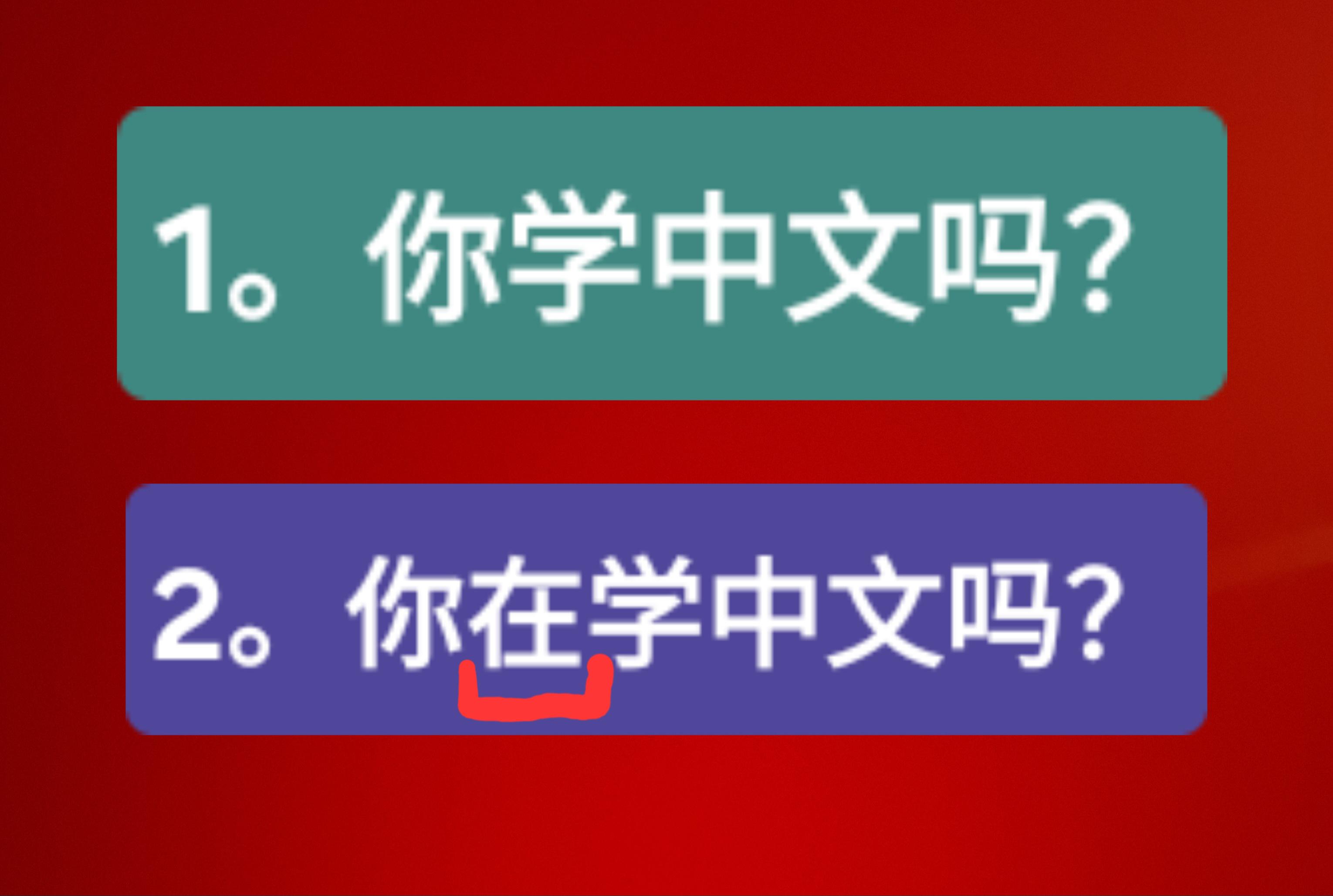
Grammar A1-2 question : what is the difference between these two sentences ?

Post image
210 Upvotes

Only added the "在" because I saw that exact sentence on a manual.

My theory is, if both are correct sentences:

  1. Do you learn Chinese?

  2. Are you learning Chinese (currently)?

If someone could shed light on this plz, much appreciated 🤝

r/ChineseLanguage • • Jun 08 '26

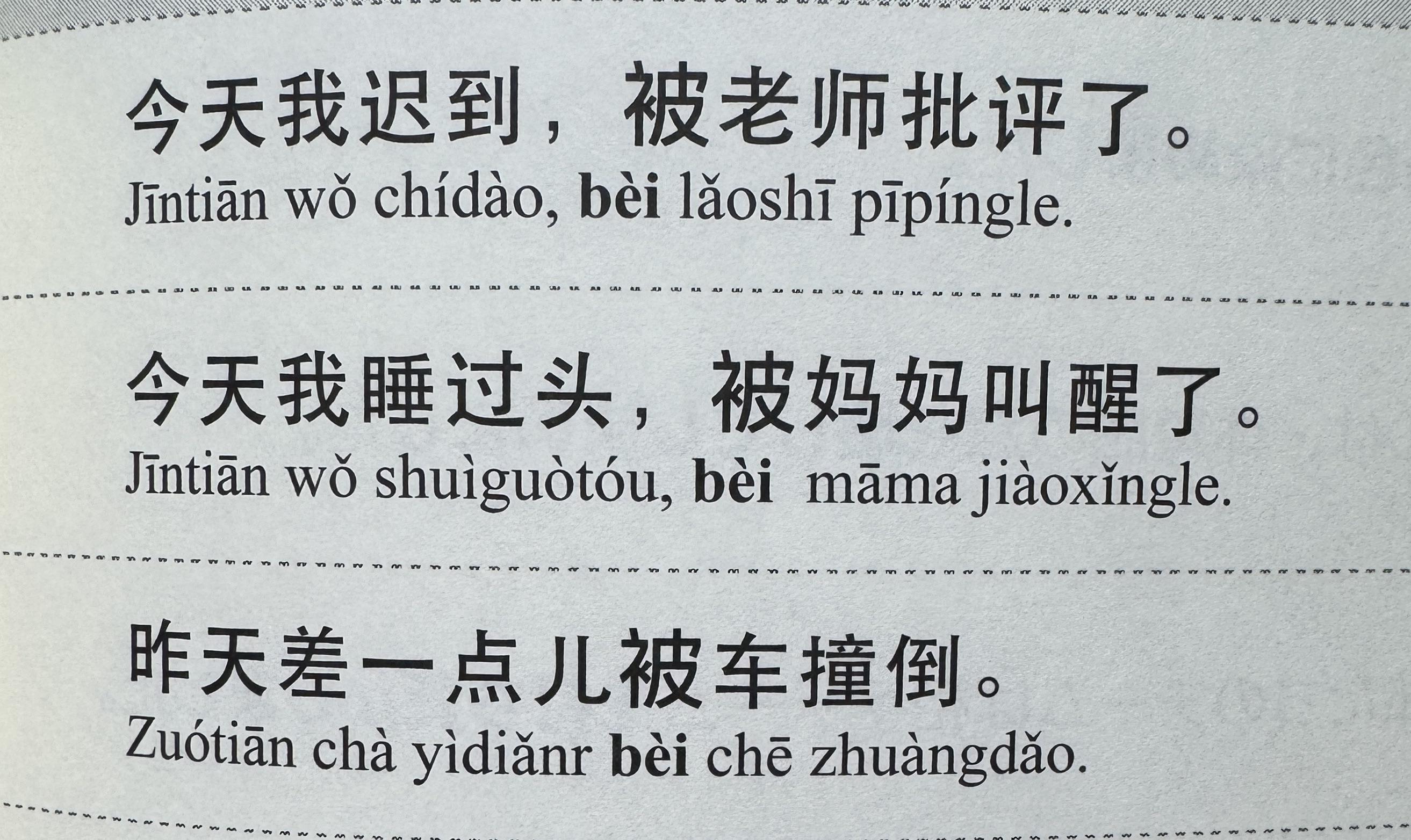
Grammar Why no 了 in the 3rd one?

Post image
163 Upvotes

了 feels so random😭

r/ChineseLanguage • • Jul 23 '26

Grammar Struggling with grammar

Post image
138 Upvotes

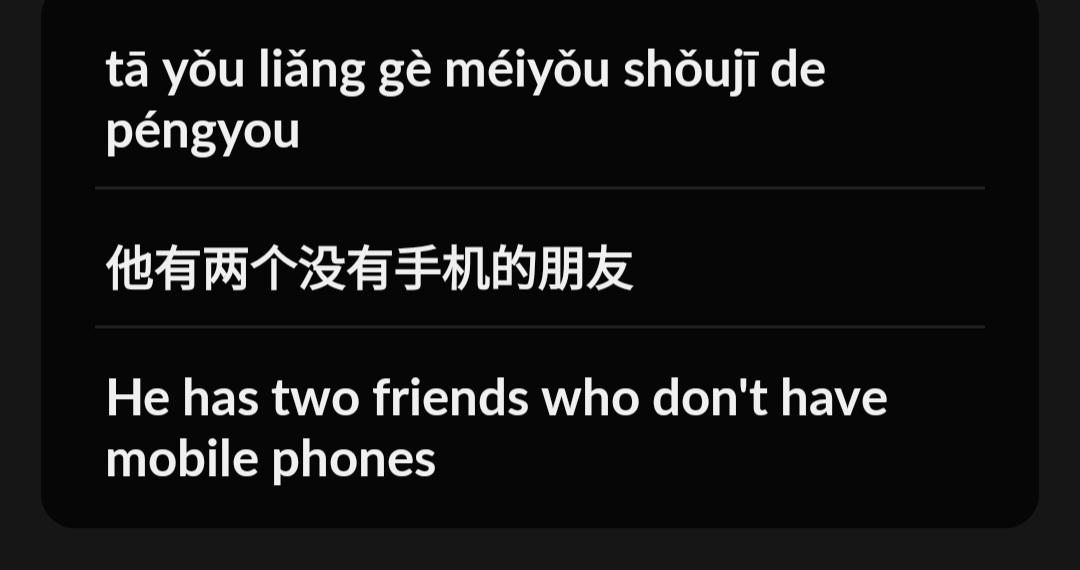
Recently started learning Mandarin Chinese and have come across a few instances where the grammatical structure is completely unintelligible to me. If someone could help me make connections between the Chinese grammar in the sentence above and English grammar (or give some general rules about Chinese grammar, especially with 的 and noun order with relations, e.g., "I'm at the X next to the Y"), that'd be great. So far I understand 的 as indicative of possessive (e.g. my apple, 我的苹果) but don't understand how it works in other contexts.

r/ChineseLanguage • • Sep 09 '26

Grammar STOP using "和" the wrong way

214 Upvotes

‘“和” can be used to connect nouns, verbs, and adjectives.’ True, but not always true.

A little bit of contextualisation and personal thoughts in the beginning, you may skip this part in the parentheses to the main content if you’re eager to.

(It started with destroying my last brain cell to explain to my foreigner friend why it is wrong to say “冬天很冷和下雪” “我很开心和兴奋”. I asked my family and friends, we all agreed that it’s not natural to use 和 this way, but we were not able to elaborate the reason at first. In fact, Chinese textbook never talked about grammar stuff; “Identify the run-on sentences” kind of problem had always been a pain in the \ss for primary schoolers. Most of us did not even realise the differences between “但,而,不过,可是,却,相反”. Our way of speaking relies on the surrounding people, we can tell you the most native way of saying smth merely based on our experiences and linguistic intuition without telling you “why”, which is however not helpful to someone who is in a different language environment studying Chinese. )*

Beginner’s blunder: using 和 as a conjunction to connect sentences.

I will see you tomorrow, and we will be doing this homework together.
明天见,和我们会一起做这个作业的。❌

I went to the supermarket, and I bought some veggies.
我去了趟超市,和我买了些蔬菜。❌

Winter is cold, and it often snows.
冬天很冷和经常下雪❌

You may use 然后 (and then) to combine sentences describing what had happened,

我去了趟超市,然后我买了些蔬菜。✅
去年冬天很冷,然后下了雪。✅

Always use 还 (in addition) to connect two sentences,

明天见,我们还会一起做这个作业的。✅
我去了趟超市,还买了些蔬菜。✅
冬天很冷,还经常下雪。✅

or simply don’t add any conjunctions,

明天见,我们会一起做这个作业的。✅
我去了趟超市,买了些蔬菜。✅
冬天很冷,经常下雪。✅

perhaps considering combining sentences into one,

我们明天一起做这个作业吧!✅
我去超市买了些蔬菜。✅
寒冷的冬天经常下雪。✅

(Fun fact: Lots of Chinese including me overuse the word “然后”…“就是” colloquially especially when we are trying to make a point or telling a story. Usually, converting voice msg to text, we would even be surprised by the wordiness. Dang, you say you never overuse it? Bro is overpassing some native Chinese.)

Beginner’s mistake: using 和 to connect adjectives. 

I am sad and angry.
我很伤心和生气。❌

He looks tall and hot.
他看起来很高和性感。❌

The vivacious and cute girl walked up to the dessert shop.
这个活泼和可爱的小女孩走向了甜品店。❌

Always use 又……又(both)

我又伤心,又生气。✅
他看起来又高又性感。✅
这个又活泼又可爱的小女孩走向了甜品店。✅

Use 还(in addition) when the second adjective seems additional and when the adjective is used without 的, 

我很伤心,还很生气。✅
他看起来很高,还很性感。✅

When the adjective is followed by “的” or without a be-verb, you might consider to use 且,

他身材高大且性感。✅
这个活泼且可爱的小女孩走向了甜品店。✅
这房间昏暗、阴冷且安静。✅(This room is gloomy, cold, and quiet.)

Exceptive rule: sometimes when a pair of adjectives is being bound together, you are allowed to use 和, but somehow you tend to not use any conjunctions.

峨眉山的景色非常地迷人和秀丽。✅
峨眉山的景色非常地迷人秀丽。✅

这块布料摸起来非常地柔软和光滑。✅
这块布料摸起来柔软光滑。✅

Beginner's inaccuracy: using 和 to connect verbs that are not “gerund or participle” 

He ate and slept.
他吃了和睡了。❌

She screamed and ran away.
她尖叫了和跑走了。❌

He washed and cut tomatoes into slices
他洗了和切了西红柿。❌

Several choices to correct the sentences:

Use 着(while) when two actions happened at the same time,

他吃着饭就睡着了。✅
她尖叫着跑走了。✅
*It is not safe while holding a tomato in your hand under the faucet and cutting it at the same time. 

Use 然后(and then) to describe something happened in the past. 

他吃了饭,然后睡觉了。✅
她尖叫了一声,然后跑走了。✅
他把西红柿洗了,然后切了。✅

Use 还(in addition) when the second action seems extra. 

他吃了饭,还睡了觉。✅
她尖叫了一声,还跑走了。✅
他把西红柿洗了,还切了。✅

Use 既……又(both) to emphasize the importance of both actions. 

他既吃了饭,又睡了觉。✅
他既把西红柿洗了,又把它们切了。✅

You may use he when a verb is followed by a verb. However, you may still use 也/既……又/还. 

I like singing and dancing.
我喜欢唱歌和跳舞。✅

我喜欢唱歌,也喜欢跳舞。✅
我既喜欢唱歌,又喜欢跳舞。✅
我喜欢唱歌,还喜欢跳舞。✅
(*You are not likely to use 然后 here, unless you’re emphasizing that you get to like singing first and then dancing)
我先喜欢上了唱歌,然后爱上了跳舞。✅

I want to eat and sleep.
我想吃饭和睡觉。✅

我想吃饭,也想睡觉。✅
我既想吃饭,又想睡觉。✅
我想吃饭,还想睡觉。✅

(*原因同上)
我想先吃饭,然后再睡觉。✅

Exceptive rule: if the verbs share the same object and are two actions bring out the same consequence under the same event, you may use 和. Nonetheless, you may still use 还. 

The proposal was discussed and adopted at this conference.
这次大会讨论和通过了这项提议。✅{sounds formal}
[both the discussion and the approval cause the proposal to take effect.]
这次大会讨论了这项提议,还把这项提议给通过了。✅{sounds colloquial}

He drafted and signed the contract.
他起草和签署了这份合同。✅{sounds formal}
[原因同上]
他起草了这份合同,最终还把合同给签了。✅{sounds colloquial}
(*remember to place verbs into correct order of what happened first and second)

“他洗和切了西红柿” nevertheless is still grammatically incorrect, because 洗 causes tomatoes to be clean, while 切 causes tomatoes to be sliced into pieces, which brings two different consequences. 

Intermediate mistake: using 和 to list nouns across categories and subcategories.

I bought apples and fruits.
我买了苹果和水果。❌
*Apples belong to the bigger category of fruits, you cannot list them together

我买了苹果和其他的水果✅
*You use 其他 which specify it to be other kinds of fruit. 

There are workers, teenagers, teachers, and students, who join this plenary session.
参加这次大会的有工人、青年、老师和学生。❌
*Workers, teachers, and students are in the category of jobs, while teenagers are a bigger category classified by age that includes students and maybe some teachers. You are required to delete it. 

If you’re just perplexed reading to the end, bro, just avoid using 和 that much, 还/然后 are pretty safe to use.

Congrats for surviving to the end!!! 祝你在学中文的路上学有所成<33!

**There might be an update.

r/ChineseLanguage • • Jul 18 '24

Grammar why does everyone say Chinese grammar is easy?

228 Upvotes

it makes me feel so stupid because i don’t find it easy at all, even as a heritage speaker. is Chinese grammar actually objectively simple, or is that just a bias that Westerners have (thinking that more tenses/cases=harder grammar)?

r/ChineseLanguage • • Sep 08 '26

Grammar Why is 2 (er) the only number that gets a separate quantity term (两) while every other number just remains 1, 3, 4, 5, 6, 7, 8 etc (yi, san, shi, wu, liu, qi, ba) when used to refer to quantities?

37 Upvotes

Like, "三个苹果" is still 三, and "七架飞机" is still just 七.

r/ChineseLanguage • • May 31 '25

Grammar How do I know where to put the 的 in this sentence?

Post image
230 Upvotes

I've noticed in the new Hello Chinese course (great timing, just finished the old one!) that 的 is sometimes omitted from sentences that in English would require some sort of possessive signifier. This image has one of these sentences, and I clearly guessed wrong as to where the 的 goes; what is the rule for where the 的 goes? Does it have something to do with the 学生 being the subject of this sentence?

Also, can anyone recommend small, HSK 1-3 physical reading books I could buy? I want to start reading some physical books for input.

r/ChineseLanguage • • Aug 24 '26

Grammar Help with when to use 的 / de

Thumbnail
gallery
89 Upvotes

hi everyone!
i’m fairly new to learning mandarin and right now i’m exclusively using HelloChinese. this might be stupid but i really don’t understand the difference between using 的 and not using it. any help is appreciated thank you so much 谢谢🙏🏻

r/ChineseLanguage • • Jun 18 '25

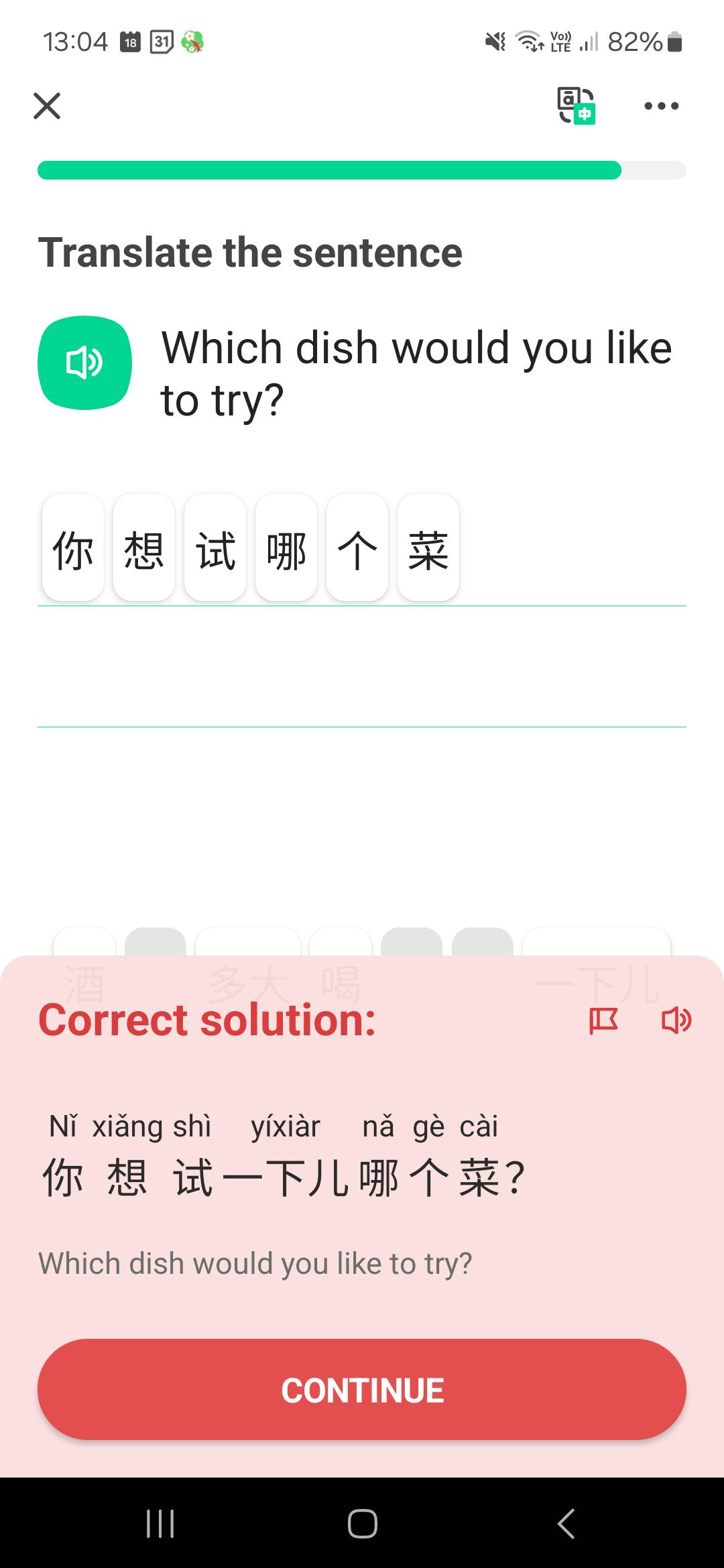
Grammar Is 一下 really necessary?

Post image
115 Upvotes

Or would the sentence I put also be correct?

r/ChineseLanguage • • Jul 10 '26

Grammar 多 = a little?(?!)

Post image
92 Upvotes

I know there are nuences to language and what not, but I'm not understanding the reasoning behind why 多 is used in the context of talking about "a little" after 1o'clock.

I initially thought it would have been something along the lines of 我们可以一点几然后吃饭。

I'm getting to the point in my journey where the sentences seem to have seemingly extra words and word order is starting to go beyond SVO. I know that means I'm progressing along my journey though, so that's the bright side haha.

r/ChineseLanguage • • Aug 11 '25

Grammar Chinese equivalent to "oh my god!"

94 Upvotes

Super random question, but is there a Chinese equivalent to "oh my god!" Or "jesus christ, this situation is surprising/terrible!"? If there isn't an equivalent, what would someone normally exclaim when surprised or horrified?? Are there different phrases for different situations, or are there more 'applicable to literally any situation or sentence' phrases?? Again, very random question, one of those thoughts that pop up out of nowhere and don't leave you alone until you get an answer 😅

r/ChineseLanguage • • Jul 02 '25

Grammar What is this Hanzi witchcraft

Post image
260 Upvotes

I thought thats Xing , why Hang ?

r/ChineseLanguage • • 22d ago

Grammar Maybe I misunderstood 去 and 来?

25 Upvotes

I'm watching the drama Love in the Clouds, and there was a scene which kind of... confused me.

Character A and B ended up going to eat together. Character A started to walk out of the building they were in, but Character B seemed reluctant to go with him.

Then Character A asked B "不去吗?" and Character B went with him after all.

I learned that we use 去 to express if somebody goes somewhere (or go away from us) and 来 if somebody comes to us/our (or a certain) direction. In this situation Character A basicly asked "Don't you come (with me)?". So why he said 不去吗 and not 不来吗?

I would really appreciate if somebody could let me know. Maybe there is a situational/cultural aspect I am unaware or I simply misunderstood how to use 去 and 来. 🥲

r/ChineseLanguage • • Oct 08 '24

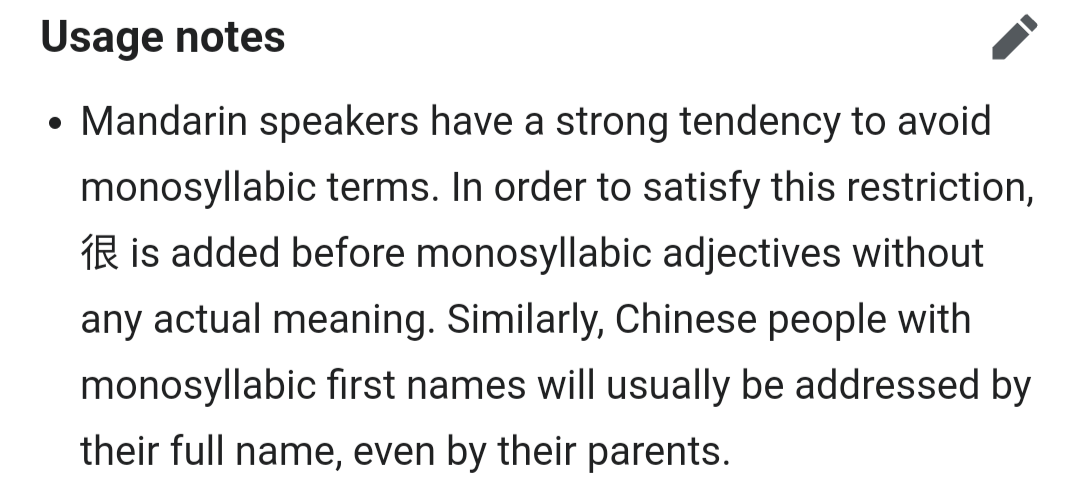
Grammar Is this accurate? Is there a lore reason for it? (found under the Wiktionary entry for 很)

Post image
411 Upvotes

r/ChineseLanguage • • Mar 14 '26

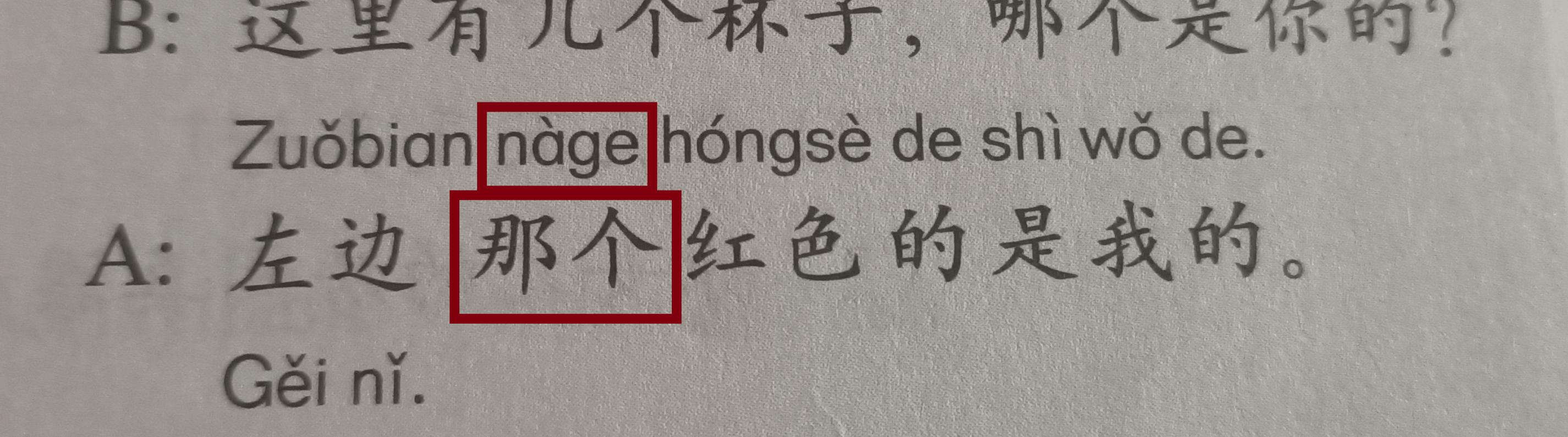
Grammar Can someone help me understand why it says 那个 here

Post image
132 Upvotes

Om trying to learn chinese and my textbook has this sentence. When reading i always try to translate the sentence into chinese in my head first, and I thought one of these would be right:

左边的红色

左边的红的

So you'd get this sentence for example 左边的红的是我的. But I would've never thought of using 那个. So I hope someone can help explain! And if maybe my translations are wrong could you also explain why? Any help would be very appreciated!!

r/ChineseLanguage • • May 12 '26

Grammar why is there 点 in this sentence?

Post image
108 Upvotes

r/ChineseLanguage • • Nov 10 '25

Grammar Why is 中 used here???

Post image
184 Upvotes

i know memes/shitposts aren't the correct way to learn chinese, but why is 中 used?? although i have very limited chinese knowledge, (and correct me if im wrong here) i know it roughly translates to middle

for context, this is from a instagram post about TV series "Journey To The West" 's Sun Wukong beatboxing, then calling buddha. he's not saying absolutely anything in this clip, so i dont see why the character would be used.

r/ChineseLanguage • • Jul 12 '26

Grammar Is 过 an equivalent to 了?

Post image
45 Upvotes

I've run into it in the immersive chinese app. The meaning seems the same to me, why use 过 istead of 了? Thanks