r/IndianHistory • • 26d ago

Announcement Moratorium on World War Related Karma Farming Posts

23 Upvotes

We've seen a sharp jump in posts that just rehash whatever's trending on Twitter about the World Wars. It started crowding out the sub's actual scope, which is the far wider history of the subcontinent.

From today we're pausing new posts on this topic for a month, under the Recycled Posts and Repeat Topic rule, and any such post will be removed. This isn't about shutting the topic out for good. We just want room for other periods and events to get some space too. If you think a specific post deserves an exception, drop us a line in modmail.


r/IndianHistory • • 16d ago

Question 📅 Monthly Feedback & Announcements Post

1 Upvotes

Hi everyone!

Feel free to chat, leave suggestions, or recommendations for AMAs. The mod team is always working on adding resources in the wiki and we encourage you to take a look! Also check out the link to our Discord server.

📖 Wiki

💬 Discord


r/IndianHistory • • 54m ago

Post Independence 1947–Present Horrifying conditions that Bengali Hindus had to face in East Pakistan post partition and then in refugee camps in India - Taken from ‘The Prolonged Partition and Its Pogroms, Testimonies on Violence against Hindus in East Bengal 1946-64 by A.J. Kamra; Foreword by Koenraad Elst’

Post image
• Upvotes

"1950 Barishal, East Pakistan: An old Hindu teacher was burnt alive by his own Muslim students. The teacher, who was a bachelor and lived in Muladi with his widowed sister, had dedicated all his life to his profession. Among his students, the marjority of whom were Muslims, picked up their old teacher and placed him in a huge bonfire of faggots. While he was being roasted alive, these boys danced around the fire in merriment. The sister escaped to Calcutta and related the tale of this gruesome murder.”(AJ Kamra The Prolonged Partition and its Pogroms”, Voice of India, New Delhi, 2020, p, 68).

Rape and abduction have been the most widespread Pakistani crimes against the non-Muslims. Even those who didn’t have it in them to kill, participated in these crimes against women. And unlike in the case of killing, a victim could be victimized again and again; abducted women were typically assaulted by numerous Muslim men for days on end. Even the Hindus women who had the good fortune of being released and returned to their families, carried the message that the only thing awaiting Hindus in Pakistan was endless humiliation. As Mr. Roy writes in his Genocide of Hindus and Buddhists in East Pakistan and Bangladesh, “The barbaric assault on Hindu women is the greatest cause of migration of Hindus from Pakistan.” (A. J. Kamra, The Prolonged Partition And its Pogroms, Voice of India, New Delhi, 2020, p, 62).

1950 Border of India and East Pakistan (now Bangladesh):
The Secretary of the East Bengal Relief Committee, Shri Charu Chandra Roy and the secretary of the East Bengal Minority Welfare committee, Sja. (Mrs) Leela Roy , made the following points in the press on March 22, 1950:
I dedicate this day to these people, whose resilience and strength made our lives worth living:
“The relief measures at Banpur and Joynagore are far short of needs. There is lack of food, water, light and proper sanitation. The refugees come on foot from Darhsan in East Bengal to Joynagar. An average of over five and had thousand refugees are pouring in by this route. At Joynagar without a platform, without a single shed over their heads, about 2500 to 3000 refugees were waiting from the early hours of the day to board the shuttle that would carry them to Banpur. Some of them had been enroute for days. On inquiry, I have met people who were in transit for no less than 5 days, suffered endless humiliation and indignity, have been deprived of their last bit of earthly possessions by innumerable hordes of extortionists. In Joynagar there is no latrine at all and at Banpur there is only one latrine. The Government within the last 20 days have not thought it necessary to have some latrines be made there. There is only one tube-well to provide drinking water. There is no lighting arrangement at all” (A.J. Kamra, The Prolonged Partition And Its Pogroms, Voice Of India, New Delhi, p, 132).

r/IndianHistory • • 11h ago

Question Why did communism "succeed" in Kerala but fail in West Bengal

65 Upvotes

The communist parties in Kerala massively improved the HDI and economic standing of Kerala giving it the highest human development in the entire country

Yet West Bengal to this day remains in a far worse state, why is that so?


r/IndianHistory • • 3h ago

Question Why we only found ( Chariots/Wagons/Bull-carts ) in Sinauli? Why not other prominent sites in Indus valley? ( I am talking about Royal Warrior Burial )

7 Upvotes

Why we only found ( Chariots/Wagons/Bull-carts ) in Sinauli? Why not other prominent sites in Indus valley? ( I am talking about Royal Warrior Burial ) .


r/IndianHistory • • 11h ago

Question Why did the CPIM/CPI and by extension Communism in general fail to gain a significant foothold in India and survive as a powerful political force?

26 Upvotes

India seems like a country primed for a communist sweep as it was a poor nation that had recently gained independence from colonialism and had a large underclass that was getting disgruntled with their economic and political oppression

Yet outside of a few states (which they proceeded to lose) communism never made a foothold in the country

Why is this so?


r/IndianHistory • • 6h ago

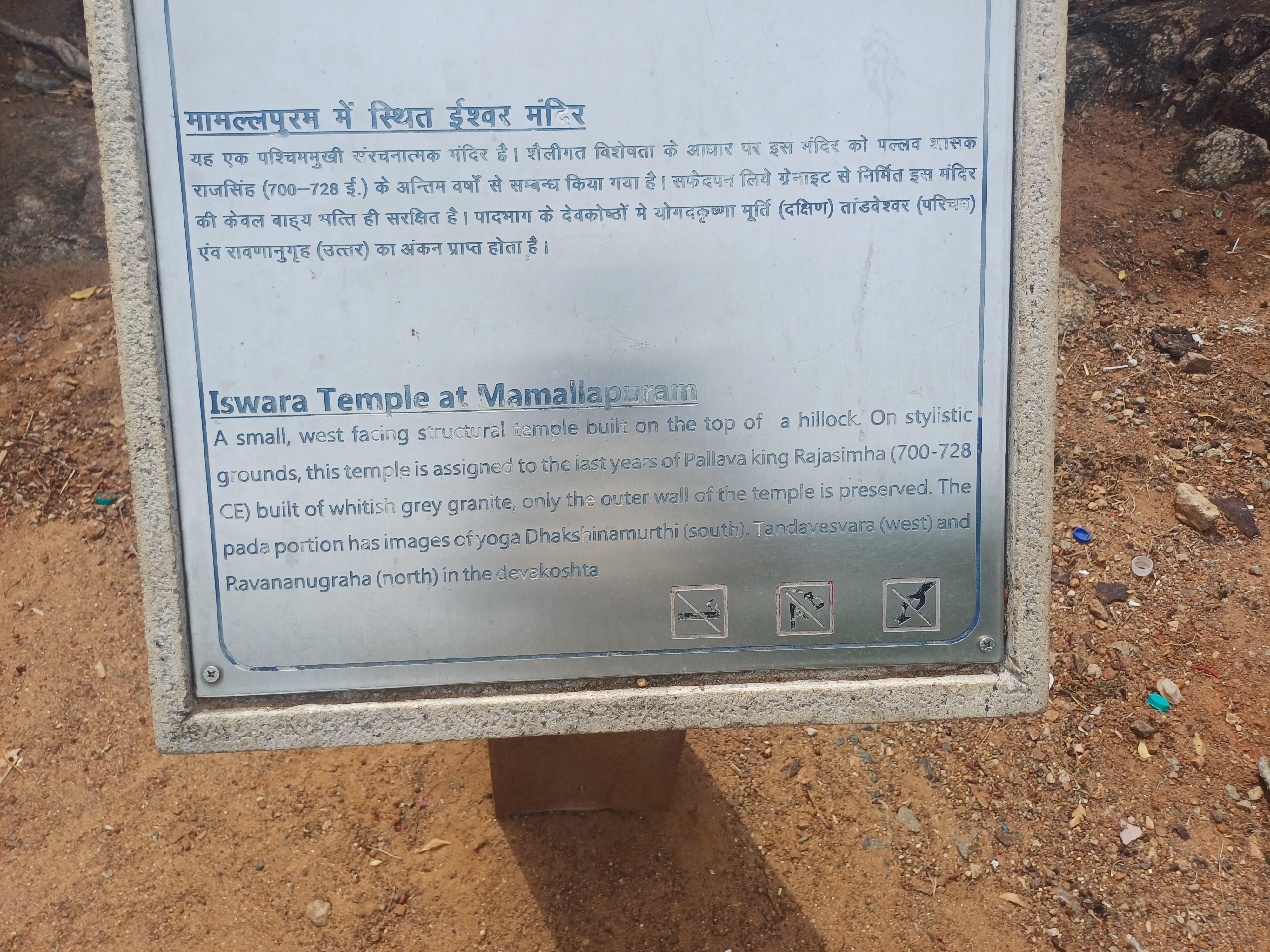
Question ASI sign board seems to be wrong

Post image
8 Upvotes

I noticed a possible typo on the Iswara Temple signboard in Mahabalipuram. It states the temple is "west facing" but lists a figure on the "west" wall instead of the east. If the entrance is on the west, shouldn't that be the east wall?

I did checkout the temple and for sure the temple is west facing and the 3 figures are to the east, south and north. I looked at the sea multiple times to confirm the east lol.

Can somebody confirm that the sign board is wrong.


r/IndianHistory • • 6h ago

Classical 500 BCE–550 CE Rabatak Inscription

Post image
9 Upvotes

This is the Rabatak inscription of Kaniska. Interesting that even in 2nd century CE, þατριαγγε (realm of the Kshatriyas)- is mainly the NI gangetic plains. He must had been breaking up a network of post-Shunga, Mitras, and regional polities (such as the remnants of Deva dynasty of Ayodhya and the Mitra kings of Kausambi).

One question though: Why does Kanishka stop the eastern boundary at Sri-Campa (Modern Bhagalpur/Bihar)? Was Bengal outside the direct Kushana tributary network, or was Campa simply viewed as the easternmost limit of the traditional Aryavarta?

​


r/IndianHistory • • 21h ago

Vedic 1500–500 BCE How Panini wrote the grammar of sanskrit if there weren't any writing systems in India in his time?

41 Upvotes

People say Panini wrote the first grammar of sanskrit around 500 BCE. However, there was no wrintig system in india from the end of the Indus Valley Civilisation around 1300 BCE to the Edicts of Ashoka around 250 BCE. In addition, Megasthenes was in India around 300 BCE and said there weren't any writing systems in the Maurya Empire.

So could Panine write a book on the grammar of a language if he doesn't knew any writing system?


r/IndianHistory • • 9h ago

Intellectual History Recommend me a book which focuses exclusively on South India during colonial times & pre independence era!

4 Upvotes

I want to know more about south India.. how was it in the colonial period.. the role it played in independence and so on. Bcz I think the mainstream books lack the reference towards it. Maybe, it isn't the case, but I rarely recall any event, or any reference...

Do help me in finding books !!


r/IndianHistory • • 1d ago

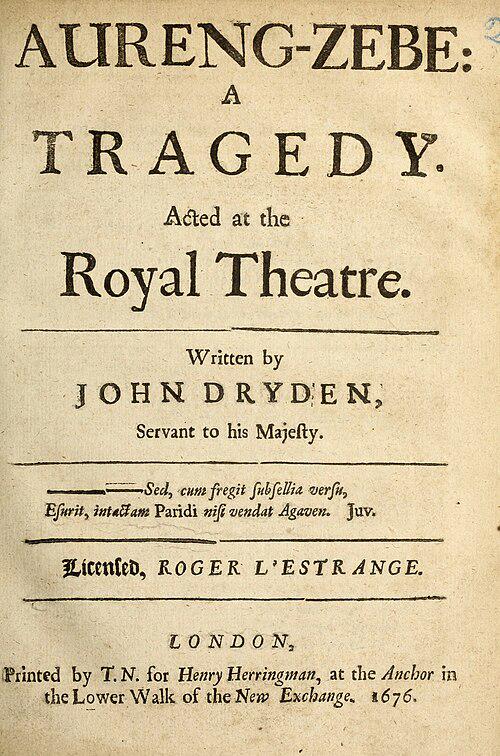
Early Modern 1526–1757 CE Aurang-zebe: british dramatic play based on the mughal emperor written in 1675 C.E.

Post image
70 Upvotes

Summary of play from https://literariness.org/2019/05/23/analysis-of-john-drydens-plays/ :
"Set in India at the time of the Mogul Empire, it derives events and characters from history, though Dryden freely alters the sources. The aging emperor, a stereotypical weak king, finds his throne challenged by several of his sons, the loyal Aureng-Zebe being an exception. Aureng-Zebe is depicted by his friend Arimant, governor of Agra, as “by no strong person swayed/ Except his love,” a hero of unshakable loyalty who hopes that he will attain the hand of the captive queen Indamora for his support of the emperor.

While Aureng-Zebe is tame by earlier standards of the heroic play, echoes of the swashbuckling, superhuman hero remain. In armed conflict, the hero defeats two rebellious brothers, Darah being the first, “Darah from loyal Aureng-Zebe is fled,/ And forty thousand of his men lie dead.” The threat represented by Morat, the ambitious villain of the play, is not so easily parried, for he has raised an immense force thus described by Abbas: “The neighb’ring plain with arms is coverd o’er;/ The vale an iron harvest seems to yield/ Of thick-sprung lances in a waving field.” The hyperboles, typical of the genre, suggest the physical threat posed by Morat; his character also serves as a foil to that of Aureng-Zebe, for he does not properly control his passions. Primarily motivated by a desire for power, he also wishes to abandon his faithful wife, Melesinda, for Aureng-Zebe’s beloved Indamora, who finds him repulsive. Further complications arise when the emperor falls passionately in love with Indamora, and the Empress Nourmahal, Aureng-Zebe’s stepmother and the “evil woman” of the play, conceives a strong passion for her stepson. Confronted with news of his father’s love for Indamora and his placing her under arrest, the hero accepts the challenge involving both his love and honor.

Aureng-Zebe finds himself threatened from many directions when he intercedes with the emperor and attempts to prevent the emperor’s petulant imprisonment of Nourmahal. No sooner has the emperor seen Nourmahal taken away than he summons the rebellious Morat with the intent of making him his heir, all because of Aureng-Zebe’s love for Indamora. Boldly entering unannounced, Aureng-Zebe attempts to end the alliance between the emperor and Morat by offering to disband his army if Morat will withdraw his forces from the city, leaving the emperor in control. Despite these peace-making efforts, the emperor orders Aureng-Zebe’s arrest when he will not renounce his love for Indamora. When Indamora pleads for Morat to spare the life of Aureng-Zebe, he demands her love in exchange, which she curtly refuses. The alliance between the emperor and Morat is broken when the emperor learns of Morat’s passion for Indamora. After Aureng-Zebe has been released through the efforts of Indamora and Arimant, Indamora finds great difficulty in convincing the jealous hero that she has remained faithful and has not betrayed him with Morat. Meanwhile, having lost the favor of the emperor, Morat rebels against him."

The outcome is obscured when Arimant, in a disguise that results in his being mistaken for Aureng-Zebe, is killed and Morat has to break off a long seductive speech to Indamora to quell an uprising. In the final battle, Aureng-Zebe leads the emperor’s forces to victory, and Morat, mortally wounded, manages to prevent his mother from murdering Indamora. Her violent passion frustrated, Nourmahal poisons herself, and the Emperor grants Aureng-Zebe both the state and Indamora.

In Aureng-Zebe, the characters who retain their honor reap the rewards of both love and honor, whereas those who do not control their passions and ambition encounter misfortune. The abruptness and violence of passions are appropriately accompanied by abrupt and violent actions in the play. A major difference between good and evil characters becomes the measure of control over passions, not the violence of the passion itself. Dryden’s characters, both the good and the bad, express themselves blatantly where sexual passions are concerned, a phenomenon not limited to the characters of the heroic plays."


r/IndianHistory • • 1d ago

Later Medieval 1200–1526 CE Sri Kartarpur Sahib - final resting place of Guru Nanak

Thumbnail
gallery
702 Upvotes

Went to Sri Kartarpur Sahib in 2021..

it is ~4 kms inside Indo Pak Border

Last resting place of Guru Nanak ji

The well used by Nanak ji is still there

Also Pakistan alleges that Indian Air Force bombed this place (pic attached)


r/IndianHistory • • 1d ago

Post Independence 1947–Present Allaince for the 1989 assembly and general elections in Andhra Pradesh.... One of the rare occasions where both left and right parties allied

Post image
59 Upvotes

Btw congress won this election with 181/294 in the assembly and 39/42 in the parliament


r/IndianHistory • • 1d ago

Archaeology India's Recent Archaeological Discoveries.

73 Upvotes

Important Archaeological Discoveries in India (October 2026)

1. 11th-Century Vishnu Idol Head Found in Khajuraho

The Discovery: Archaeologists have found the missing head of an 11th-century statue of Lord Vishnu in Khajuraho, Madhya Pradesh. Yadubir Singh Rawat, the Director General of the Archaeological Survey of India (ASI), officially confirmed this to The Times of India.

Why it Matters: Experts will now use scientific methods to join the head back to the statue and restore it completely.

2. Ancient West Asian 'Torpedo Jar' Found in Tamil Nadu Sea

The Discovery: Marine scientists and the Tamil Nadu State Archaeology Department (TNSDA) explored the underwater site of Poompuhar, an ancient Chola port. They found a piece of a 'Torpedo Jar' from West Asia and over 250 pieces of Chinese pottery.

Why it Matters: According to The New Indian Express, this discovery clearly proves that the ancient Chola Empire had strong sea-trade connections with Arab and West Asian countries.

3. Survey Begins at Ujjain's 'Vaishya Tekri' Stupa

The Discovery: The head of the ASI confirmed that preliminary digging and scientific surveys have started at the Maurya-era 'Vaishya Tekri' Buddhist stupa in Ujjain, Madhya Pradesh.

Why it Matters: Early data suggests that this ancient structure might be even larger than the famous Sanchi Stupa. Scientists are using Ground Penetrating Radar (GPR) technology to confirm its exact size.


r/IndianHistory • • 1d ago

Question What do these symbols carved into the floor of Pataleshwar Cave Temple represent?

Thumbnail
gallery
235 Upvotes

Pataleshwar Cave Temple, located on Jangli Maharaj Road in Pune, Maharashtra, is an ancient rock-cut Hindu temple dedicated to Lord Shiva. Dating back to approximately the 8th century CE, it is associated with the Rashtrakuta period and is considered one of Pune’s oldest surviving monuments.

The temple is carved out of basalt rock and features a large pillared hall, a Shiva lingam, and a distinctive circular Nandi mandapa. Interestingly, the temple complex also appears to have been left partially unfinished.

I’ve visited this temple multiple times, but during my visits, I noticed these small symbols carved into the stone floor. I’ve attached photographs of them.

Does anyone know what these symbols represent? Could they have a religious or spiritual meaning, be related to ancient architectural practices, or serve some other purpose?

I’d love to learn more about their history and whether there are any archaeological studies or historical references explaining them.

Floor plant from : Pataleshwar Cave Temple, Pune - RTF | Rethinking The Future https://www.re-thinkingthefuture.com/case-studies/a13983-pataleshwar-cave-temple-pune/


r/IndianHistory • • 1d ago

Artifacts This is a Dagger of the Khandayats (a peasant militia community from Odisha) which is locally known as "Muhan Bhagati".

Post image
93 Upvotes

"Muhan Bhagati" means this Dagger resembles a tiger's face.


r/IndianHistory • • 1d ago

Linguistics I learnt Brahmi for fun...

8 Upvotes

I was bored so i chose to brag


r/IndianHistory • • 1d ago

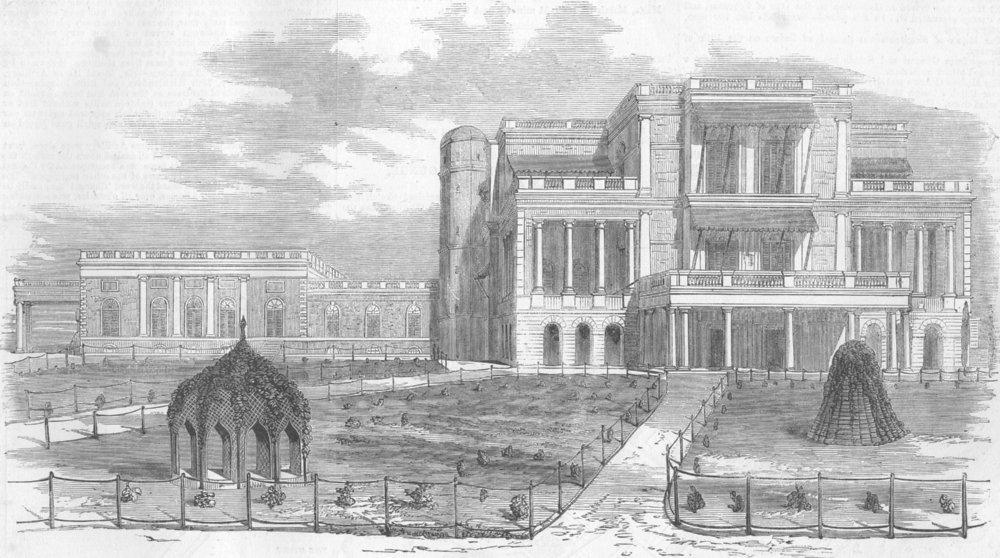
Colonial 1757–1947 CE Siege of Residency – British Memories – Pages from a Diary SIEGE COMMENCED,Lucknow, June 30, 1857, Tuesday

Post image
25 Upvotes

A MOST disastrous day. Early this morning we were awoken by the sound of guns passing the house, and found that a small force of 300, with seven guns, was going out to meet the advanced guard of the enemy, which was reported to be at a place called Nawab Gunge, in hopes, by driving them back, of preventing the rest from coming on. When they reached the village of Chinhut, about five miles from Lucknow, instead of a small force they found the whole rebel army, amounting to between 12,000 and 15,000. Our unfortunate troops were taken at a disadvantage, surrounded, and obliged to fly back in terrible disorder, leaving nearly 200 killed and wounded, and five of our guns, one of them a howitzer, in the hands of the enemy. It was a little less than miraculous that any of them came back alive. Poor Colonel Case, Captain Sterens, Mr Thompson, and Mr Brackenbury, and Captain M'Clean, of the 71st N. I., were killed.

Sir Henry Lawrence and Colonel Inglis returned all safe. At nine o'clock, we were in a state of siege, completely invested by the enemy, and tremendous firing commenced.

A very fierce attack was made on the Bailee Guard Gate at the back of this house. No sooner was the first gun fired than the ladies and children were all hurried downstairs into an underground room, called the Tye Khana, damp, dark, and gloomy as a vault, and excessively dirty. Here we sat all day, feeling too miserable, anxious, and terrified to speak, the gentlemen occasionally coming down to reassure us and tell us how things were going on. James was nearly all day in the hospital, where the scene was terrible: the place was so crowded with wounded and dying men that they had no room to pass between them, and everything in a state of indescribable misery, discomfort, and confusion. The Polehamptons have left the Residency and got a little room in the hospital to live in. Mrs. Polehampton will make herself useful there in nursing. I wish I could go too, but there is no room for us, and James says it is too great a risk for me to go backwards and forwards under fire each time, so I must try to be of use here instead.

( An account of 30th June, 1857 from A Lady’s diary of the siege of Lucknow, written for the perusal of friends at Home”, published in London,1858)

30th June – The Defence of Lucknow

“…and the force was compelled to retire with the loss of the eight-inch howitzer, and three 9-pounders.

The enemy came boldly on, and invested us on all sides, firing from all the houses round, which they rapidly loopholed; they also erected a hasty battery for the eight-inch howitzer across the river, from which they threw several well-directed shells; and they began to collect boats for a bridge across the river, the iron bridge being under fire from the Redan.

( From the defence of Lucknow, a Diary recording the daily events during the siege of the European Residency from 31st May to the 25th September, by a Staff Officer, London, Smith, Elder and Co,65 Cornhill, 1858)

The week beginning from the 30th June,1857 was momentous in the history of Lucknow and in the freedom struggle. 30th June- Battle and Chinhat and siege of Residency, 1st July –blowing of Macchi Bhawan; 4th July, death of Sir Henry; and 5th July, Coronation of Birjis Qadr. 1857 looks like a forgotten chapter of collective memory.


r/IndianHistory • • 1d ago

Question where can I read Padmaprābhṛtaka by Shudrak ?

4 Upvotes

I have been searching for it since many days but found it nowhere. Can somebody help me please.


r/IndianHistory • • 2d ago

Archaeology Indus Valley farming started much later than previously thought. New radiocarbon studies show that the earliest layer at Mehrgarh dates between 5223 and 4914 BC, not "around 8000 BC". This has major implications for the beginning of civilization in South Asia and the role of Iranian-related farmers.

Thumbnail
nature.com
156 Upvotes

r/IndianHistory • • 2d ago

Colonial 1757–1947 CE The True Origin of the British Empire’s Wealth: What Historians Get Wrong

Thumbnail
youtube.com
41 Upvotes

The story of how the British Empire got rich is one of the most distorted chapters in modern history. For generations, textbooks have told us that Britain became the wealthiest nation on Earth through industrial genius, scientific innovation, and sheer hard work. The steam engine. The spinning jenny. The factory system. But when you follow the actual money trail through tax ledgers, shipping manifests, and the private letters of the men who built the empire, a very different picture emerges.

In this deep-dive investigation, we discover the real origins of British imperial wealth, from the 1600 royal charter that created the East India Company to the hidden offshore financial empire that still operates out of the City of London today. We trace the Battle of Plassey in 1757, where a thirty-two-year-old clerk named Robert Clive used bribes, forged treaties, and a conspiracy with Mir Jafar to seize the richest province in India for a private corporation. We examine the catastrophic Bengal famine of 1770, which killed between seven and ten million people while East India Company revenues actually increased. We explore the Caribbean sugar economy, the transatlantic slave trade, and the long-suppressed thesis of Eric Williams, whose 1944 book Capitalism and Slavery was not published in a mainstream British edition until 2022.

We also break down the single most shocking fiscal fact in British history. In 1833, Parliament passed the Slavery Abolition Act and paid twenty million pounds, roughly forty percent of the national budget, to compensate slave owners for the loss of their human property. The enslaved people themselves received nothing. The loan taken out to finance that payment was not fully paid off until 2015.


r/IndianHistory • • 2d ago

Colonial 1757–1947 CE Bengal famine and American independence

Enable HLS to view with audio, or disable this notification

589 Upvotes

Never thought the Bengal Famine of 1770 could have any connection to American independence. The East India Company’s financial crisis and the British government's attempts to bail it out contributed to the tensions that led to the Boston Tea Party. History is crazy when you realise how events in Bengal were connected to the American Revolution.here you have annamalai speaking about this in detail


r/IndianHistory • • 1d ago

Early Modern 1526–1757 CE Battle of Godavari

Post image
5 Upvotes

Naseer Jung started off from Aurangabad and came towards the Godavari. When the Peshwa’s family was assembling at Pune, the moves against Naseer Jung began in earnest. The battle was fought largely to the south and west of Aurangabad and is often called the battle of Aurangabad or the Godavari. The Peshwa was supported by his most reliable aides: Chimaji Appa, Pilaji Jadhavrao, Malharrao Holkar, and Ranoji Shinde. The Marathas crowded Naseer Jung and attacked him when the ground was just right for battle, forcing terms.

https://ndhistories.wordpress.com/2024/01/06/battle-of-godavari/

Marathi Riyasat, G S Sardesai ISBN-10-8171856403, ISBN-13-‎978-8171856404.

The Era of Bajirao

Uday S Kulkarni

ISBN-10-8192108031

ISBN-13-978-8192108032.


r/IndianHistory • • 2d ago

Post Independence 1947–Present Fun fact: There's never been an alive Congress PM to see another Congress PM immediately succeeding him

164 Upvotes

Not counting the very brief acting PM tenures (as a result of unexpected deaths) of Gulzarilal Nanda, but there has never been an instance in which a Congress PM was alive to witness another Congress PM immediately succeeding him. The transitions were:

Nehru dies in office on 27 May 1964, Nanda serves as the Acting PM, Shastri becomes PM on 9 June 1964.

Shastri dies in office on 11 January 1966,, Nanda again serves as the Acting PM, Indira Gandhi becomes PM on 24 January 1966.

Congress-to-Janata Party transition in 1977.

Indira Gandhi dies in office on 31 October 1984, Rajiv Gandhi becomes PM that day.

Congress-to-NF transition in 1989.

Congress-to-BJP transition in 1996.

Congress-to-BJP transition in 2014.


r/IndianHistory • • 2d ago

Question If Only Rajput Queens Performed Jauhar, What Happened to the Other Women When a Fort Fell?

56 Upvotes

I don't understand one thing. There are stories about the jauhar of Rajput royals, but were all the women involved ranis? What about the dasis, workers, and other female servants? If a city fell, all women would be in danger, whether they were servants, commoners, noblewomen, or the wives of merchants. So how did the invaders supposedly target only Rajput or royal women while sparing other Hindu women?

Also, if only Rajput women performed jauhar, what happened to all the other women? Why didn't they perform jauhar as well? I'm just curious to understand.