So a few weeks back I posted about a little amateur experiment with my kids in the Ebersberg forest near Munich (local hotspot for Chernobyl Cs137). We found some mushrooms that weren’t Bay Boletes (Maronenröhrlinge), just a similar species, and our semi-quantitative setup (gammaspectrometer + lead castle) showed about 1.2 kBq/kg. Not bad, but we really wanted the real deal – the Bay Bolete, which usually comes later in the year, around mid-October.
This time we got lucky. Found a nice batch. We were pretty excited because locally these are the famous Cs137 concentrators. But honestly? The result was a bit disappointing: only 1.78 kBq/kg dried mushrooms. So yeah, it’s more than the other ones, but not like, many times more. Just a bit more.
Why these shrooms actually concentrate Cs137? And the answer is pretty cool: it’s down to two brown pigments in the cap. Badion A and Norbadion A. These are unusual naphtho-pyrandione dyes that you don’t find in, say, Steinpilze (cepes). They normally sit there as potassium complexes, but Norbadion A can also grab cesium instead. It forms a stable 1:1 complex with CsCl. Basically the pigment chelates the Cs137 instead of potassium, which is why Bay Boletes suck it up so efficiently while other boletes barely do.
If you want to see the chemical structure of that dye, there’s a screenshot from the linked publication: https://doi.org/10.1002/ange.19840960619 (me chemistry nerd, sorry.)
So.....next step is to isolate that BadionA/NorbadionA from the shrooms and....sniff it! (No just kidding! DONT DO THAT!)
All in all the value of 1.78kBq/kg dried shrooms is well below consumption thresholds by the EU, but I dont know if I would eat those, of course in a regular meal there are only a few grams of those inside. But that clear peak even with an amateur setup, hmmm...
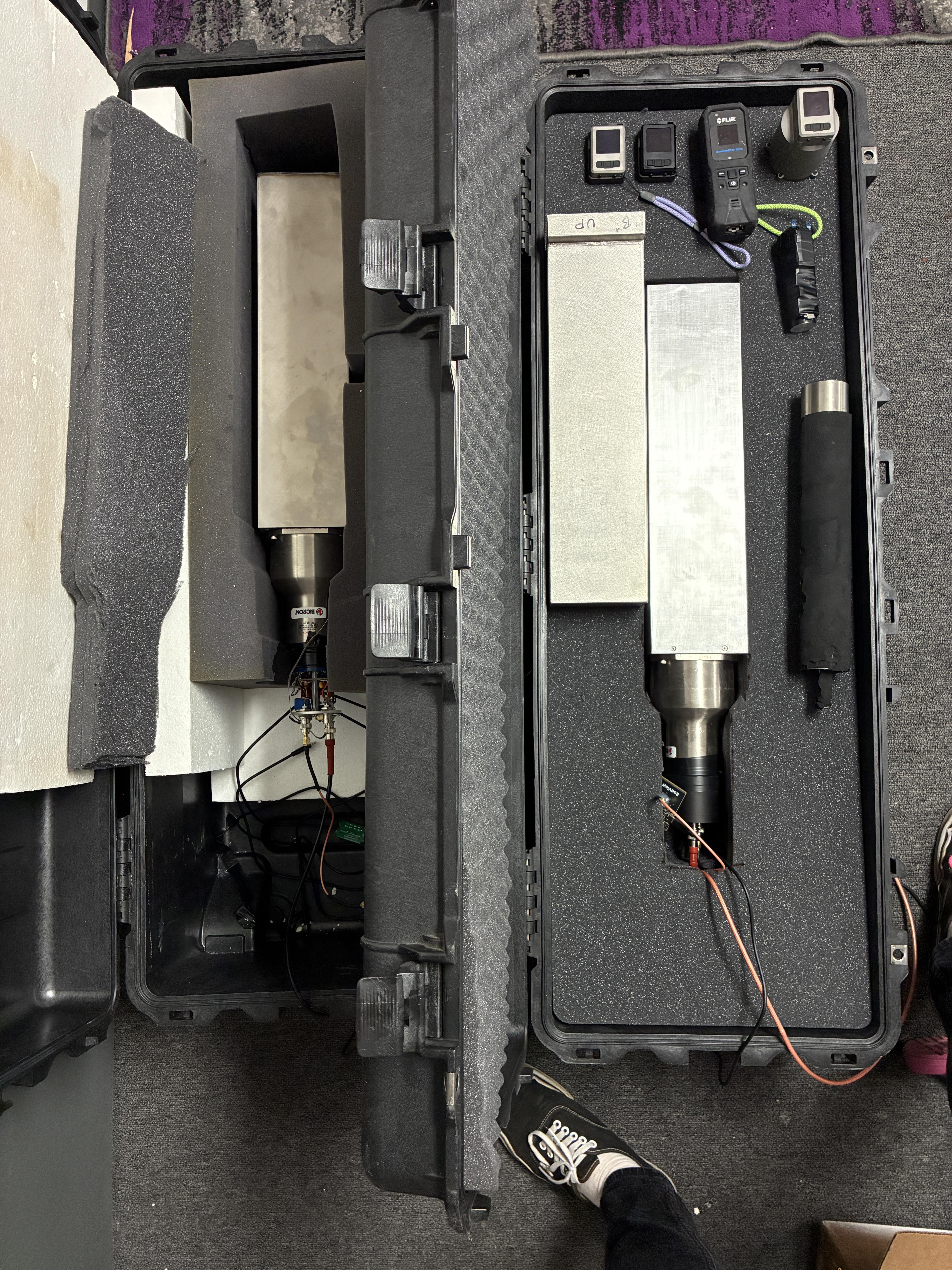
Disclaimer&Setup: we dry the shrooms and fixate everything in a mini-marinelli with epoxy resin. (those puks are for me later neat little checksources, all legal - well below any restricted levels). Spectrometer is GSMAX8k and probe is GS1515CsI. We only have one calibration point in the same marinelli geometry, and only from dried/sieved soil - so anything here is amateur-semiquantitative, matrix effects a.o. are not considered.
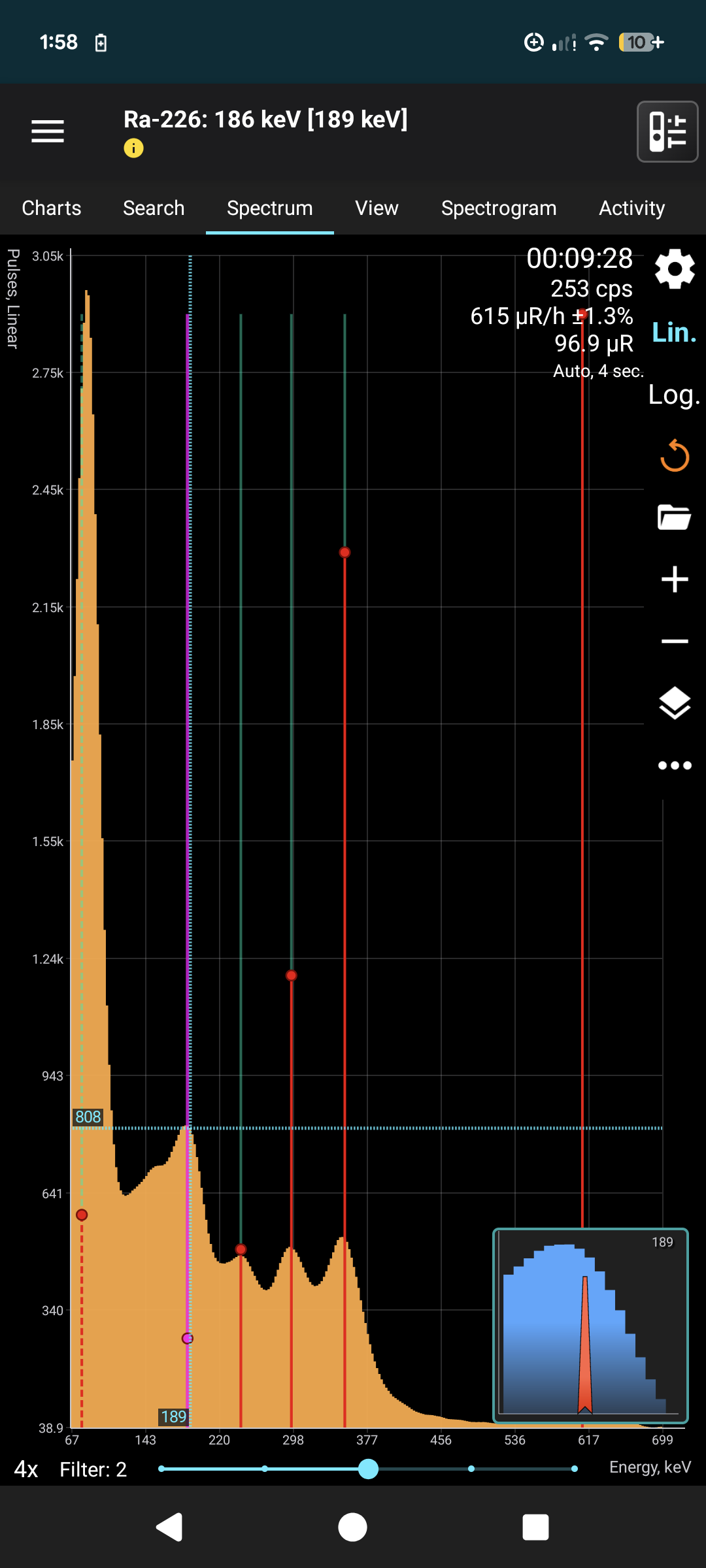
Last image: you can even see it with the radiacode110 from my son, only after 18 minutes the 661keV peak comes up -> but only (!) in a leadcastle! Without you cant see jack shit. So highly recommended to get yourself a leadshield :-) for your radiacodes, it opens a complete new world :-)