r/SpeculativeEvolution • • Aug 31 '26

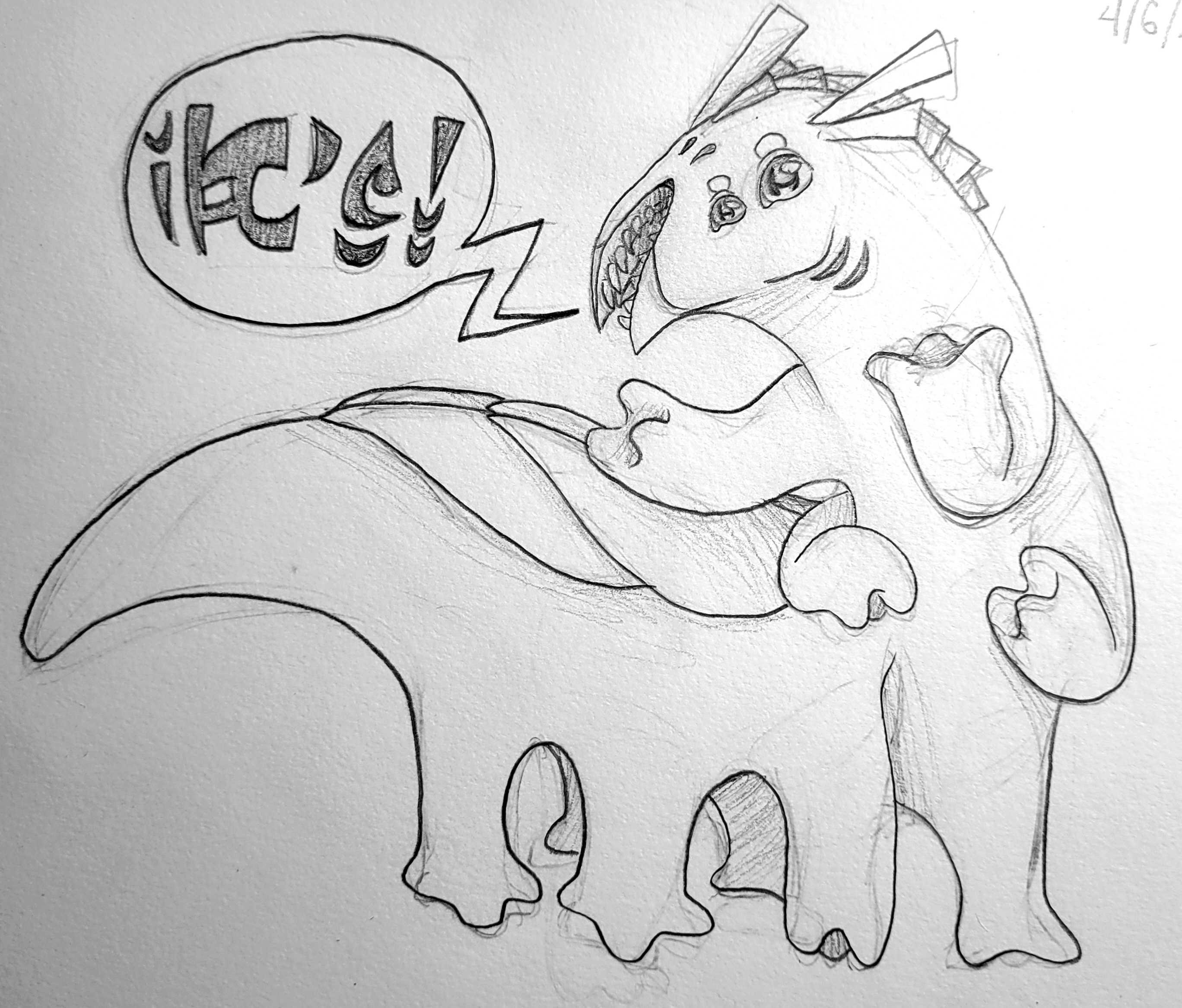
Subreddit Announcement Announcing r/SpeculativeEvolution's prompts for Spectember 2026!

Thumbnail
gallery
105 Upvotes

FAQ

Do I have to do every prompt in order to participate?

Nope! Do as many as you're comfortable with. If you miss a day, that's fine as well.

I like another prompt list better. Can I submit those instead?

Sure! We don't have a monopoly on Spectember, and this is all for fun. Just be sure to use the "Non-Subreddit Spectember Prompt" flair so it's easier for us to catalogue.

Can I get like to the Spec Evo Forum?

Sure: https://specevo.jcink.net/

Can I get a link to the Specposium Discord server?

Sure, here you go: https://discord.gg/4Ez8qmseY9

Will there be a community project/collaborative event this year?

That's the plan! Stay tuned.


r/SpeculativeEvolution • • 5d ago

Jurassic Impact [Jurassic Impact] Snow Frogs

Post image
339 Upvotes

Snow Frogs

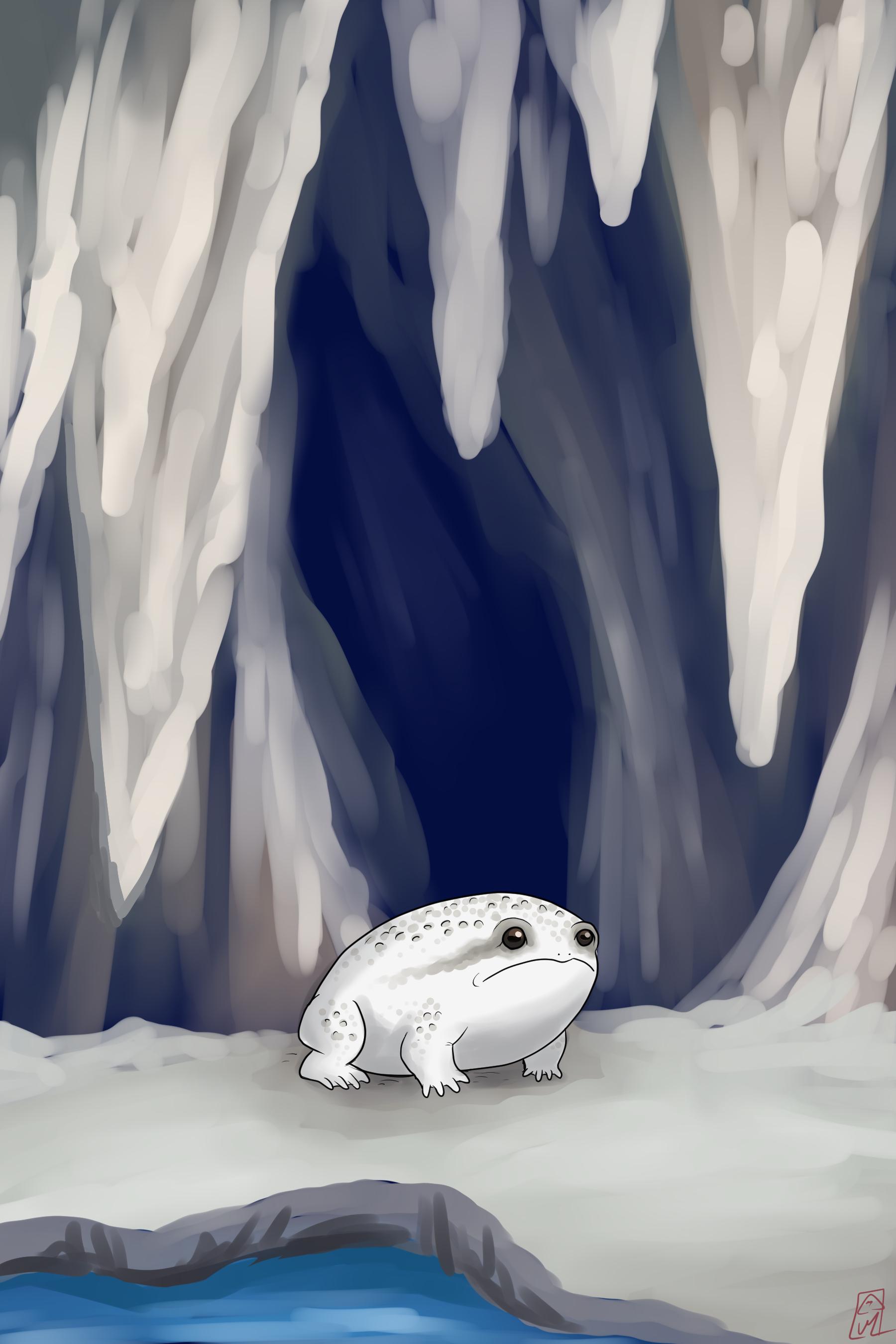
Throughout the Miocene, Antarctica has steadily transformed into the frozen expanse of desert we know today. For the most part, the continent is only populated by highly specialized dermorhynchid mammals and marine birds...but inside the continent's caves there is another species that managed to survive the freezing. It may seem unlikely, but Jurassic Impact's Antarctica is also home to marine frogs.

Chionobatrachus is a genus of small, round, cold-tolerant frogs which inhabit the Antarctic cave systems. As some of these caves can actually reach 75 degrees fahrenheit in the deeper sections, the higher temperatures and moisture have allowed small populations of frogs to remain as Antarctica became covered in ice. Snow frogs still have quite an arsenal of adaptations to endure the cold, however, such as a biological antifreeze in their bloodstream similar in composition to that of our timeline's wood frogs. Like toads, snow frogs also have dry, bumpy skin and can survive on less moisture than some of their kin.

With the majority of water on the continent being salt water, snow frog tadpoles have adapted to become salt-tolerant. This tolerance to marine conditions remains into adulthood, and adult snow frogs prey on various small undersea worms and invertebrates. Anything they can swallow is edible, and in the case of the tadpoles their diet consists mainly of plankton and algae, as well as rotifers and nematodes.


r/SpeculativeEvolution • • 8h ago

Future Evolution [OC] The Doomed Earth-Shellcrackers (85 my into the future, late Thalassic)

Post image
113 Upvotes

Around 40 million years ago, the first nutcracker rats appeared. These rodents were small generalists that fed primarily on hard foods, such as seeds, nuts, and snails, assisted by their large, fused incisor teeth. This characteristic allowed them to spread over time into many different habitats and niches. Approximately 25 million years ago, when the last glaciers disappeared and the Earth entered a hothouse phase, shallow aquatic ecosystems rich in life appeared along almost all coastlines, which ultimately drove many terrestrial clades into the water, with one of the most relevant at this time being a group of nutcracker rats, the family Pseudoramphidae.

These mammals differ from their terrestrial relatives by their much larger size, calcified tails, and the ability to generate electrical impulses, used by most species to communicate. Like many nutcracker rats, their upper tooth is capable of moving vaguely independently from the rest of their skull, in a manner similar to how some psittacines can articulate their beak. This adaptation allows them to scrape their food or grind it easily, which has led them to occupy mainly durophagous and herbivorous niches in the water, although large predatory or generalist species do exist.

In this case, we can observe the Australian shellcracker, one of the largest species within its genus, displaying mainly benthic behaviors and inhabiting the oceans between Oceania and Asia. They abound in corals and macroalgae, which has led many herbivores to appear in these ecosystems. Some of the most prominent are snails that can reach almost half a meter in size and large generalist crabs that feed on both algae and animals hidden in the mud. These end up being crushed by their immense, flattened teeth, with the lower one serving as a spoon capable of scooping them from the ground, and the upper one acting as a hydraulic press that crushes the victim. Like most pseudoramphids, males have tails hardened with keratin plates, which feature bright colors and can move up and down to attract the female's attention or warn other individuals


r/SpeculativeEvolution • • 18h ago

Fan Art/Redesign [Credit: Keenan Taylor][Media: The Future Is Wild/Kaimere] A Squibbon & Notzokideu

Post image
293 Upvotes

r/SpeculativeEvolution • • 2h ago

Alien Life [OC] Do curved beaks work for flying predator species when their mouths open vertically?

Post image
14 Upvotes

So, this is a sophont species I've been playing around with for a while now. I've just been calling them "snail dragons" so far since their bodies are squishy and use fluid filled sacs instead of the usual hard skeletons. The fluid in this instance is likely a gas of some sort instead of a liquid, but that's as far as I, personally, am really able to get into it. This species is kind of getting me out of my comfort zone more than the others I've worked on, both because if the lack of a typical skeleton and because they are a flighted species.

Now, the part that I'm currently going back and forth on is the shape of the beak. I like the profile of the curved beak a lot, and I originally chose it because this species have a larger portion of meat in their diet than anything else, so it's based on the beaks of raptors. However, I don't know now if that would still be likely to evolve like that with the vertical mouth? I have also considered making the curve horizontal, with each side having an opposite curve like a bird with scissor beak but naturally. And, honestly, I just couldn't get that to look right?

So yeah, what do you guys think of the curved beak with the vertical mouth? Should it be straight? Should it be horizontal like the scissor beak type idea? Something else entirely?? I'd love to heard your guys' thoughts on this because again, this is a bit out of my wheelhouse, haha.

(I'm on mobile, apologies for typos or lame formatting)


r/SpeculativeEvolution • • 3h ago

Alternate Evolution [Credit: world orogen] pet seed world

Post image
16 Upvotes

I'm making a pet seed world. So far I have the species I'm going to use and the map For the pets I'm using: Labrador retrievers, Syrian hamsters, Bengal goldfish, and budgerigars. The plants are white clover, dandelion, hazel, ryegrass, foxtail, cock'sfoot grass, wheat, and Canadian waterweed. The main invertebrates are Lumbricus terrestris. Plodia interpunctella, krill, and many more microbes, bacteria, and algae


r/SpeculativeEvolution • • 12h ago

Alternate Evolution [OC] Triassic Unbroken: Fern forests in Africa

Thumbnail
gallery
66 Upvotes

The large protomamiferans are spreading throughout mainland Africa, such as the Stond, which weighs about 2.6 to 4.3 tons, the phytomander is an amphibian with habits very similar to that of a crocodile, measuring about 5.7 meters and weighing at least 1.2 tons and at most about 2.8 tons, finally the Lindwurms is a descendant of Shavoripteryx, these are expanding in Godwana and Africa, it is very possible that its flight capacity will improve with millions of years.


r/SpeculativeEvolution • • 5h ago

Alien Life [OC] Some Different Flavors of my Aliens

Post image
17 Upvotes

Hi, these are my aliens from a world terraformed by another kind of alien from a separate planet. They're called Ota, pronounced "Oh-Tuh" and this is my first time sharing them on Reddit. These are some of their ethnicities/races. Note that this isn't all of them – Ota are as diverse as humans, possibly more due to their isolated, scattered homes (their world was flooded and now their landmasses are scattered islands where mountains used to be) – but these are the major ethnicities.

Qaen Lusune Runa Ra Thagulo Senota - Shortened to Qaen Lusune Runa Senota, “The Sunrise People” (The Easterners): The Qaen Lusune Runa Senota, “The Sunrise People,” are a race of Ota from the northeastern hemisphere known for their glass crafting. They have a gray tint to their skin due to high amounts of glaucomelanin and low amounts of erythromelanin. They also are covered in spots. These spots can be dark or faint, and can be sparse or dense. They are born without them, but gradually develop them as they age. Their native islands are some of the largest landmasses remaining on Onura, but are barren and sandy, with few resources. The Sunrise People are known to be resourceful because of this. They build houses out of sand/clay/mud, and dried plants - analogous to the waddle and daub homes of Earth. They are quite large, at an average height of 5.5 feet, and it can be easily theorized that The Sunrise People and The Voyagers split off from the same ancestral population.

Qaen Lusune Runa Ra Thara Senota - shortened to Thara Senota, “The Western People/The Sunset People” (The Westerners): The Thara Senota, “The Western People,” are a group of Ota from the northwest island clusters. They’re recognized for their animal jewelry and tools - making items out of teeth, bones, and skin. This isn’t unusual for populations of Ota, and is actually very common due to a lack of accessible metals on land, but The Western People are exceptionally skilled at this craft. They have high amounts of erythromelanin in their skin, and low amounts of glaucomelanin, making their skin a deep reddish-brown hue. They have unusual white rings on their bodies - one that circles their face, and two that circle their shoulders and meet in the middle of their chest, as well as one around the base of their tail, and one on each of their wrists and ankles. Their native islands are in an isolated, dense cluster of highly vertical towers of rock. The Westerner’s homes are often built straight onto the sides of these towers, and sometimes into them with tunnels into the stone that took entire generations to dig. Their shelters are small and sturdy, made to withstand storms and the wind that comes with building vertically, and are connected to one another with rope bridges and stairs carved into the rock. The Westerners are known for their agility, and their protectiveness of their children. They are often considered the least social of the Ota, and are often cold to strangers. They have a different writing system than the other tribes – instead of using threads and knots, Westerners use stone tablets and large, etched, pictographs, able to be read by an ota’s eyes from close up and from far away.

Rathasune Lurota (“The Voyagers”): The Rathasune Lurota, “The Voyagers,” are a race of Ota known for their long, seasonal migrations between distant islands. They have high amounts of glaucomelanin and low amounts of erythromelanin, which causes their skin to have gray tint. Their faces and their bellies are pale. They are the largest race of Ota, at 5.5-6 feet tall compared to the usual 4.5-5 feet of the other tribes. They have unusual bumps at the front of their faceplate - this is a mutation that can occur in any individual of any tribe, but the same genetic bottlenecking that caused them to be so large also caused the mutation to be highly prevalent throughout The Voyager population. Their boats are large and sturdy, made for long-term open ocean travelling and habitation. Due to their frequent travelling, they are often the threads that connect distant populations of Ota and are known as traders and merchants. A quirk of their voyaging culture is that travelling strangers are always greeted kindly and given a place to rest.

Qaen Lusune ke Thawalinra Ota (“The Black Sands Tribe”): The Qaen Lusune ke Thawalinra Ota, the Black Sand People, are a group of Ota from a chain of volcanic islands in the north. The sand of these islands is black due to the erosion of basalt. Their skin is black due to high amounts of both erythromelanin and glaucomelanin. They have stark white patches on their eyes, and their bellies are white as well. Due to genetic bottlenecking, a mutation analogous to leucism where their skin lacks pigment cells is common in their population. They're known for their deeply religious beliefs, closely tied with remembering their ancestors through “Memory Necklaces,” and having individuals who maintain these necklaces, which can be generations old.

Gulopana Narien Ota (“The People who Preserve Food”): The Gulopana Narien Ota are a race of people who are known for their various food preservation methods. Their skin contains more erythromelanin than glaucomelanin, giving them a brown skin color. Their islands sit directly in the most strongly seasonal area of Onura, and these islands have heavy fluctuations in food availability because of it. They are large, very flat, and prone to flooding, making them muddy and marshlike. Their villages consist of huts raised out of the water, and connected with rope bridges. They make the floors out of tightly woven mats of grass, giving the bottoms of their structures a bouncy, flexible feel. Because of the food instability on their islands, The Gulopana Narien Ota are known to preserve huge amounts of food when it's plentiful. Their preservation methods are many and varied, including but not limited to smoking, pickling/fermenting, and drying. The Gulopana Narien Ota also plant and harvest underwater crops, and farm small fish and bivalves. This tribe has placed large, stone structures along the coast of their island that, when the wind blows through, produce a low, whistling tone. The stones are made so that, all the way around their islands, they vary in tone. When the Flood Winds come, the ever-present drone of the island shifts, alerting the Gulopana Narien that the flooding season is approaching.

Luwalin Senota (“The Ice Dwellers”): The Luwalin Senota, “People from the Ice,” are a race of Ota from the southern hemisphere, where the last of the Onuran icecap remains. They have very little pigment in their skin, making them extremely pale, almost white in color. Luwalin Senota are typically better at walking and running on land than other Ota, due to their nomadic lifestyle, similar to Pre-Flood Ota. Genetically, they are the Ota that are closest to them. They're known for being uncommon and reclusive, rarely traveling further than the islands surrounding the ice. Their shelters are made of skins and are quickly collapsible and lightweight, easy to travel long distances with and quick to set up. Unusually, they live in small family groups rather than villages, and gather yearly for huge spring festivals, where they sing beautiful choral songs that tell the stories of their ancestors, feast, trade, and mingle with others. The festivals are typically held in sheltered coves, often that have been used for generations before. During the festivities, young adult Luwalin Senota are encouraged to meet others around their age. Not so coincidentally – a large amount of traditional festival foods contain aphrodisiacs – this is also when most Luwalin Senota pregnancies occur. Pregnant Luwalin Senota will stay with their families. By the next festival, after the infant is born, the mother may choose to join her mate’s family instead, raising the child with her mate and their family.

r/SpeculativeEvolution • • 5h ago

Alternate Evolution [OC] Terrors In The Brush: Chapter VI, The Troop

Post image
6 Upvotes

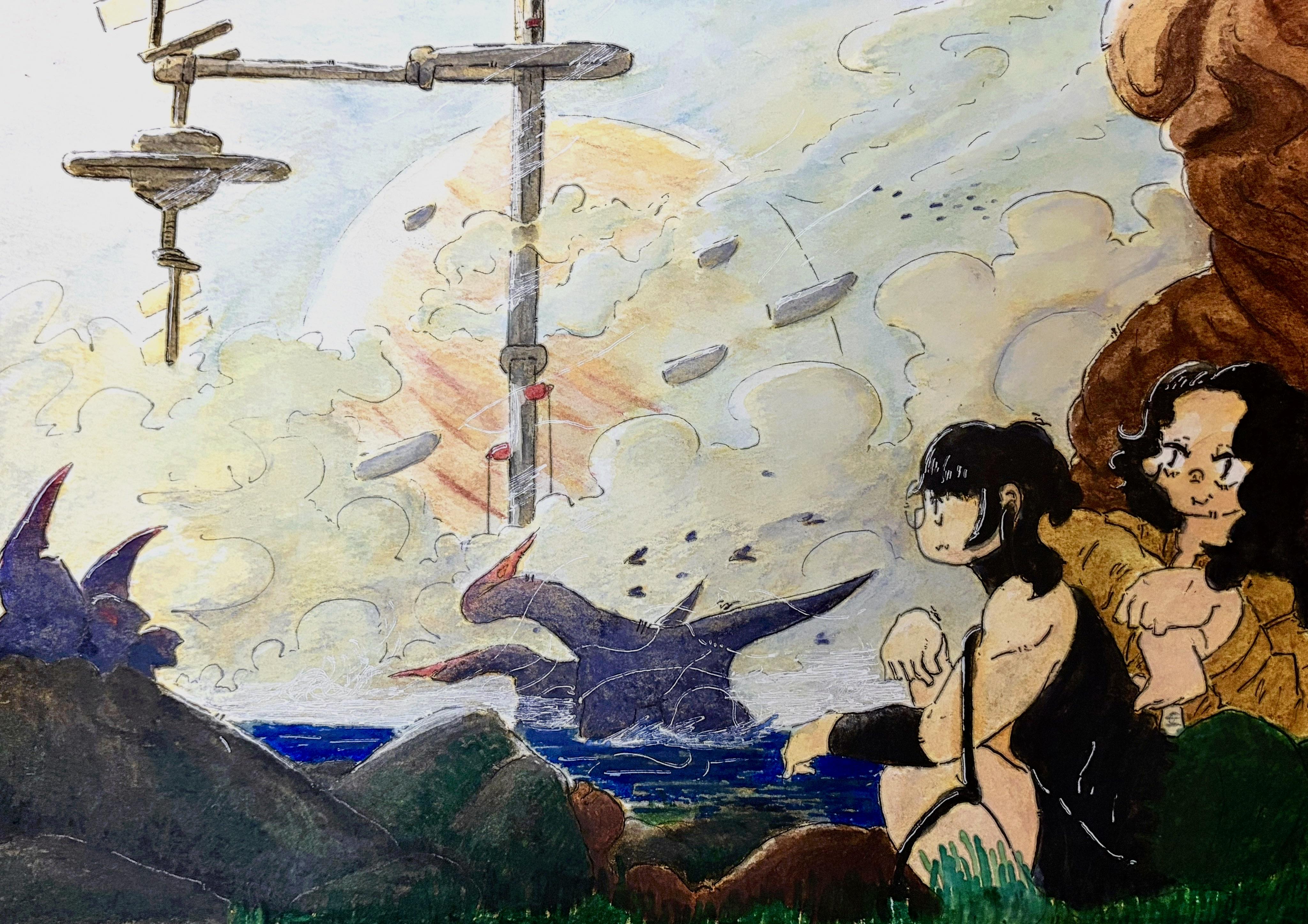
This is a speculative paleo-fiction project blending family drama with a fantastical yet grounded prehistoric atmosphere, showing a family of raptors and a cast of lost creatures fighting to stay alive in a brutal prehistoric ecosystem.

Conflict between sexes! Nature has no mercy, not even for the young!

Across the shining oasis, the Dinopithecus troop has also taken refuge, the females gathered around one of their last infants, but they have no intention of letting the males offer any help. Small Toe and his kin, as well as all those who dwell at the great lake, have no idea of the chaos that ensues when this drought breaks not only body and spirit:

But the fragile bond between hearts.

From my continuing work Terrors in the Brush — a speculative survival series blending paleo realism with raw emotion.

There is no fantasy, no magic — there is only nature red in tooth and claw.

Read Chapter VI Now.


r/SpeculativeEvolution • • 9h ago

Question/Discussion What would a gastropod equivalent to an octopus look like?

10 Upvotes

If you think about it, primitive shelled cephalopods like ammonites and nautiluses are equivalent to snails, while squids are their equivalent to slugs in that they reduced their shell to a simple internal pen.

So what about a gastropod equivalent an octopus? Would it be a slug that reduced its body to just a head while its facial appendages expanded? Most sea slugs have a pair of rhinophores that are used for smell, so would those become like octopus arms? Would something similar happen with a land slug's optical and sensory tentacles?

Would it only happen with sea slugs, or could it happen with land slugs as well?


r/SpeculativeEvolution • • 6h ago

Alien Life [OC] Я русский так что напишу на русском

Thumbnail
gallery
5 Upvotes

Если тут такие есть как я то вот вам описание моей планеты. Там вам и виды животных и информация о них и география и астрономия я то и сё. Короче инфы много. Я не лучший в рисовании но я старался. Хз что тут ещё можно написать... Читайте на здоровье, мои сладкие :3


r/SpeculativeEvolution • • 9h ago

Question/Discussion Why retain pharyngeal slits if they aren’t being used for filter feeding or respiration?

8 Upvotes

So for one of my projects, the aquatic vertebrate analogues have pharyngeal slits, originally for filter feeding like how it was on earth. However, the actual respiratory organ is a pair of sacs located at the back of the throat, exiting out of spiracles in the back similarly to Jay Eaton centaurs, so those slits don’t ever evolve to serve a respiratory purpose. And, of course, some of these creatures evolved into non-predatory niches, so the slits don’t even serve the purpose of filter feeding. So, why keep them? I’m thinking they’re retained for the purpose of reducing drag when moving and hunting, but I’m not sure about that reason along.


r/SpeculativeEvolution • • 20h ago

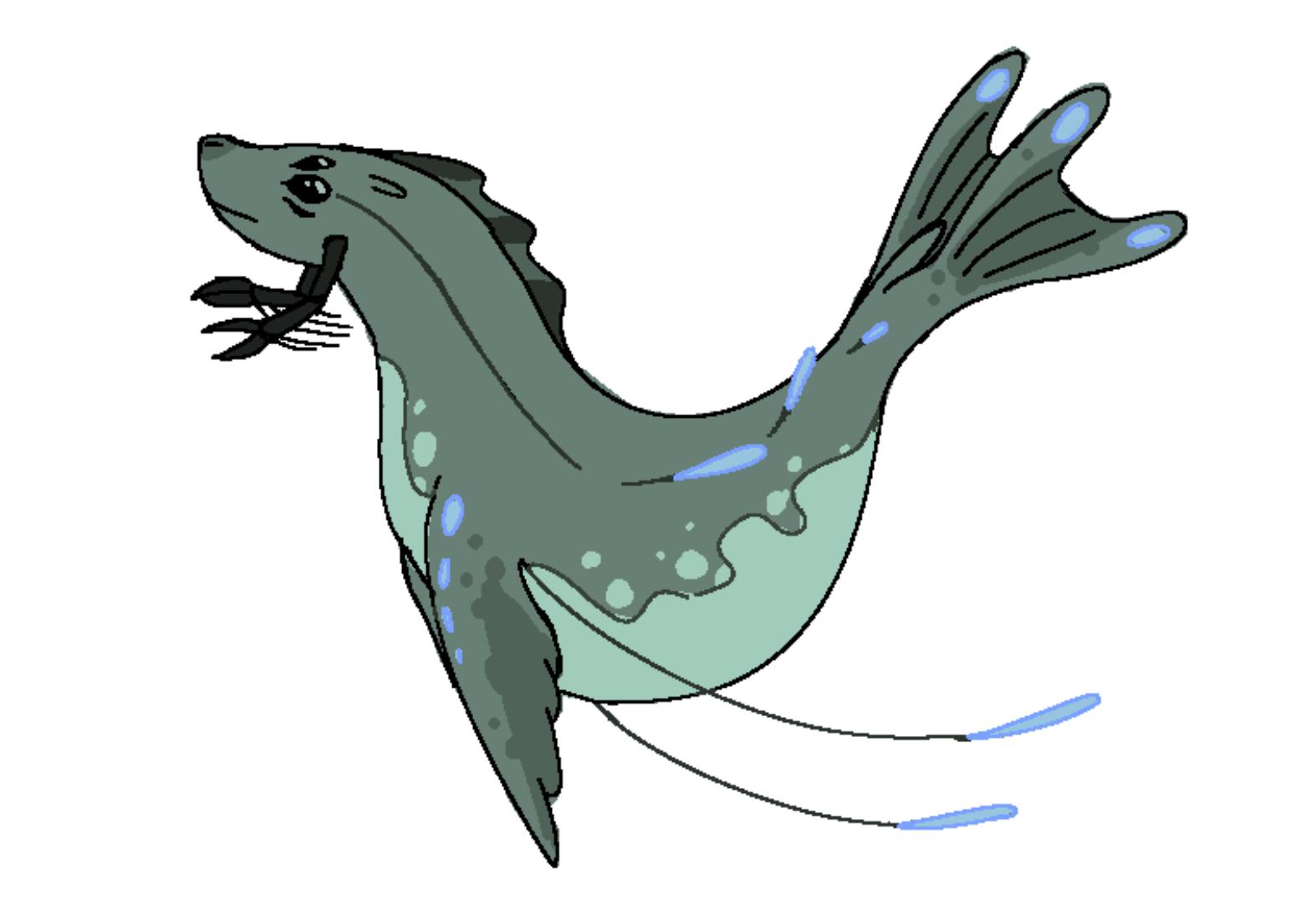
Alien Life [OC] how can i make this look more alien and less seal? Speculative biology planet Abaamta

Post image
52 Upvotes

I just got the idea for a seal-like animal that lives in the cold climates of Abaamta and is hunted by the locals for food and resources, just like humans used to hunt seals around 10 thousand years ago. But after i drew this i realized it looks a little too much like just a seal with extra details... what can i add/remove to make it better?


r/SpeculativeEvolution • • 18h ago

Alternate Evolution [OC] I redrew my old creature but with new speculative origin of jawless fish

Post image
27 Upvotes

Boomcach has the origin of Paleozoic jawless fish similar to sacambambaspis. But unlike in our timeline it went ashore. It has strong belly muscles with which it can jump. That's how boomcach can actually move pretty quickly but is not the best way of movement. The ancestor to boomcach already had explosive rashes, which grow on the armor, which made it pretty successful. Boomcach has strong armor so he suffers no damage from the explosion. It can't chew so he uses an explosion and his tail spike to cut the victim to pieces. And it sucks food with its mouth. Boomcach had convergently evolved lungs but its nose looks very differently so it can't smell very good and it is completely deaf but it has pretty good eyesight. It is not the only species of terrestrial jawless fish.


r/SpeculativeEvolution • • 13h ago

Alien Life [OC] Klauenschatt

Thumbnail
gallery
7 Upvotes

When traversing the temperate forests of Frusnajättar's Gemäsirisen period by night, beware of the rustle of leaves around you, and the snapping of twigs in the underbrush, lest you wish to die without even having seen your killer.

Klauenschatts (picture one) are large terrestrial predators, weighing in at about one ton. They can usually be found prowling through vast stretches of forest by night, attacking most of anything that moves. Your average human would be just small enough to count as a snack for this Animal, while anything larger might be considered a worthy kill to carry back to the den. Due to their padded feet, Klauenschatts are surprisingly stealthy on the soft forest floor, and their dark brownish fur let's them blend in almost seamlessly between the trees of the forest. Tho it may pursue slower prey occasionally, Klauenschatt prefers to either ambush prey, perhaps while said prey is asleep, or to engage more standoffish prey in direct combat. In any case, it's primary means of attacking is not its comparatively weak bite, but its two highly specialized claw-limbs, which it uses to slash upwards at its prey with devastating force, often times disembowling other animals in the process.

Once a Klauenschatt has slain an animal large enough to be worth the effort, but small enough to carry, it uses its claw-limbs to hoist its kill onto its back and keep it pinned there. The animal will then carry its catch for dozens of kilometres, back to its den, where the rest of the pack may feed on the flesh.

Klauenschatt dens are usually naturally occurring caves, or simple burrows dug by the animals themselves, and are on average home to about 10 Klauenschatts. During the night, every able-bodied Klauenschatt leaves the den to hunt, and retrieve food for the young, sick, elderly or pregnant members of the pack, who remain back at the den. During the day, Klauenschatts may be found resting within the den, however they have also been documented to play with one another, producing dog-like vocalisations that are rarely heard outside of the dens.

During mating season, Klauenschatts tend to go out much further when hunting, in hopes of encountering potential mates that are not part of their den, in order to facilitate genetic diversity. If a mate is found, the process of mating itself is relatively short, and is usually the only interaction mates will have during their lives, as both animals return to their original dens. During pregnancy, females will stay at the den until they give birth to between one and three cups, upon which the female immediately begins going out to hunt again, as the young are raised communally, often times by the older members of the pack.

Many Klauenschatt packs contain an alpha animal, which can be distinguished by their much more massive builds, straightener claws, fiery red fur and more combat oriented teeth. When a pack is in need of further protection than what their regular members can provide, Klauenschatts will do something that is usually a tabu within their species, that being feeding the remains of one of their dead to a cub. Cannibalism at a young age will trigger the activation of dormant genes in a Klauenschatt cub, leading to it growing into an alpha animal, which can weigh up to three tons. Tho alphas do hold a lot of respect amongst their packs, they are not the de facto leader of said packs, as most decisions are made using some very primitive form of direct democracy. Furthermore, being an alpha mostly confines a Klauenschatt to the den, as their legs cannot support their much greater mass on long hunts like those of regular Klauenschatts. Alphas' more combat oriented teeth also cause additional difficulties in cutting up and chewing their food, meaning that their much more intimidating build, comes at a price.


r/SpeculativeEvolution • • 21h ago

Seed World [OC] Some details of Gellios (and Early Reef Ecosystems)

Thumbnail
gallery
21 Upvotes

Source

Unlike Earth, Gellios does not orbit a G-type star; rather, it is the fifth planet in a system orbiting an A-type star. Stars of this class exhibit colors ranging from blue to white and are relatively short-lived, typically existing for only about a billion years or slightly longer. Nevertheless, the classification "A5V" indicates that the star belongs to spectral class A, possesses a temperature corresponding to the "5" subclass, and resides on the main sequence (V)—meaning it is shining stably by actively fusing hydrogen into helium within its core. This is why it is categorized as an A5V-type star.

Its axial tilt is several times greater than Earth’s, which leads to a higher frequency of extreme weather events; furthermore, while a year on Earth lasts 365 days, a year on Gellios spans 1,460 days—the equivalent of four Earth years. Yet, despite all these unusual conditions, the limited group of organisms that arrived from Earth managed to adapt to the planet, evolving into a vast array of different species

The Medusocene was the first era to follow the terraforming of Gellios. In the absence of any chordates andk most other animal groups, this empty world was gradually populated by jellyfish, nudibranchs, brine shrimps, and polychaetes; despite extreme weather events and exceptionally long days, life proved ready to discover new ways to survive.

In sandy, rocky, and similar environments—where corals are entirely absent and seagrasses other than Eelgrass do not exist—the niches were filled by plants derived from Eelgrass, as well as animals like Sabellid polychaetes, Rootjellies and Everpolyps. (descended from Hydrozoan, Turritopsis dohrnii), Basal, early-evolving species—such as the Ancestral Rootjelly (Radixothecatus primigenum)—began to colonize these open spaces over time. As certain nudibranchs started preying upon these stationary, reef-building animals, specialized "Radixothecatovorous" species—or "Rootgrazers"—emerged. One such example, Cyan Spiny Rootgrazer (Radixothecatophagus cyacanthus), evolved to be spiny and spent its life consuming parts of the Rootjellies it preyed upon. Ultimately, the formation of these ecosystems—much like coral reefs—gave rise to aquatic environments characterized by high biodiversity: The Rootjelly (& Everpolyp) reefs.

At first glance, one might imagine Stingstalkers as small jellyfish that feed on the massive carcasses of megafaunal jellyfish that have died during the summer months; however, some species—such as Hillenburg’s Stingstalker (Spiculovenator hillenburgi)—have opted for different prey. Small invertebrates make up a significant portion of the diet for such species; brine shrimps, in particular, serve as their primary food source, accounting for a staggering 85 percent of their total intake. Furthermore, there exists another lineage of jellyfish that shares similar prey sources with the Stingstalkers—a group that has evolved to be somewhat more advanced than other jellyfish lineages.

Lineages derived from Tripedalia cystophora—such as the Mangrove Wood Sandstrider (Psammogradis minimus)—have already emerged as some of the strangest creatures to appear during the early stages of this planet’s history. With their inherited array of four advanced eyes and twenty primitive ones—complemented by a rudimentary tapetum lucidum for nocturnal/crepuscular hunting—it would not be an exaggeration to label them as "monsters" in the context of their prey. Though they remain small and are themselves hunted by larger predatory jellyfish, one cannot deny that they are highly successful within their own ecological niche.

Although Gellios appears quite distinct—possessing a somewhat dense atmosphere and weather conditions vastly different from those of our own world—the limited group of organisms that arrived from our world managed to adapt, laying the foundations for a biosphere that is already thriving. Yet, extinction events will inevitably occur from time to time; after all, without such extinctions, there would be no speciation.


r/SpeculativeEvolution • • 18h ago

Fan Art/Redesign [OC][Media: Miraculous: Tales of Ladybug and Cat Noir] The Horrificator are Reptilian, Ectothermic Rodents

Post image
9 Upvotes

Akumylenemys monstrositus—also known as the Horrificator—was a large species of the Gooculators, a ectothermic, predatory rodents that diverged significantly from the modern house mouse (Mus musculus) and lived 215 million years into the future. During this era, the Earth is home to a Pangea-like supercontinent, inhabited by biota that have survived various extinction events.

Gooculators—which contain Horrificators—eject a goo-like substances from their mouths to restrict the movement of their prey or to kill/ them with poison; they lead solitary lives and mate only once or twice a year. Unfortunately, having diverged significantly from typical mammals, they are unable to feed their offspring with their own milk.

However, horrificators—especially their young—are preyed upon by various predators, including certain gavial-like crocodilians, predatory birds, and large, venomous slime moulds.

However, 252.1 million years later, these creatures went extinct due to intense competition from other predators; as for humans, having long since vanished—or devolved into mindless, sessile organisms)—they could not be placed under protection, and nature claimed their lives without a shred of mercy. But yet these rodents are short-lived, but interesting experiments of the far future, but don't forget about that Every Species cannot escape Extinction.


r/SpeculativeEvolution • • 21h ago

Alien Life [OC] Europan Striders

Post image
16 Upvotes

r/SpeculativeEvolution • • 18h ago

Alien Life [OC]What do you think of my speculative alien creature?

Thumbnail
gallery
7 Upvotes

You can see the basics anatomy in the image soo what do you think about the design and anatomy? It lives on a planet with a blue son it has air shooting valves for speed boost or jumpstart speed, it has air pouch for storing the air,it has two tails for balance


r/SpeculativeEvolution • • 12h ago

Uncategorized Speculative Biology [OC] Beneath the Ice

2 Upvotes

Snow Crocodiles or Carcharosuchus Albæ are large carnivorous crocodilians native to the polar zones of the planet.They are the superpredators of the tundra.

Physical statistics: At 8.5-11m in length, a biteforce of roughly 32-38k newtons , 1m in height and weighing neigh 7-9,5 tons, they are built like normal crocodiles. They actually are a "living fossil" by the planetary standards. However they have many key changes. Their first is thermoradiating osteoderms, warm blood and a heterodont dentature. The front ones are conical but the rest are handsaw like.Their body colouring is pale cyan-white meant to imitate water. They live comfortably 85-110 years

Prey and Predation: The Snow Crocodile is not a picky eater. It will comfortably feed on any creature it can tackle in the artic enviroment. Larger Snow Crocodiles may take on smaller Mammoths. In the sea it comfortably feeds on large fish and Reptoriales. It has no predators due to the planetary megafauna being herded around the tropics but in young age they might be attacked by large cats and fishes.

Habitats: Artic zones and tundras, temperate forests in colder seasons and sea.

Reproduction: They reproduce whenever they can because of difficulty of encounter. They are viviparous and have 1-2 young which are cared for till they get to 3-4m length. Both parents will care for the nest ferociously. Unlike most parent caring crocodilians Snow Crocs directly feed their own children before themselves, as like in Tiamats.

Senses and intelligence: Relatively poor sight is compensated by extreme smell and hearing. Their roars infact can reach 140db for territory control. However they are quite intelligent by being excellent trap makers, often digging beneath the ice with their claws to create unstable terrain.


r/SpeculativeEvolution • • 18h ago

Question/Discussion seed worlds are just isekai but with science (x?)

5 Upvotes

lets be honest seed worlds are just scientifically accurate isekai, organisms just being send to different worlds by unknown or known beings for what purpose? it varies. the organisms have to face challenges and pressures that they have never faced before and slowly grow strong along the way or the opposite, and you know what else sounds like that? isekais.

its just shows that seed worlds are just a kind of isekai but with realism and science


r/SpeculativeEvolution • • 22h ago

Alien Life [OC] Meonian tripods

Thumbnail
gallery
11 Upvotes

Here's one phylum from my science-fantasy project. In my setting, worlds are connected by a web of natural portals, so life is both incredibly diverse and incredibly adaptive. These are just a few main morphological types (many developed convergently on different worlds).

Tripods come in many forms, from soft-bodied to bony creatures, but they're all considered part of the same evolutionary lineage. They all have three limbs, with two eyes in between them, and a mouth at the bottom of the body.

The main types are:

  1. Tri-star - soft-bodied, three-limbed creatures. Circular mouth at the bottom of the body with three hand-like mandibles. Two small eyes between each limb. Move in a circular motion (one limb at a time). Mostly aquatic.
  2. Tri-crabs - not actual crabs. Round bodies covered with hard shells and jointed legs with claws. Mouth still on the bottom of the body, surrounded by three mandibles. Move in a circular motion. Although mostly aquatic, some species were found on land (even in the desert). The biggest regular tri-crabs ever encountered are up to 1m tall.
  3. Giant tripod - only found in Lallen, where it feeds by grazing on the breathing fronds of the zoophytic pseudotrees. Looks like a tri-crab, but 10m tall. As Lallen wasn't deeply explored, only a few specimens were observed, and none were actually examined. It's unknown if they belong to a single unique species or if there's an entire ecosystem comprised of giant, large, and regular-sized tripods.
  4. Swimmers/crawlers - swimmers abandoned circular life for the sake of bilateral symmetry. Their back limbs turned into flattened tails, while the front ones evolved into fins (swimmers) or jointed legs (crawlers). Their frontal eyes grew, while the back ones atrophied, disappearing completely in some species. The mouth moved forward, although it remained at the bottom of the body. Aquatic. Probably share ancestors with tricrabs.
  5. Dwarf whiptails - most likely land-dwelling descendants of crawlers, with more developed legs and tail-limbs turned into whip-like appendages used for defense or hunting. Exoskeleton partially moved inside the body and turned from plate into a lattice. The circular mouth moved forward on a pseudo-head. Vestigial eyes on the sides of the tail. Not related to true whiptails, which are quadrupeds.
  6. Fliers - most likely flying descendants of swimmers or dwarf whiptails, with internal lattice-like skeleton. Two limbs turned into wings, and one into a flat, prehensile leg-tail, sometimes armed with a single claw. Some species retained circular mouths with mandibles, while others developed needle-like beaks. Some have vestigial eyes at the bases of leg-tails. Common in almost every world of the Meon Cluster, ranging in size from tiny to colossal.

6a. Sap-kite - a type of flier native to Obhan. They have lozenge-shaped bodies with claws on the wings that they use to climb tree trunks. Then they use their needle-like beaks to pierce the bark and drink the sap. Sap-kites can spend days on a single tree, only moving when the sap stops flowing. They don't fly, only glide, but anatomical analysis confirmed they belong to the same order as fliers.

6b. Vampire flier - also native to Obhan. Like sap-kites, they have needle-like beaks, but they prefer to use them to pierce through animal eyes to suck out their brains. Their wings have rows of spikes on the inside to hold the prey while they feed.

I have a hunch that with lattice-like skeleton fliers' wings would look slightly different, but I don't have the artistic skills to make it happen 😅 What do you think? Does it sound like a plausible evolutionary situation? What other forms would you add?


r/SpeculativeEvolution • • 1d ago

Maps & Planets [OC] Tahdora Hadean landscape

Thumbnail
gallery
47 Upvotes

Had lots of time to spare so managed to complete this piece within one day rather than across the span of a week like usual. This illustration represents a hadean analogue for the tahdora project ( Not my project im just an illustrator for it). I struggled with the lava as ive never drawn such a thing before but i think it didnt turn out too bad. Sky is dark due to thin atmosphere, sunset, and lots of outgassing from volcanoes across the infant planet. My next work for the tahdora project will be an archean eon scene but from space, and after that ill be able to finally get to work on some actual speculative organisms. I appreciate any forms of constructive criticism and ill take any artists advice!!


r/SpeculativeEvolution • • 1d ago

Question/Discussion How would a starfish like animal work if it had a pseudocoelom and no hard skin like real starfish, just soft?

8 Upvotes

For a alien body plan


r/SpeculativeEvolution • • 1d ago

Question/Discussion Help with my bio project?

6 Upvotes

I’m working on a spec evo project on a very VERY iron heavy world,(funfact:the oceans are blood red and almost all plant life is yellow!)
I already have a couple critters and I mostly need inspo anything is welcome!