r/romanempire • u/Ancient-Distance-650 • 2h ago
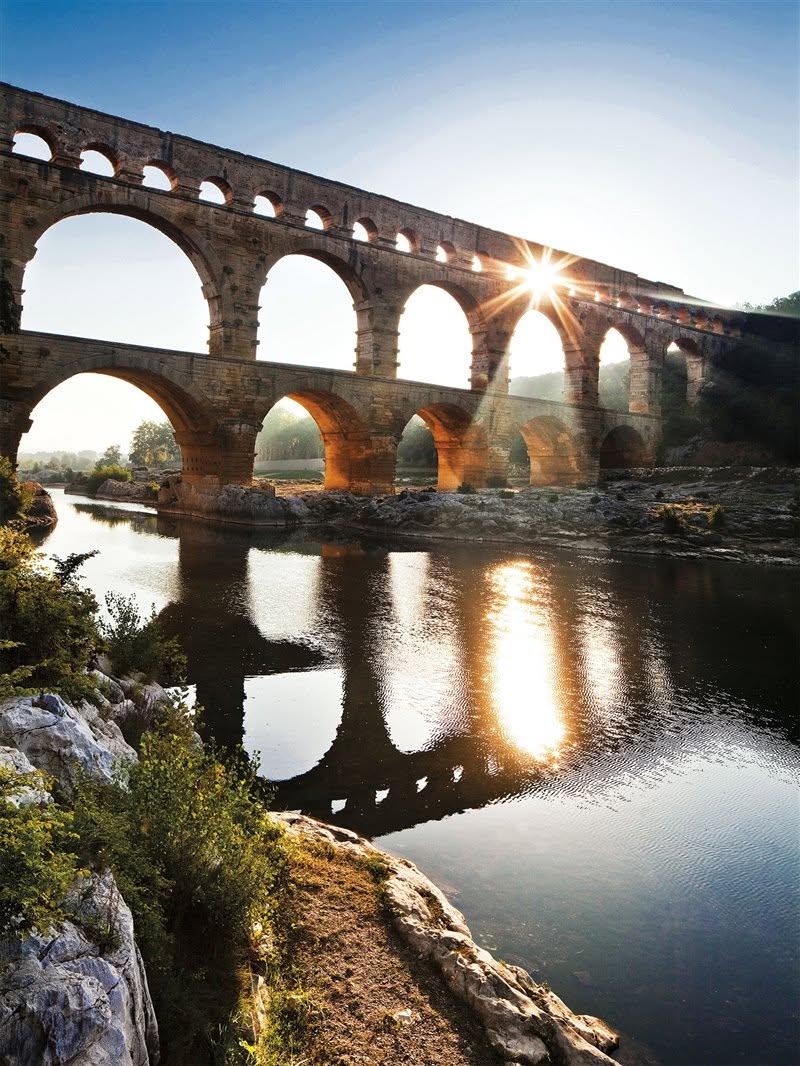
An ancient Roman aqueduct stretching across the landscape
gallery
50
Upvotes
r/romanempire • u/Roman-Empire_net • May 08 '26
The Via Appia Antica outside Rome — much of the surface is the original 4th-century-BC basalt. Image: Wikimedia Commons.
In 1st-century Rome, a courier carrying urgent news from the Senate could leave the Forum at dawn, change horses every ten miles or so at a government way station, and reach Brundisium — 360 miles south on the heel of Italy — in five or six days. He never left a paved road. He almost never crossed a river that didn’t have a Roman bridge. And every mile of his journey, a stone column told him exactly how far he’d come.
That courier owed his speed to one of the most ambitious public works projects in human history: the Roman road system. By the time the Empire reached its greatest extent under Trajan in the early 2nd century AD, Rome had laid down roughly 250,000 miles of roads, of which around 50,000 miles were stone-paved highways — a figure that wouldn’t be matched anywhere on earth until the late 19th century. (Recent research published in November 2025 suggests the network may have been even larger than that, with 60,000 newly-mapped miles of secondary roads pushing the documented total close to 186,000 miles.)
The roads were not just infrastructure. They were the circulatory system of the Roman world — and the reason a single city on the Tiber could govern people from northern England to the upper Nile.
r/romanempire • u/Roman-Empire_net • May 07 '26
Buried under later imperial palaces, the House of the Griffins preserves 2,200-year-old frescoes from the late Republican period. The site is normally closed to the public. New livestream tours give virtual access to wall paintings that no tourist has been able to see in person for decades — and they're some of the best Republican-era frescoes anywhere. Read more: https://roman-empire.net/discoveries/house-of-griffins-livestream-tours
r/romanempire • u/Ancient-Distance-650 • 2h ago
r/romanempire • u/Cabilly_eCom_Law • 53m ago
The Pantheon is best known as a temple (and later a church), but it also served as a place of justice. Cassius Dio records that Hadrian held court there, seated on a tribunal so the proceedings remained public. He did the same in the palace, the Forum, and other locations depending on the case.
It’s not the everyday civil court building (that was more the Basilica Julia), but it is a documented spot where the emperor personally administered justice inside one of the most famous surviving Roman structures.
r/romanempire • u/Terraarc • 1d ago

The Romans built a house or bath here. The floor stayed under the street. They cut a hole so you can see the mosaic from the pavement. The pattern is still clear.
r/romanempire • u/pereifas • 16h ago
r/romanempire • u/Prestigiousjane • 13h ago
Enable HLS to view with audio, or disable this notification
r/romanempire • u/Unique_Friend_8837 • 1h ago
r/romanempire • u/roman-empire-net • 12h ago

Two years earlier, Sejanus had been executed in Rome. Now, on the same date, another figure connected to the struggle for power under Emperor Tiberius was dead.
Her name was Agrippina the Elder.
She was the granddaughter of Augustus, the wife of the celebrated general Germanicus, and the mother of Caligula, the future emperor. For years, she had been one of the most prominent women in the imperial family.
But her life changed dramatically after Germanicus died in AD 19. Agrippina suspected that powerful figures in Rome had conspired against her husband, and she never concealed her hostility toward Tiberius.
The emperor grew increasingly suspicious of her and her sons. In AD 29, Agrippina was exiled to the island of Pandateria, where her mother had also once been banished. Her sons Nero and Drusus were persecuted as well, and both died before her.
Agrippina remained in exile for years. On October 18, AD 33, she died, far from the political centre where her family had once stood at the heart of Roman power.
How did she die? The ancient historian Tacitus says she either took her own life by refusing food or was deprived of it. The precise circumstances remain uncertain. Tiberius denied having her strangled or thrown down the Gemonian Steps, as Sejanus had been.
The date was no coincidence in the emperor’s memory. Tacitus reports that Tiberius himself drew attention to the fact that Agrippina had died on the same day, two years after Sejanus.
In imperial Rome, even the most distinguished family could fall from favour. Agrippina’s story is a reminder that being related to an emperor offered no guarantee of safety when politics turned against you.
r/romanempire • u/Weird_Prize6402 • 17h ago
Lago Albano and Lago di Nemi, in the Castelli Romani hills southeast of Rome, are one of the best-documented places one can actually tie the Roman Empire to cannabis.
Pollen studies from sediment cores in both lakes show clear evidence that Romans cultivated hemp (Cannabis) in the surrounding area, with a major peak in the 1st century AD. This was primarily industrial hemp: used for ropes, sails, textiles, baskets, and other fiber products that the empire relied on.
They also knew the plant’s medical applications, and classical writers like Pliny the Elder and Galen noted effects from the seeds (Pliny called it the “laughing weed” and mentioned mixing it into wine).
It’s not evidence of recreational smoking in the modern sense, but it is solid archaeological/palynological proof that cannabis was being grown by Romans right outside the capital.
Sources: pollen records from Lago Albano and Lago di Nemi (Mercuri et al., Vegetation History and Archaeobotany, 2002).
r/romanempire • u/roman-empire-net • 15h ago
r/romanempire • u/Inevitable-Sun-8051 • 1h ago
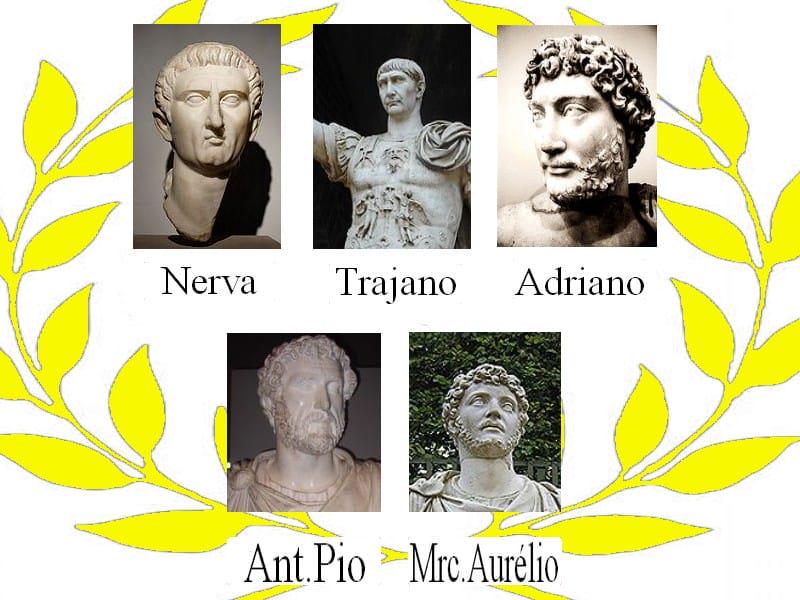
Rome wasn’t destroyed by bad emperors alone—but some of them made its problems far worse. 🏛️⚔️
Caligula allegedly wanted to make his horse a consul. Nero watched his reputation collapse after the Great Fire of Rome. Commodus turned the Colosseum into his personal stage, while Valentinian III made the catastrophic decision to kill one of the Western Empire’s most capable generals.
From palace assassinations and military coups to civil wars and the fall of Constantinople, these 20 emperors reveal the darker side of nearly 1,500 years of Roman imperial history.
Which emperor do you think did the most damage to Rome—and was the empire already doomed by the time he took power?
#RomanEmpire #AncientRome #RomanHistory #History
r/romanempire • u/Ramo_Rami • 19h ago
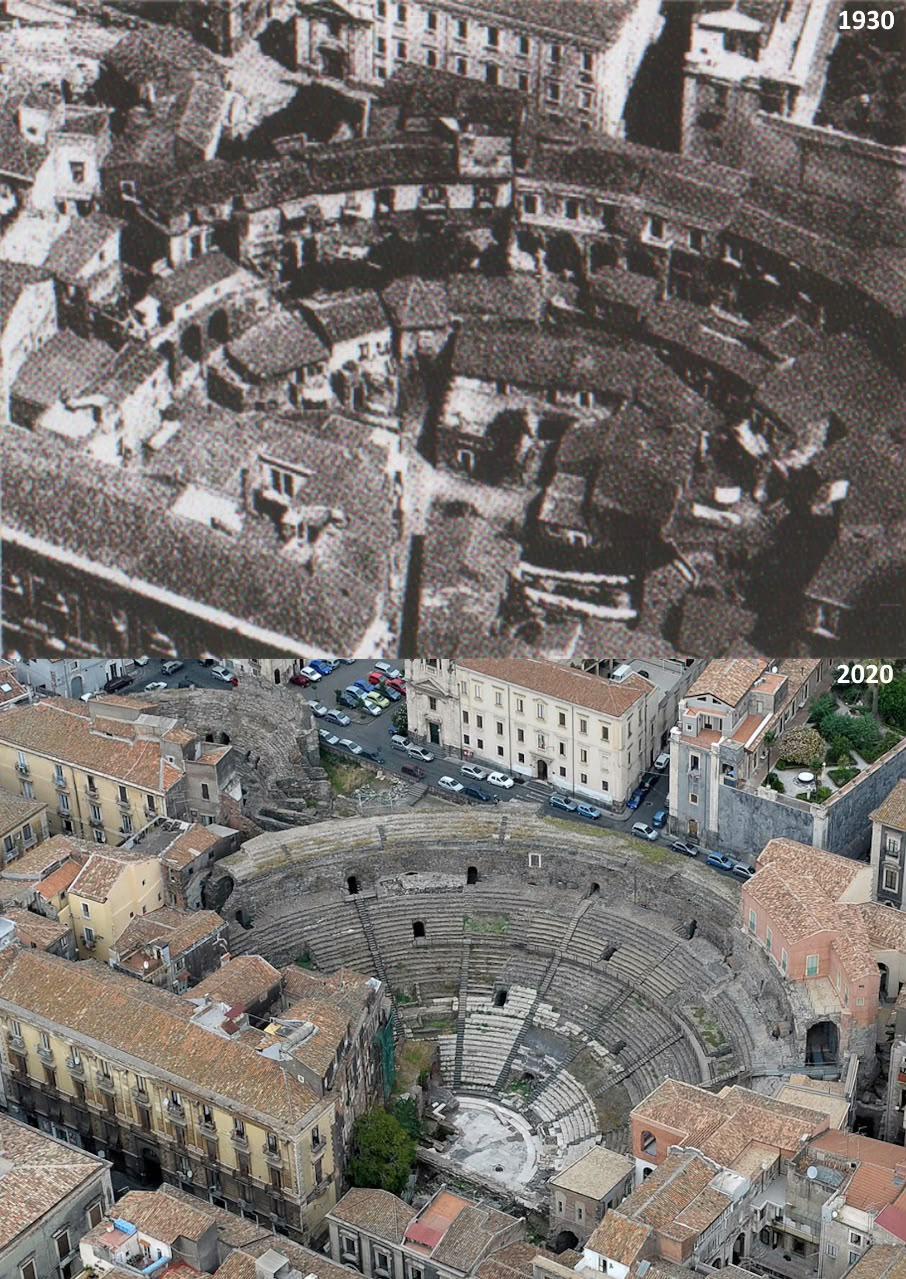
Hello,
This photo made me think about how roman structures all over the Roman world survived to this day especially inside city perimeters like the colosseum, so I'm looking for well researched, probably academically respected, preferably somewhat illustrated books about "what happened to buildings from the Roman empire to our days".
It can focus on one single famous building, like the colosseum or circus maximus, but I think I'd enjoy more a single book that looked over a number of buildings throughout time.
r/romanempire • u/Over-Willingness-933 • 40m ago

r/romanempire • u/Ill-Lobster-7448 • 1h ago

Founded by Alexander the Great in 331 BCE, Alexandria rapidly became the commercial and administrative heart of Ptolemaic Egypt. Following Rome's annexation of Egypt in 30 BCE, it evolved into one of the greatest ports of the Roman world and arguably the jewel of Roman maritime commerce, linking Mediterranean consumer markets with the Red Sea and, ultimately, the trading networks of the Indian Ocean.
A critical nuance of this network, highlighted by Raoul McLaughlin, is that the famous 120-ship trade fleets mentioned by Strabo did not sail from Alexandria itself. Instead, they departed from the Egyptian Red Sea ports of Myos Hormos and Berenike. Eastern goods were unloaded at these ports, transported across the Eastern Desert to Coptos, and then carried down the Nile to Alexandria, which functioned as the empire's principal Mediterranean distribution hub.
In The Eastern Commercial Revenue Model, McLaughlin argues that Indian Ocean commerce may have generated revenues equivalent to roughly one-third of imperial revenues, according to his model. The argument draws on evidence including the Muziris Papyrus, Strabo, the Periplus of the Erythraean Sea, and Roman customs records.
This makes Pliny the Elder's famous complaint particularly interesting. Pliny lamented that India, Arabia, and the Seres drained 100 million sesterces annually from Rome. Yet, while private currency flowed outward to purchase these eastern goods, the Roman state aggressively capitalised on their return by levying a 25% import duty (the tetarte) on cargo entering through the Red Sea trade system. Consequently, later scholarship by Andrew Wilson and Alan Bowman noted that it was "very possible" that something like one-third of the Roman state's military budget could have been financed through Red Sea customs revenues alone.
What is particularly striking is how durable this commercial geography proved to be. Many of the same functions later passed through Roman Alexandria → Byzantine Alexandria/Cairo → Islamic and Mamluk Egypt → Venetian distribution networks. Likewise, major commercial nodes such as Petra, Leuke Kome (White Village) and Laodicea sat along critical junctions linking India → the Arabian Sea → the Red Sea → Nabataean and Levantine routes → the Mediterranean. The concentration of Roman coin finds and hoards around many of these commercial corridors offers a tangible reminder of the immense wealth that flowed through this system over centuries.
For me, the most interesting takeaway is that Rome did not create eastern maritime commerce. Rather, it inherited, secured, and monetised pre-existing maritime networks linking the Mediterranean, Red Sea, Arabia, and India. Driven by seasonal monsoon winds, Indian, Arabian, and East African mariners had established these commercial routes long before Rome entered the system. Rome's achievement was to integrate those routes into an imperial tax, transport, and distribution system, with Alexandria serving as the grand gateway through which eastern wealth flowed into the Roman economy.
References & Further Reading
• McLaughlin, R. (2014). The Roman Empire and the Indian Ocean: The Ancient World Economy and the Kingdoms of Africa, Arabia and India. Pen & Sword.
• McLaughlin, R. (2018). "The Eastern Commercial Revenue Model." In The Indian Ocean in Antiquity: Political, Cultural and Economic Impacts. Routledge.
• De Romanis, F. (2020). The Indikoi Ploi: Trading with India in Classical Antiquity. University of California Press.
• Sidebotham, S. E. (2011). Berenike and the Ancient Maritime Spice Route. University of California Press.
Direct paper access:
The Eastern Commercial Revenue Model (Academia.edu Excerpt)
Book details:
The Indian Ocean Trade in Antiquity (Routledge Publisher Page)
Related reading:
https://www.reddit.com/r/romanempire/comments/1x6l4u9/maritime_trade_and_the_economic_importance_of_the/
Parallel discussion:
Roman Luxury Markets and Trade with the Dravidian Arc (r/GrahamHancock)
r/romanempire • u/roman-empire-net • 5h ago
Fact: Executions happened in Rome, including at the Circus Maximus and other venues, but there is no solid evidence that Christian martyrs were regularly killed in the Colosseum.
That association grew later, after the building became a Christian pilgrimage site.
r/romanempire • u/roman-empire-net • 1d ago

r/romanempire • u/Terraarc • 1d ago

The Romans built a house or bath here. The floor stayed under the street. They cut a hole so you can see the mosaic from the pavement. The pattern is still clear.
r/romanempire • u/AtticaMiniatures • 1d ago
I recently finished painting this 54mm white metal diorama depicting Late Roman legionnaires in the aftermath of a battle.
I wanted to capture a quieter moment in Roman military history not the fighting itself, but the exhausted soldiers standing together after the battle.
The Late Roman army is a fascinating period to explore, especially with the changes in equipment, uniforms, and military organization compared to the earlier Imperial legions.
r/romanempire • u/Lower_Touch8168 • 15h ago
Hey all!
Apologies if this is against the community guidelines, delete it so obvs!
Sadly can no longer go to this event but noticed that the stalls are nearly sold out. Don’t want these to go to waste as they’re pretty great tickets. It’s Row F, Seats 16 & 17 (might be able to check the view on A view from my seat or something). They were £114, willing to listen to offers. Gutted I can’t go, will be insanely jealous of the person that does go but if anyone is interested, let me know ☺️
r/romanempire • u/predictr27 • 1d ago

r/romanempire • u/Simple-das • 16h ago
r/romanempire • u/lapaginadelleaudioge • 16h ago
r/romanempire • u/Turbulent_Kick_87 • 1d ago
