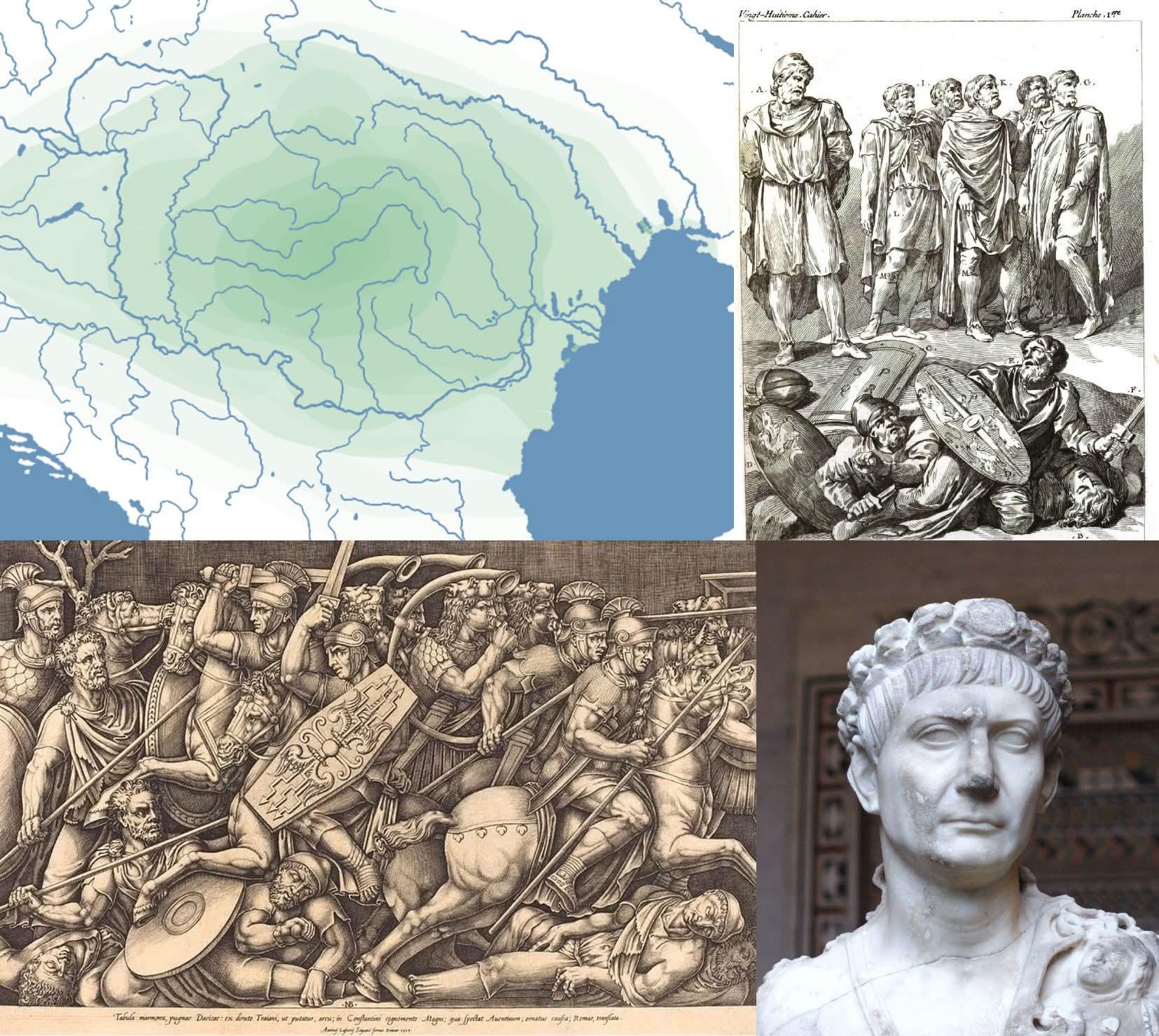
In AD 117, the Roman Empire reached its greatest territorial extent. Its armies had conquered Dacia, captured the Parthian capital of Ctesiphon, and advanced as far as the Persian Gulf. Rome had never controlled so much territory, and the emperor responsible for this extraordinary expansion was Trajan, remembered by later generations as Optimus Princeps — the Best Ruler.
But there was a problem. Much of what Trajan had conquered in the East was already slipping from Roman control.
Trajan had launched his eastern campaign in AD 114, partly over the long-running dispute with Parthia concerning Armenia, a kingdom caught between the two great powers. His armies advanced rapidly, capturing important cities and pushing deep into enemy territory. In AD 116, Ctesiphon fell, and Trajan reached the Persian Gulf. It was a spectacular military achievement, but capturing cities was one thing. Holding an enormous territory thousands of kilometres from Rome was another.
Revolts broke out across the newly conquered regions. The Parthian Empire had not been permanently destroyed, and the fortified city of Hatra resisted Roman attacks. The further Roman forces advanced, the more difficult it became to maintain control over the lands behind them. Trajan had expanded Rome’s borders, but he had not secured all the territory within them.
Then, in AD 117, Trajan fell ill and died while returning toward Italy. His successor, Hadrian, inherited an empire at its greatest extent — and a difficult strategic problem.
Hadrian chose to abandon most of Trajan’s recent eastern conquests. Armenia returned to a position of greater independence, and Rome withdrew from much of Mesopotamia. The decision marked a clear reversal of Trajan’s ambitions, but it was not necessarily an admission that the entire campaign had been pointless. Hadrian was prioritising defensible frontiers and the long-term security of the provinces Rome could realistically maintain.
After all, an army could defeat an enemy in battle without creating the conditions necessary to govern the conquered population. Every new province required soldiers, supplies, administration and money. The farther Rome expanded, the more resources it needed simply to maintain its new borders.
Yet Trajan’s reputation remained remarkably strong. He had not only conquered Dacia and expanded Roman power in the East; he had also sponsored major building projects and cultivated an image of a ruler who worked with the Senate and served the state. His successor’s retreat from the East did not erase those achievements. Dacia, for example, remained part of the Roman Empire for well over a century after Trajan’s death.
This is what makes Trajan’s reign so fascinating. He is remembered as the emperor who brought Rome to its greatest territorial extent, but some of his most ambitious conquests proved temporary. Hadrian’s decision to withdraw raises a question that every great empire eventually had to confront: is it better to control more territory, or to secure what you already possess?
Trajan’s story does not necessarily prove that he was an overrated emperor. His eastern campaign was only one part of a long and consequential reign. But it does remind us that military success and lasting political success are not always the same thing.
Rome reached its greatest size under Trajan. Under Hadrian, it began to accept that the greatest empire was not necessarily the one that kept expanding.