If everyone in your field knew about Russia's disinformation campaign why did no one have any suggestion or ideas of how to stop it or try to warn society because it seems like no one on the internet or real life even wanted to acknowledge it ?
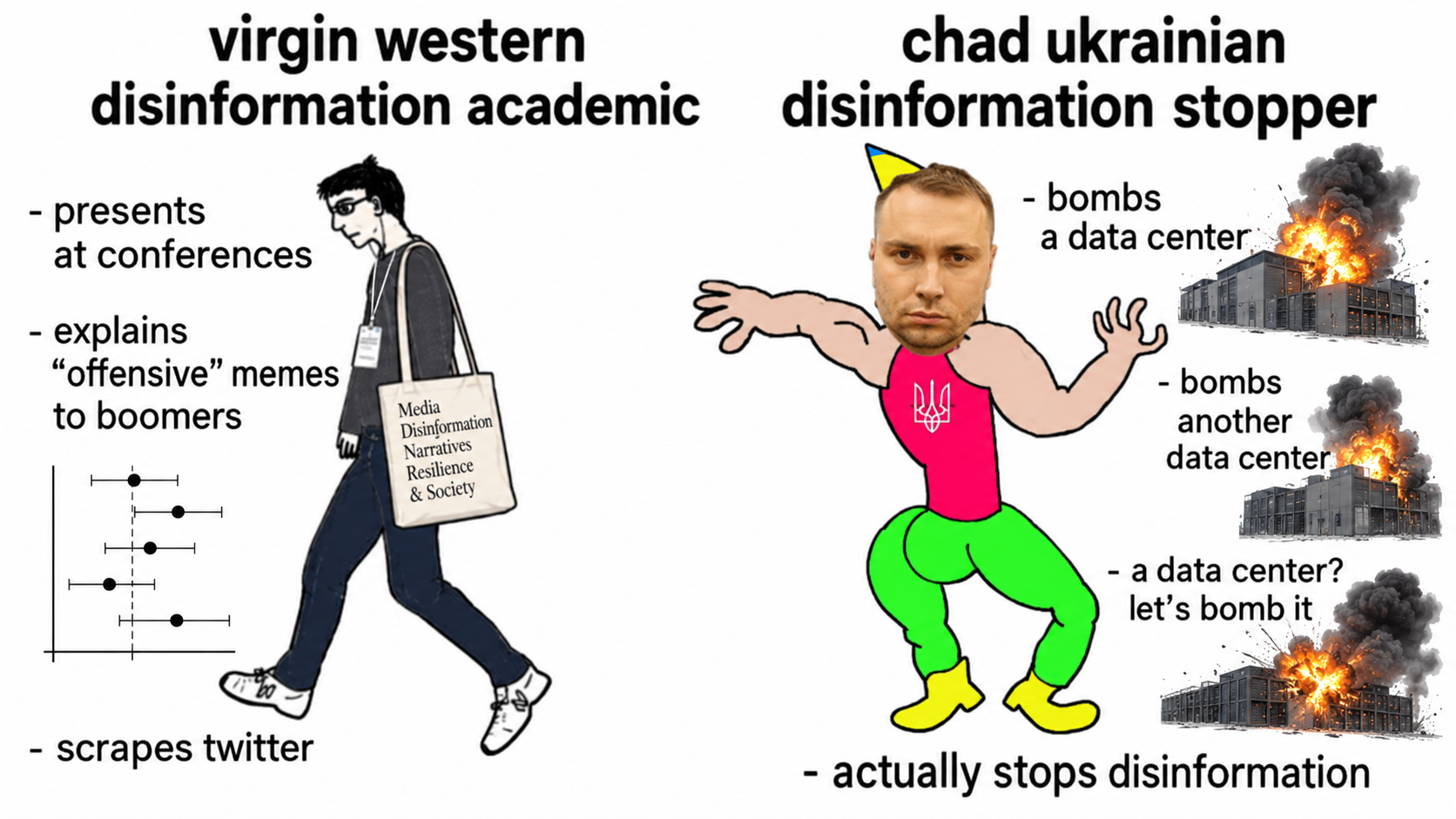
We have ideas, when also are sounding alarms since 2016. I worked on QAnon. I'm also one of the minority that says that passive defense is not effective (debunking) and that most of the damage is already done when those strategies are being deployed, so we need retaliation for adevrsarial campaign that try to influence our information environment (deterrence theory works everywhere). But you have old politicians that don't give a fuck and don't understand social media, or politician that are scared to intervene in the information environment because they feel any intervention could open them up to attacks on being censorious, or politicians that don't want to antagonize Russia for a few posts, or politician that even if they're not collaborating with the foreign threat, they benefit from their operations, or politicians that are collaborating with the foreign threat. I'm really generalizing here, but short answer is political will and ignorance of the issue. Something is starting to move, but fucking slowly. France is doing a nice job all considered TBH.
I would contest though that deterrence theory does not work with disinformation as well as cyberspace more generally. However, that does not mean I am against measures flooding the russian info environment.
I mean, it's a bit complex to discuss it here, I wrote a couple of articles on applying deterrence by denial and deterrence by punishment in the cyber/information space. I would argue that counterhacks can be a viable tit for tat strategy for example. But you need to mean it. Political pressure, hacks, sanctions, etc, the entire arsenal. But there's no political will to act tough, at most just to talk tough.
very cool. I was mostly referencing Gartzke and Lindsay's work (Elements of deterrence, Age of Deception). Though this is not my area really so I defer to your judgement.
I mean, I'm more into classical deterrence, and my point was theoretical, not concerning explicitly with political realities. Tho winds are slowly changing. VIGINUM in France and @FrenchResponse on Twitter are good examples (at least in my mind) of the cycle I tried to highlight. Early Warning capabilities, to anticipatory intervention, to reduced campaign effectiveness, to increased adversarial effort, to possibly deterrence by denial...
I mean, we're doing little and they're getting bolder and bolder. But yes, escalation is a genuine risk, but it is as much a risk as allowing the other side to believe that repeated provocations will go unanswered and unpunished. It's basically a big game of chicken: if you're always the one to steer off, the other side has little to no reason to change course. That mean establishing credible limits, automatic tripwires, and imposing proportionate costs before the stakes become much higher for both parties involved. In short, politician should learn to deter adversarial aggression without being escalatory. To conclude, both action and inaction have inherent risks, right now we just choose inaction and it's not going well. But on the other hand I can see how some people could view my position as too hawkish, tho in my opinion there's not a lot of wiggle room left, and I would like governments using deterrence instead of just waiting for the crash.
197
u/Kajort 5d ago
I feel personally attacked as a PhD in Russian InfoOps. Maybe I should enlist in Ukraine drone command.